Can You Make Orange Juice in a Blender?
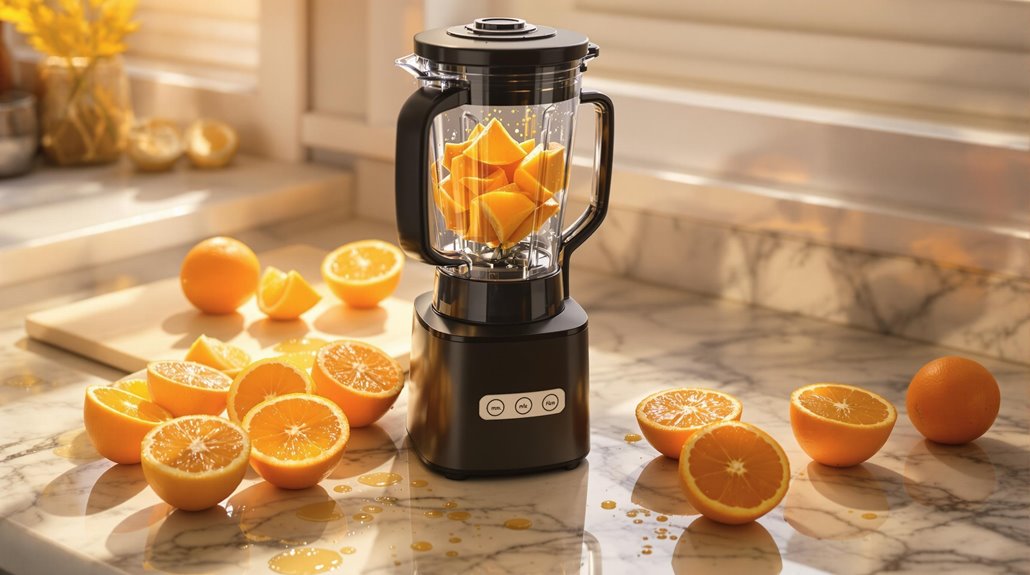
You can definitely make orange juice in a blender, and it's a healthier choice than store-bought alternatives. You'll get more nutrients, fiber, and fresh flavor while avoiding artificial preservatives and added sugars. Simply peel and segment your oranges, remove the white pith to prevent bitterness, and blend until smooth. Strain the mixture through a fine-mesh strainer for your desired consistency. With the right technique and tools, you'll reveal the secret to perfect homemade orange juice every time.
Benefits of Making Orange Juice in a Blender
Why settle for store-bought orange juice when you can make fresh, nutrient-rich juice at home? Making orange juice in a blender offers several advantages that'll enhance your daily routine. Fresh oranges retain more nutrients like Vitamin C when you blend them yourself, compared to processed alternatives that may lose nutritional value during manufacturing and storage.
When you juice in a blender, you'll get more pulp and fiber, which aids digestion and helps maintain steady blood sugar levels. You can control the consistency - blend until smooth for a traditional juice texture or leave some pulp for added benefits. Plus, you'll avoid artificial preservatives, added sugars, and unnecessary ingredients found in commercial juices. The health benefits of fresh-squeezed juice make it worth the extra effort, and you'll taste the difference immediately. For an exciting twist, try combining oranges with sweet mangoes to create a vitamin-rich tropical smoothie that's both refreshing and nutritious.
Essential Equipment and Tools
Just a few basic tools are all you'll need to make fresh orange juice in your blender. Unlike a traditional juicer, you won't need specialized equipment to create invigorating homemade juice.
The essential items include a reliable blender powerful enough to process orange segments and pith, a cutting board and knife for preparing the fruit, and a fine-mesh strainer to remove any unwanted pulp or bitter elements. You'll also want to have a large bowl or measuring cup to catch the strained juice, and a spatula or spoon to help press the mixture through the strainer.
Consider keeping ice cubes on hand if you prefer your juice chilled and frothy. A storage container with a lid is helpful if you plan to make extra juice for later.
Choose a blender with variable speed settings to achieve your preferred juice consistency and texture.
Choosing the Best Oranges for Blending
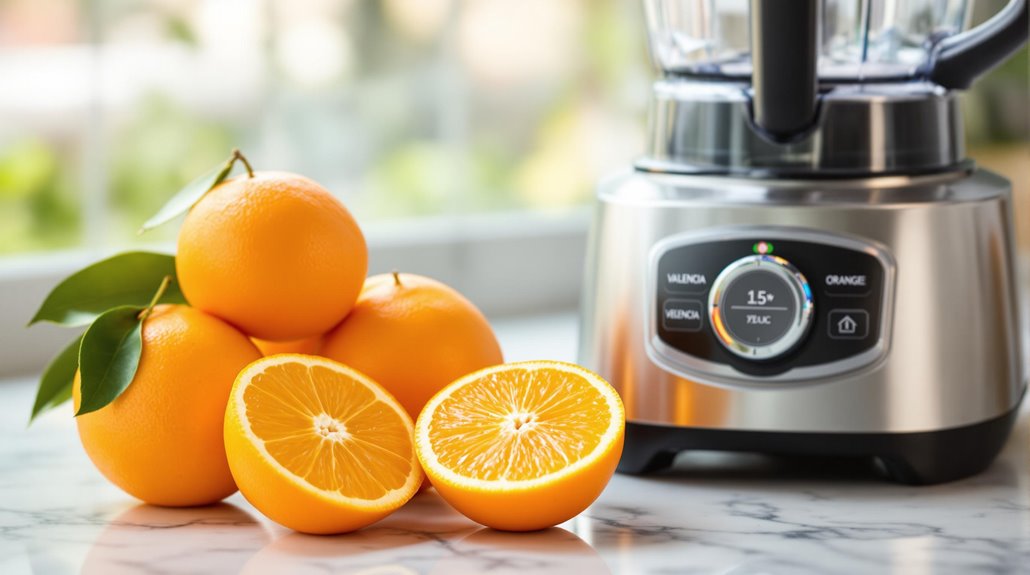
Selecting the right oranges makes all the difference when creating fresh juice in your blender. Look for fruits that feel heavy for their size and have bright, unblemished skin. Valencia and navel oranges are excellent choices for their sweet tasting juice and high liquid content.
When choosing store oranges, give them a gentle squeeze to ascertain they're not too firm or too soft. Fresh oranges should have a slight give when pressed. You'll want to remove the pith completely before blending, as the white pith can create a bitter taste in your juice.
If possible, choose oranges that aren't refrigerated, as room temperature fruits yield more juice. Remember that older oranges often have thicker skin and more pith, making them less ideal for juicing. Similar to how pomegranate skin removal requires patience, carefully peeling oranges ensures the best possible juice quality.
Preparation Steps Before Blending
Once you've gathered your perfect oranges, proper preparation will set you up for the best blending results. Start by washing the oranges thoroughly under cool water to remove any dirt or residue. Peel each orange carefully, making sure to remove all the white pith, which can make your juice bitter when made in a blender.
Separate the oranges into orange segments and remove any seeds you find, as they'll create an unpleasant taste. If you prefer smoother juice, you'll want to strain the juice after blending using a fine mesh strainer to remove excess orange pulp. However, if you enjoy a more textured drink, you can skip this step.
Place your prepared segments in the blender, and you're ready for the next phase of juice-making.
Step-by-Step Blending Instructions
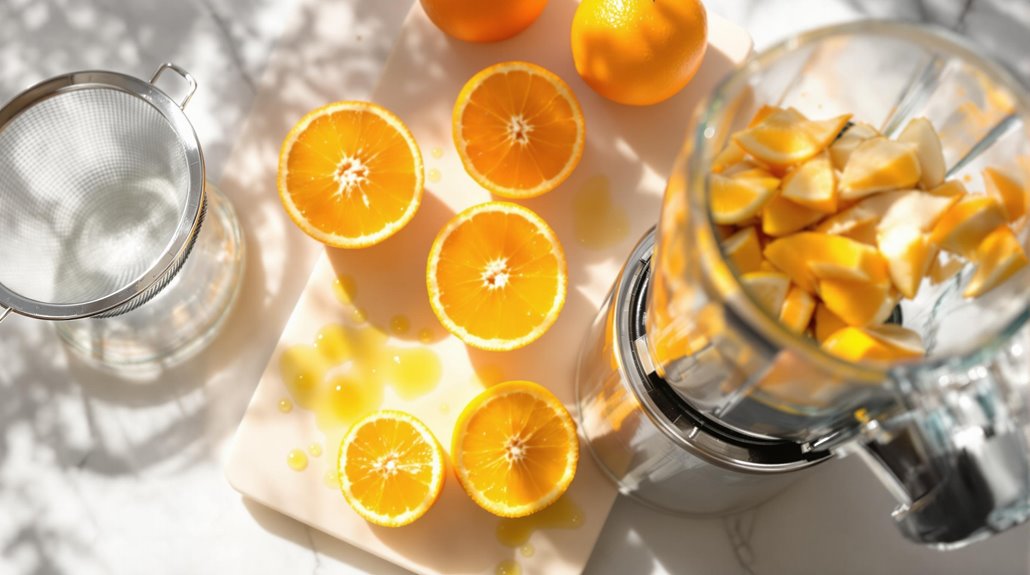
The actual blending process is straightforward when you've properly prepared your oranges. To make orange juice, place your peeled orange segments in the blender and pulse for 15-20 seconds. While an electric juicer might be more efficient, your blender can still create freshly squeezed juice with the right technique.
Start on a low speed, then gradually increase to medium. You'll want to blend until the oranges are completely broken down, usually taking about 30-45 seconds total. Using a fine-mesh strainer, pour the mixture through to remove as much pulp as possible. For a step-by-step approach to making juice that's smoother, you can strain it twice. If you prefer some pulp, simply adjust the straining process to your liking.
Adding Optional Flavor Enhancements
While basic orange juice is delicious on its own, you can enhance its flavor profile with several complementary ingredients. For a bright, citrusy kick, simply add a splash of fresh lemon juice to your blend. If you're looking to balance sweetness, add a tiny pinch of salt - it'll intensify the orange's natural flavors without making the juice taste salty.
For a rejuvenating twist, try adding 2-3 mint leaves to your blender. Don't add a lot, as mint can quickly overpower the orange flavor. During summer months, you can also blend in a few ice cubes for an instantly chilled drink. If your oranges aren't quite sweet enough, consider adding a teaspoon of honey or agave nectar to achieve your desired taste.
Straining and Serving Tips
After blending your oranges, you'll need to strain the juice to achieve a smoother consistency. Pour your fresh orange juice through a fine-mesh strainer or cheesecloth to remove any pulp or foam. While a citrus press might work differently, Homemade Orange Juice made in a blender needs this extra step for the best results.
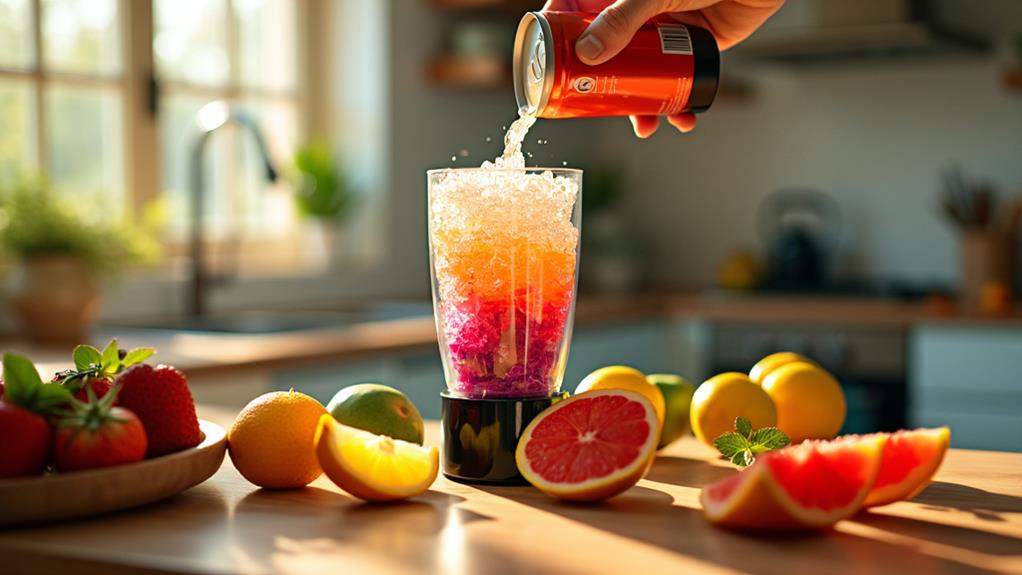
Serve your strained juice over ice for an instantly invigorating drink. Add club soda to create a sparkling orange spritzer. Garnish with fresh orange slices or mint leaves.
Save the leftover pulp for smoothies or baking. Your juice is delicious when served immediately, and orange juice is best when consumed fresh. Don't let the pulp go to waste - you can freeze it in ice cube trays for future recipes or add it to baked goods for extra flavor and nutrition.
Storage and Shelf Life
Proper storage of your blender-made orange juice is essential for maintaining its fresh taste and nutritional benefits. When you use your blender for this Orange Juice Recipe, you'll want to consume it immediately for the best flavor and highest Percent Daily Values of nutrients. If you can't drink it right away, store it in an airtight container in your refrigerator for up to 2-3 days.
To extend shelf life beyond what you'd get with an electric citrus juicer, you can surely use your freezer, which preserves the juice for several months. Adding a splash of lemon helps prevent bitterness from developing. Remember that different orange varieties may affect storage time, so monitor your juice's taste and appearance.
For ideal freshness, keep your juice away from light and in sealed containers.
Troubleshooting Common Blending Issues
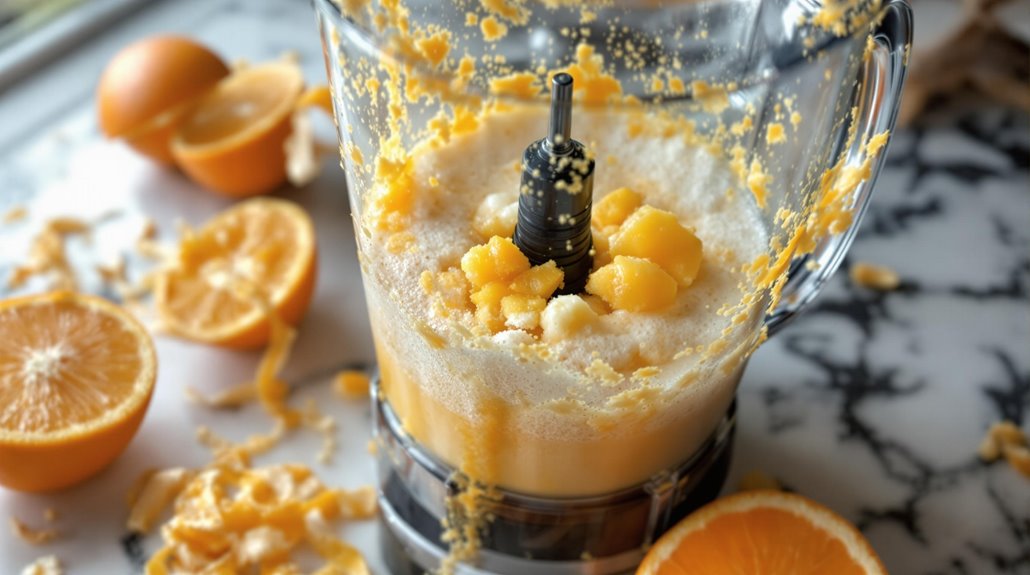
Are you experiencing challenges with your blender-made orange juice? When you make Homemade Orange juice, bitter taste and excessive pulp can be common issues. To guarantee the best results, make sure you're following proper blending techniques and avoiding common pitfalls.
- Try to remove as much pith as possible when you cut orange segments to prevent bitterness.
- Press and move the tamper while blending at a moderate speed to avoid over-processing.
- Keep orange segments chilled before blending to maintain optimal flavor.
- Use a fine-mesh strainer to achieve your desired consistency.
Daily Values are based on personal preference, but most people enjoy smooth, bitter-free orange juice. If your juice tastes bitter, you're likely blending too long or including too much pith. Adjust your technique and experiment with different blending speeds to find the perfect balance.
Creative Ways to Use Blended Orange Juice
Once you've perfected making orange juice in your blender, you'll uncover it's incredibly versatile beyond just drinking it plain. Unlike store-bought juice, your homemade fruit juice can enhance various recipes and beverages.
Try blending your manual orange juice with yogurt and bananas for nourishing smoothies, or combine it with other favorites like apple juice or watermelon juice for unique flavor combinations. For an immunity enhancement, mix your juice at home with ginger, honey, and lemon. You can also freeze the juice into ice cubes to add zesty flavor to iced drinks without diluting them.
Get creative with your juice recipes by making homemade orange sorbet or popsicles. For a citrusy breakfast twist, drizzle your freshly blended orange juice over pancakes or waffles to liven up your morning meal.