What Is the Difference Between a Pollotarian and a Pescatarian?
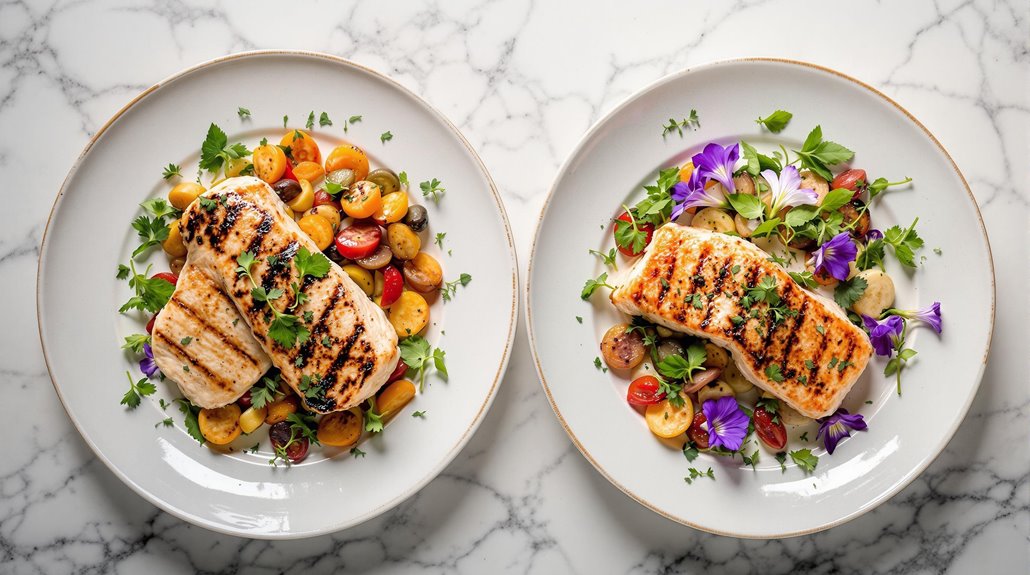
The main difference between pollotarian and pescatarian diets comes down to your protein choices. As a pollotarian, you'll eat poultry and fowl while avoiding red meat, pork, and fish. In contrast, if you're pescatarian, you'll include fish and seafood but exclude all other meats, including poultry. Both diets can include eggs and dairy products, and they're considered forms of semi-vegetarianism. There's much more to investigate about the health benefits and environmental impacts of each choice.
Defining Pollotarian and Pescatarian Diets
While both pollotarian and pescatarian diets offer alternatives to traditional meat consumption, they differ markedly in their approach.
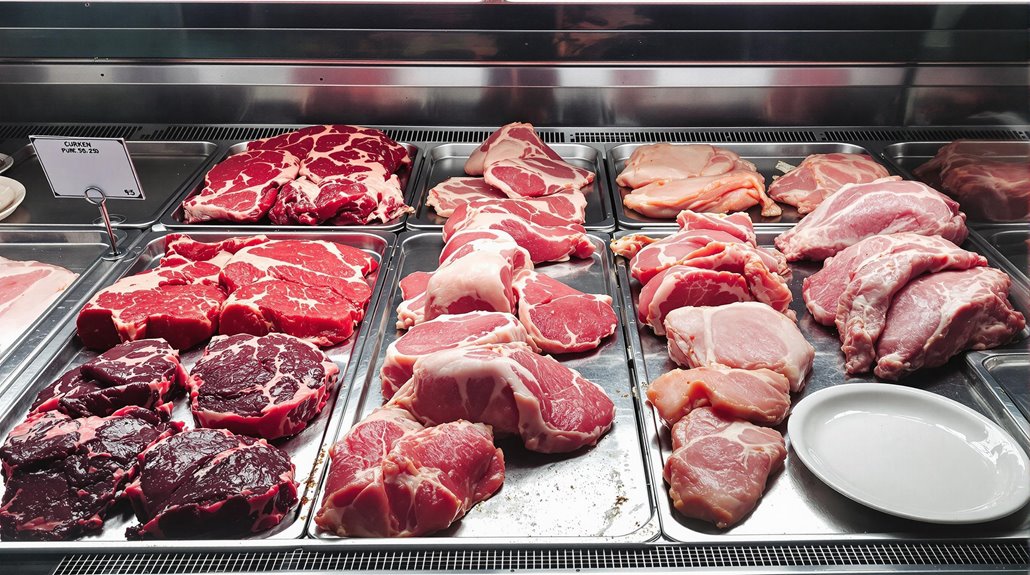
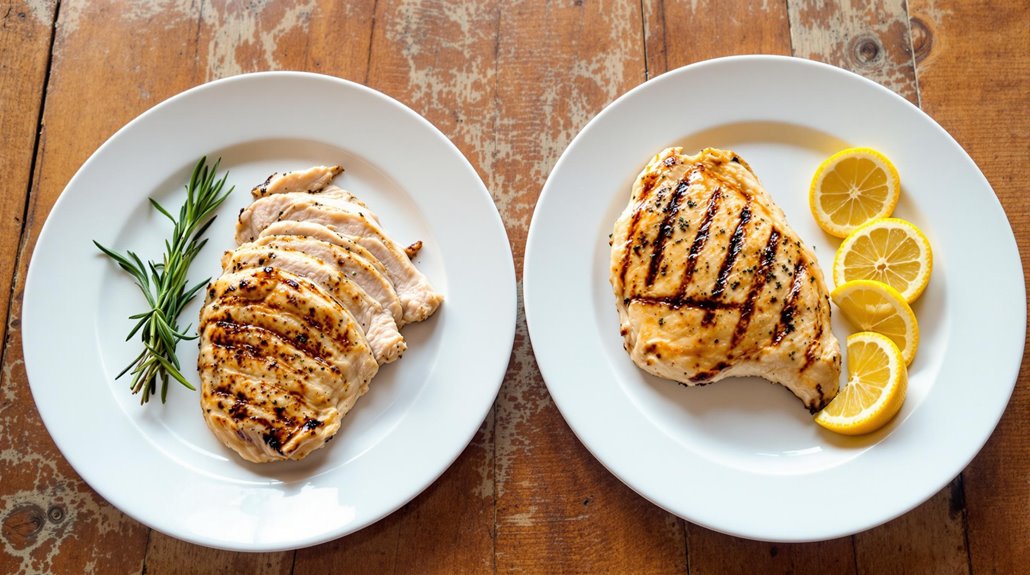
If you're following a pollotarian diet, you'll eat poultry and fowl like chicken, turkey, and duck, but you'll exclude red meat and pork from your meals. You can also include eggs and dairy in your diet as additional animal products.
As a pescatarian, you'll follow a vegetarian diet that includes fish and seafood while excluding all other forms of meat, including poultry. Some pescatarians choose to include eggs and dairy products, while others opt to restrict these items. Both dietary choices are considered forms of semi-vegetarianism and can help you reduce your overall meat consumption for health and environmental reasons.
Following either diet can help maintain a high nutritional value while providing flexibility in meal preparation and options.
Key Dietary Restrictions and Allowances
Understanding the specific allowances and restrictions of pollotarian and pescatarian diets helps you make informed dietary choices. As a pollotarian, you'll focus on poultry consumption while excluding red meat, pork, and fish from your diet. You can also include eggs and dairy products to maintain protein intake.
If you're following a pescatarian diet, you'll eliminate poultry and red meat but can enjoy fish and seafood as your primary animal protein sources. Some pescatarians choose to consume eggs and dairy, while others opt for a more restricted approach by excluding these products.
Both diets aim to reduce traditional meat consumption while offering distinct health benefits. Pollotarians may experience improved heart health and lower diabetes risk, while pescatarians can benefit from the essential omega-3 fatty acids found in fish. Those following either diet can enhance their nutrition by incorporating protein-rich smoothies into their daily meal plans.
Health Benefits and Potential Risks
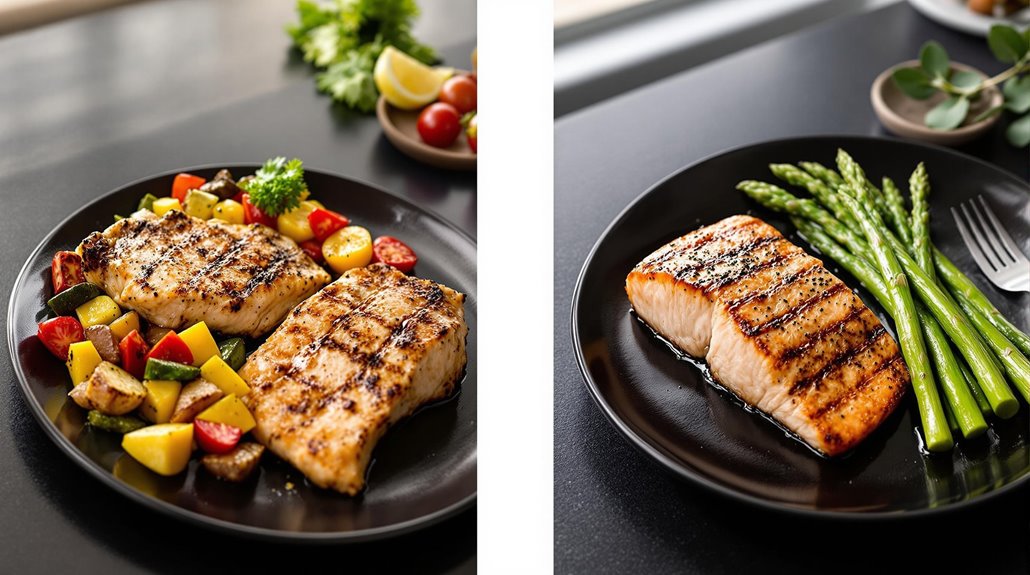
Both pollotarian and pescatarian diets offer unique health advantages and come with their own set of considerations. As a pollotarian, you'll benefit from a lower risk of heart disease compared to eating red meat, since poultry contains less saturated fat and cholesterol. However, you might face nutrient deficiencies, particularly in iron and zinc.
If you're following a pescatarian diet, you'll have protection against certain types of cancer, especially colon cancer, thanks to omega-3 fatty acids in fish. Yet, you should be aware of potential exposure to environmental pollutants, including mercury found in some seafood.
Both dietary choices can help you maintain a healthy weight and reduce your risk of type 2 diabetes when compared to diets high in red and processed meats. When making healthy smoothies to supplement either diet, choosing a nutrient-rich blend can provide better glucose absorption and sustained energy compared to juicing alone.
Environmental Impact Comparison
When comparing the environmental footprints of pollotarian and pescatarian diets, you'll find distinct differences in their impact on the planet. While both diets are more sustainable than those heavy in red meat, pollotarian diets generally have a lower environmental impact than pescatarian ones.
Though seafood can be a sustainable choice, widespread overfishing and ocean pollution pose significant environmental challenges.
Poultry production requires less land and water than beef, and it generates fewer greenhouse gas emissions. While pescatarian diets avoid these land-use issues, they face other environmental concerns like mercury contamination and depleting fish populations.
If you're primarily motivated by sustainability, consider that both diets still have a greater environmental impact than vegetarian options. However, between the two, a pollotarian diet typically leaves a smaller ecological footprint than a pescatarian one.
Protein Sources and Nutritional Considerations
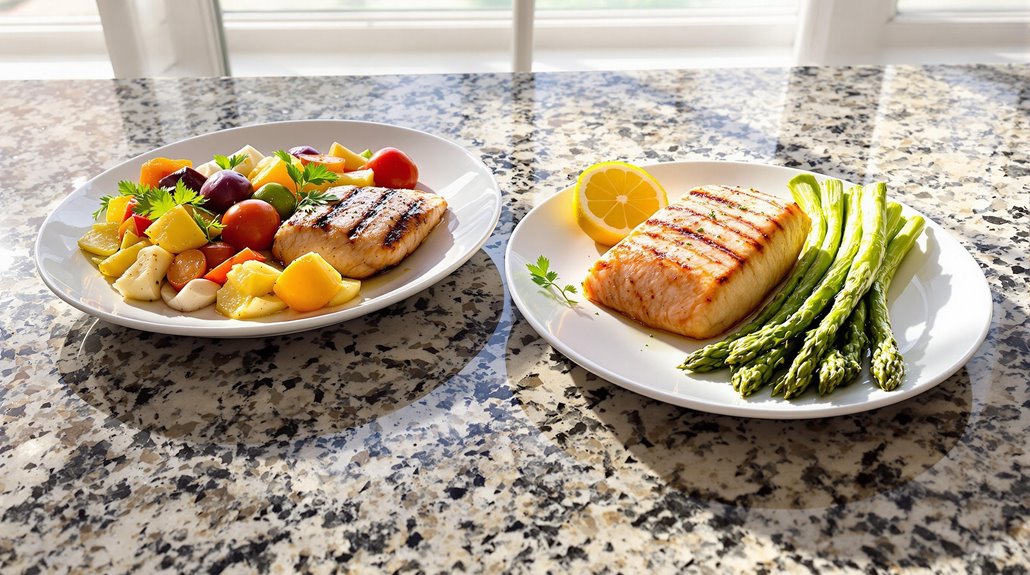
The choice between pollotarian and pescatarian diets brings distinct protein profiles and nutritional benefits. If you're a pollotarian, you'll eat poultry as your main animal protein, while pescatarians rely on fish and seafood. Both diets can support your health when properly arranged.
As a pescatarian, you'll benefit from omega-3 fatty acids found in fish, which support your heart and brain function. If you follow a pollotarian diet, you'll likely have a lower risk of heart disease compared to red meat eaters, though you'll need to watch your cholesterol intake from poultry.
Both diets allow you to incorporate plant-based proteins like legumes, nuts, and seeds. Whichever diet you choose, make certain you're getting enough essential nutrients like iron, zinc, vitamin B12, and calcium through careful meal planning.
Making the Switch: Tips for Beginners
Starting your path as either a pollotarian or pescatarian doesn't have to feel overwhelming. Begin by gradually reducing your consumption of restricted products while investigating new alternatives. If you're choosing the pollotarian route, focus on poultry and plant-based options, ensuring you're getting enough protein through chicken and turkey. For pescatarians, incorporate various fish types while studying about sustainable seafood choices.
Both diets offer health benefits and lower risk of certain diseases, but you'll need to plan your meals carefully. Stock your kitchen with plenty of fruits, vegetables, and whole grains.
If you're going pescatarian, familiarize yourself with different fish preparation methods and omega-3 rich options. Pollotarians should explore diverse poultry recipes and cooking techniques. Remember to consult nutrition guidelines to guarantee you're meeting all your dietary needs during the conversion.
Menu Planning and Recipe Ideas
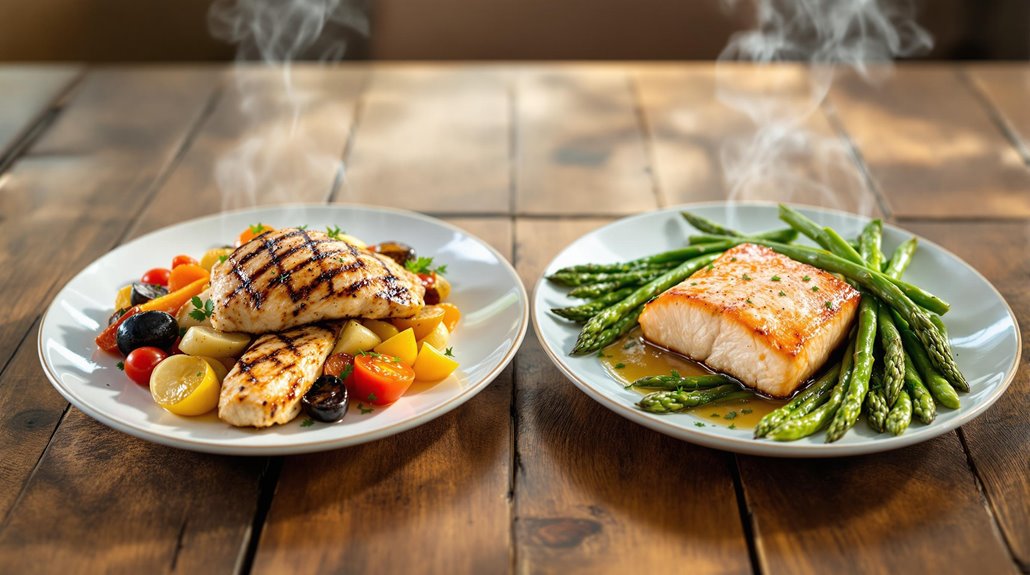
Looking to create exciting meals that align with your dietary choice? Whether you're following a pollotarian or pescatarian diet, you'll find plenty of delicious options by combining Protein Sources with whole grains and fresh produce. Both diets emphasize a plant-based diet foundation while offering flexibility with specific animal proteins.
Key meal planning strategies include:
- Build your plate with 50% vegetables, 25% protein, and 25% whole grains
- Cook with heart-healthy olive oil and season with herbs and spices
- Prep protein portions in advance for quick weeknight meals
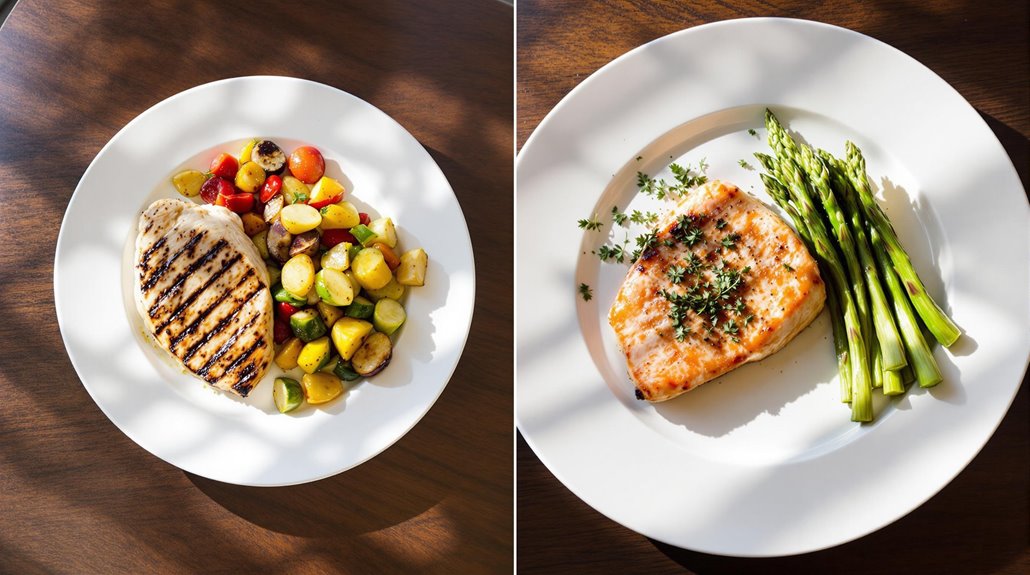
For pollotarians, focus on poultry-based dishes like grilled chicken with quinoa and roasted vegetables. Pescatarians can immerse themselves in diverse seafood options, from baked salmon to shrimp stir-fries. Remember, both diets can easily shift to meat-free diet days by substituting legumes or tofu as protein alternatives.
Social and Cultural Considerations
While meal planning focuses on the practical aspects of these diets, social and cultural factors play a significant role in choosing between pollotarian and pescatarian lifestyles. You'll find that both diets are often known by different names depending on your cultural background, and they're sometimes considered a type of vegetarian eating pattern.
If you live in a coastal region, you might find it easier to maintain a pescatarian lifestyle, while those in poultry-farming communities may naturally gravitate toward a pollotarian diet. When eating meat is deeply embedded in your cultural traditions, these diets can offer a middle ground - especially when sharing meals with friends and family who consume red meats. Your choice between these diets might reflect not just personal preferences, but also your cultural heritage and community practices.
Long-term Sustainability and Success
When considering the long-term sustainability of pollotarian and pescatarian diets, success often depends on careful planning and commitment. Whether you're modifying from a vegetarian or vegan lifestyle or reducing your eat meat habits, both diets offer viable paths to health and fitness goals.
For long-term success, consider these key factors:
- The amount of poultry options in a pollotarian diet provides more variety than pescatarian seafood choices, potentially making it simpler to maintain
- You'll need ongoing education about nutrition to avoid deficiencies that can occur when limiting certain food groups
- Regular monitoring of your health markers helps guarantee you're meeting your nutritional needs without compromising your dietary preferences
Unlike a strict vegan diet, both these eating patterns offer flexibility while still promoting environmental consciousness and personal health benefits.