What Are the Safety Features of a Blender?
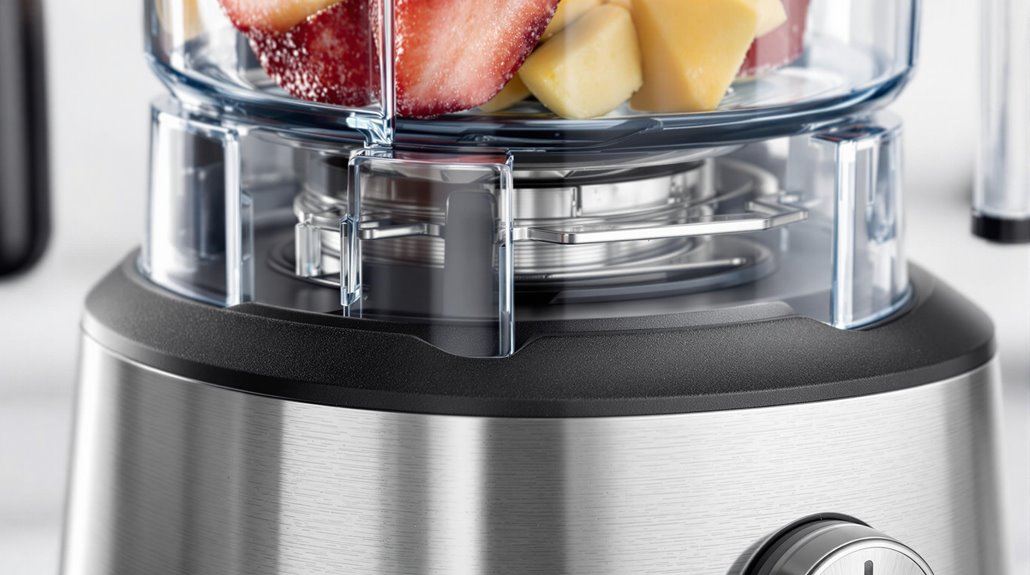
Modern blenders come equipped with multiple safety features to protect you during use. You'll find enclosed blending jars with protective mesh screens, interlock systems that prevent operation without the lid, and automatic shut-off mechanisms when the container is removed. The blades feature rounded edges and strategic positioning, while power control systems include variable speeds and overload protection. There's much more to uncover about these essential kitchen safety innovations.
Essential Safety Components in Modern Blenders
When it comes to modern blender safety, several essential components work together to protect users from potential hazards. You'll find that enclosed blending jars and protective mesh screens serve as primary guards against accidental contact with sharp blades.
To make sure the blender operates safely, manufacturers install interlocks that prevent the unit from running until the lid is properly secured.
To minimize the risk of electrical accidents, modern blenders come equipped with RCD protection systems that automatically cut power if they detect any irregularities. Additionally, you'll notice clear safety signs and markings that remind you to use appropriate PPE when necessary.
These features, combined with proper maintenance and regular cleaning, create a thorough safety system that protects you during both home and industrial blending operations.
For maximum safety when handling hot contents, users should allow liquids to cool before blending to prevent potential steam burns and blade damage.
Interlock Systems and Lid Protection
Interlock systems represent one of the most important safety mechanisms in modern blender design. When you're operating your blender, these systems work continuously to prevent accidental activation and protect you from potential injuries. The lid must be properly secured before sensor activation allows the blades to spin.
You'll find that modern blenders include sophisticated user notifications and automatic shut-off features that activate the moment the lid is removed during operation. These safety measures guarantee you can't accidentally come into contact with the spinning blades. The interlock mechanisms comply with strict safety standards, making your blending experience safer and more reliable.
Whether you're making smoothies or crushing ice, you can trust that these built-in protections are working to maintain your safety while using your blender. For additional protection, always wear rubber slippers when operating electrical appliances like blenders to reduce the risk of electric shock.
Blade Safety and Design Features
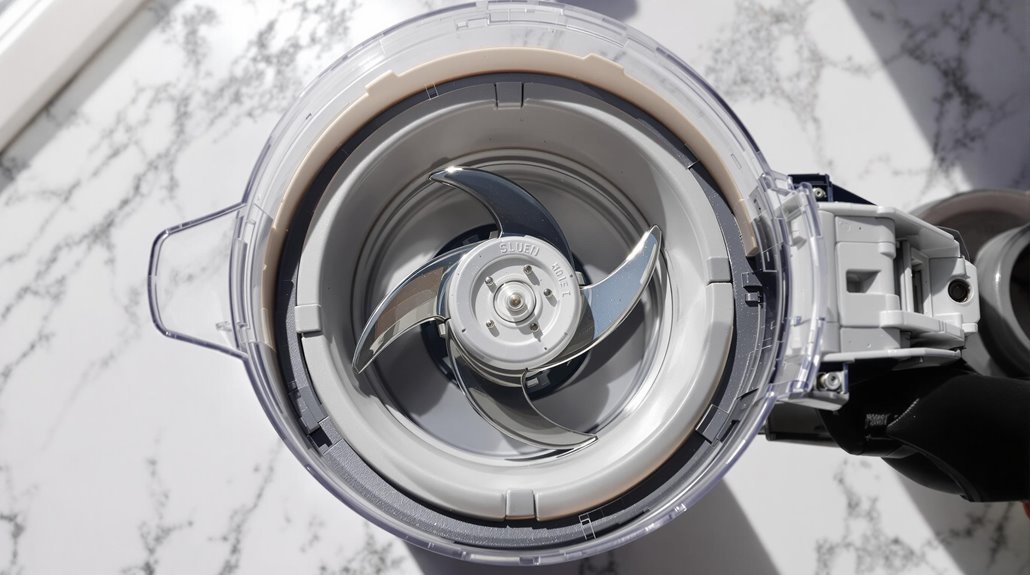
Modern blender blades incorporate multiple safety features that work together to protect you during operation. You'll notice the rounded blade edges and blunt tips that drastically reduce the risk of cuts when handling or cleaning the unit. The blades are strategically positioned at the container's base, keeping them safely away from your hands during food preparation.
The durable container materials and ergonomic grip design work in tandem with the blade system to guarantee safe handling. When you're blending, the blades remain enclosed within the sturdy container, preventing any accidental contact.
In high-end models, you'll find blade braking systems that quickly stop the rotation once you turn off the power. These thoughtful design elements create multiple layers of protection while maintaining efficient blending performance.
Most high-quality blenders feature stainless steel blades that resist corrosion and maintain their durability even with frequent use.
Power Control Mechanisms
Beyond physical blade safety, a blender's power control mechanisms add another layer of protection during operation. You'll find variable speed adjustment options that let you control blade rotation, ensuring appropriate power levels for different ingredients and minimizing splashing or overflow risks.
Your blender's automatic shut-off features provide essential protection by immediately stopping the blades if you remove the container or open the lid during operation. This prevents accidental exposure to moving blades while blending.
Additionally, overload protection circuits monitor the motor's performance and cut power when they detect stalling or excessive strain. These circuits protect both you and your appliance from potential hazards caused by motor burnout or mechanical failure.
When combined, these power control features create a thorough safety system that makes your blending experience safer and more reliable.
Electrical Safety Measures
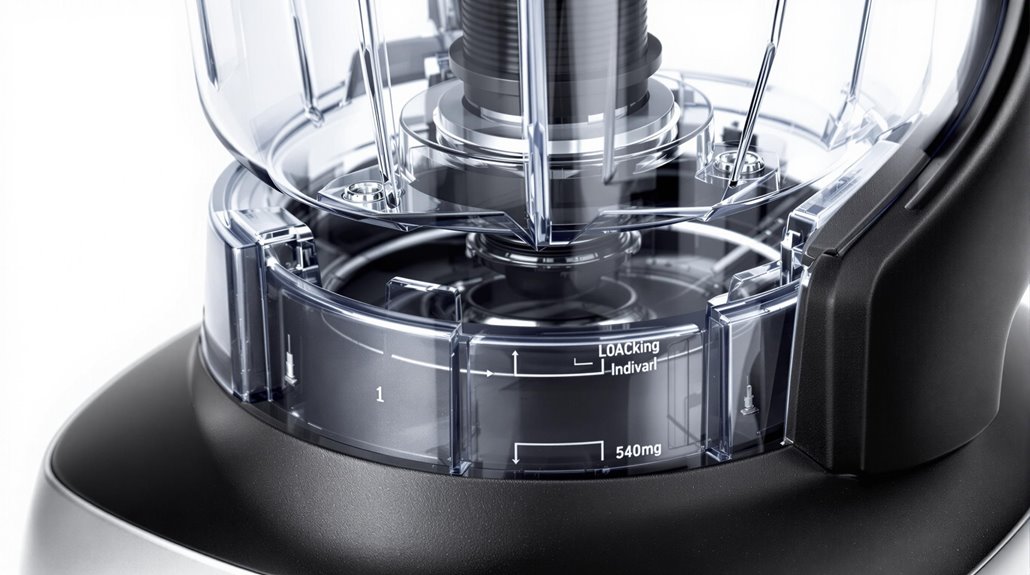
Electrical protection stands at the forefront of blender safety design. You'll find that modern blenders incorporate several essential safety features to protect you from electrical hazards. The grounding requirements mandate a three-prong plug, which greatly reduces your risk of electrical shock while operating the appliance.
Your blender's overcurrent protection system prevents motor burnout and fire risks by automatically cutting power when the motor draws too much current. Emergency shut-off mechanisms are equally indispensable, featuring easily accessible power switches and automatic motor stops when you remove the container during operation. For added protection, high-end models include safety interlock systems that won't let you run the blender unless the container is properly locked in place. These electrical safety measures work together to safeguard your protection during daily blending tasks.
Safe Operation Guidelines for Households
While operating a blender may seem straightforward, following proper safety guidelines is essential for protecting yourself and your family. Before proper food preparation, guarantee you've placed your blender on a stable, dry surface away from the counter's edge. You'll need to inspect the blade guard and lid for any damage before each use.
Always secure the lid tightly before blending, and don't remove it while the blades are in motion. When working with frozen ingredients, make sure they're completely thawed to prevent dangerous splashing. You'll want to keep utensils away from the running blender to avoid injury and damage to the blades.
Remember to clean your blender thoroughly between uses, and maintain dry hands when handling the power cord. Choose a blender placement location that's away from water sources and within easy reach of an outlet.
Child-Proof Features and Parental Controls
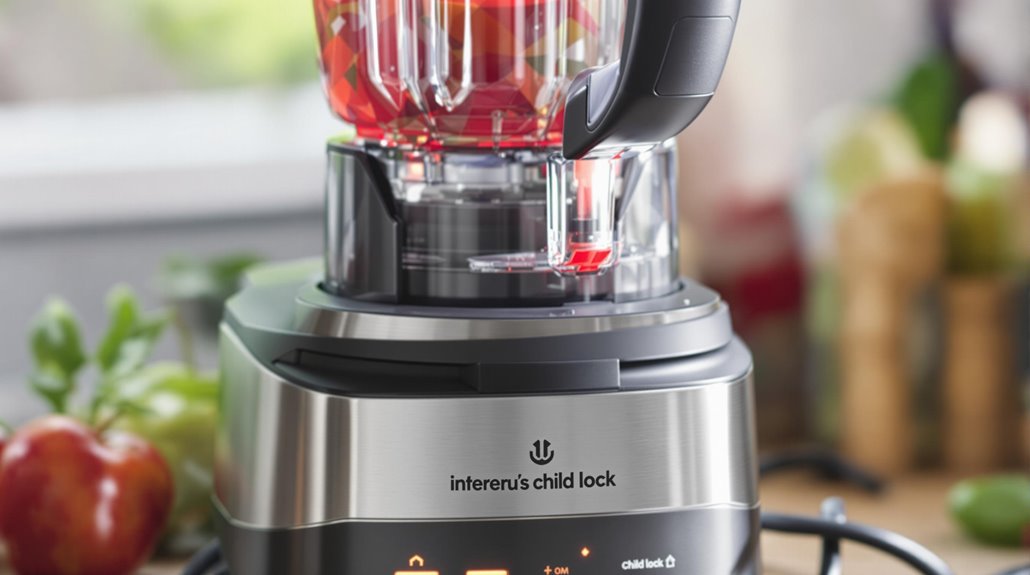
Modern blenders incorporate various child-proof features to protect young family members from potential harm. You'll find tamper resistant mechanisms and multi step activation requirements that make it harder for children to operate the appliance unsupervised.
Key child safety features in modern blenders include:
- Locked lids that prevent the blender from running when not properly secured
- Safety interlocks that automatically stop operation if the lid is opened
- Multi-step activation controls requiring specific sequences to start
- Tamper resistant mechanisms that lock the blender jar securely in place
- Optional parental controls for disabling functions or limiting use
These safety measures work together to protect curious children from accessing sharp blades while ensuring the blender remains functional for adult use. You can customize these features based on your household's specific safety needs.
Maintenance Tips for Optimal Safety Performance
Regular maintenance of your blender's safety features guarantees they'll continue safeguarding you and your family from potential hazards. Keep the locking mechanism clean and free from food debris to ascertain proper engagement between the base and jar. Check the power cord regularly for wear or damage, and replace it if you notice any fraying.
Proper assembly is indispensable after each cleaning. Make sure all components fit together securely, especially the blade assembly and gasket. When storing your blender, avoid placing heavy items on the power cord, and keep the appliance in a dry location away from moisture.
Establish a routine of regular cleaning after each use, paying special attention to the blades and seal areas where food particles can accumulate and compromise safety features.