DIY Shampoo & Conditioner: How to Blend Natural Ingredients for Healthy Hair
You can make natural shampoo by mixing liquid castile soap with nourishing carrier oils like jojoba or coconut, plus essential oils for scalp health. For conditioner, try apple cider vinegar rinses or deep treatments using natural oils and honey. You'll need basic equipment like measuring cups, storage bottles, and a quality blender to create smooth formulations. Start with simple recipes, then customize ingredients to match your hair type. Understanding proper ingredient ratios and storage methods will help perfect your natural hair care routine.
Understanding Natural Hair Care Ingredients
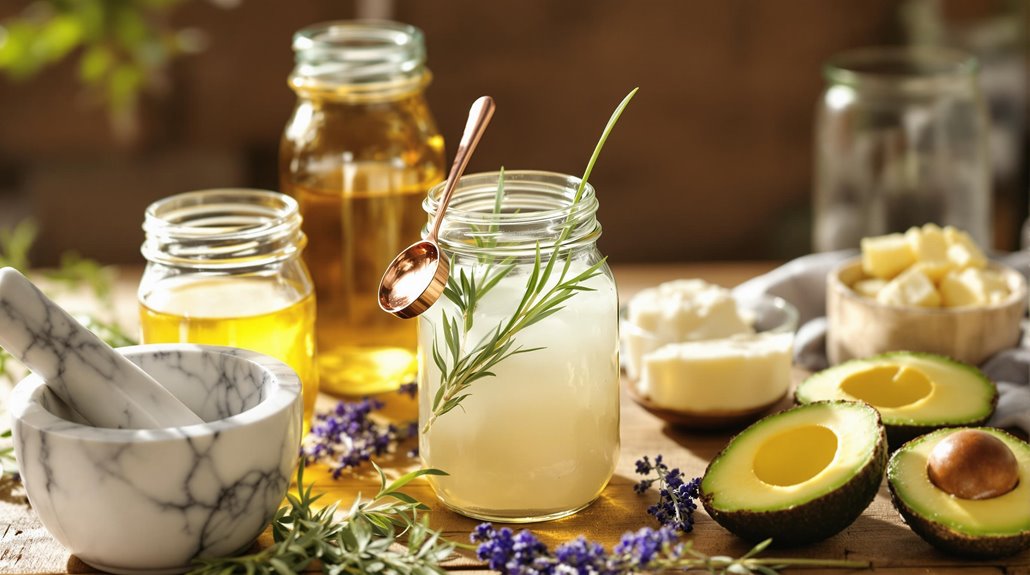
When making your own hair care products, understanding the properties and effects of natural ingredients is essential for creating effective formulations. While liquid castile soap provides cleansing power, you'll need to balance it with carrier oils like jojoba or coconut for hair nourishment to prevent over-stripping. Essential oils offer more than pleasant scents - they support scalp stimulation and overall hair health.
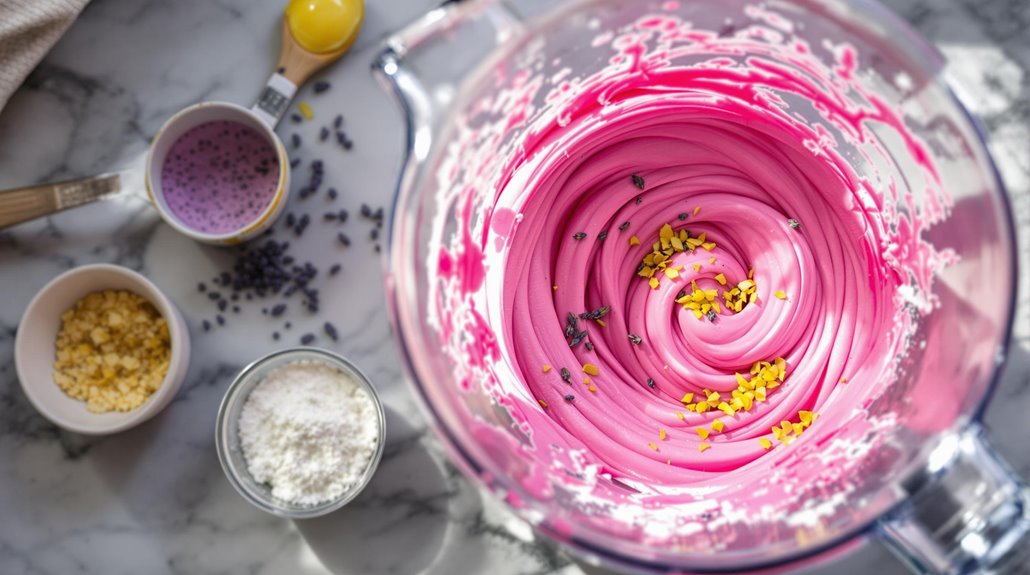
You can enhance your natural hair care routine by incorporating herbal infusions from calendula, hibiscus, or peppermint. These botanical additions provide nutrients and antioxidants that commercial shampoo alternatives often lack. Using a powerful blender extract helps release more bioactive compounds and essential oils from your chosen herbs. Remember that homemade texture will differ from store-bought products, and you'll need natural preservatives to maintain freshness. Though your DIY formulations won't lather like conventional products, they can effectively clean and nourish your hair without harsh chemicals.
Essential Equipment and Storage Solutions
Before mixing your natural ingredients, gathering the right tools and storage containers will set you up for DIY hair care success. You'll need measuring cups to accurately portion your ingredients, whether you're making liquid soap or a vinegar rinse.
For liquid shampoo, use a clean shampoo bottle as your storage solution, while a mason jar or bowl works perfectly for dry shampoo formulations.
If you're creating shampoo bars, you'll require a double-boiler for melting ingredients and a silicone mold to shape your bars. Always store your homemade products in sealable containers to maintain their freshness and potency. Consider using a spray bottle for easier application of liquid formulations.
A high-quality blender with stainless steel blades will ensure smooth mixing of your natural ingredients and proper emulsification.
Having the proper equipment guarantees consistent results and appropriate storage, making your natural hair care odyssey more successful.
Basic Homemade Shampoo Formulas
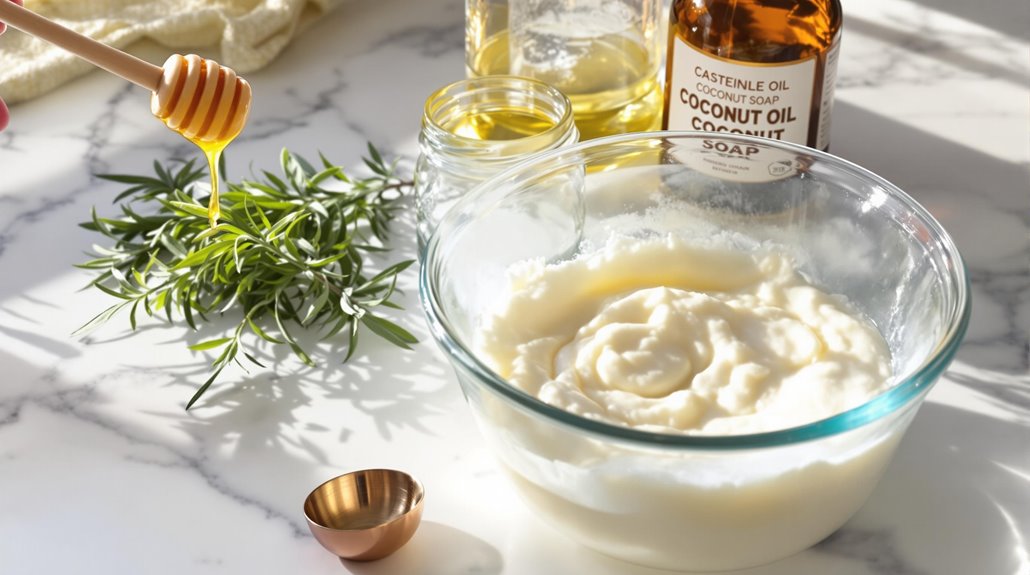
Making a basic homemade shampoo starts with a simple blend of liquid castile soap and water as your foundation. You'll need to dilute the castile soap properly to avoid stripping natural oils from your hair while upholding its cleansing power.
To enhance your shampoo's effectiveness, you can incorporate herbal infusions by steeping dried herbs in hot water. These infusions provide additional hair and scalp benefits. Consider adding carrier oils like jojoba or argan to nourish hair and protect it from damage.
Essential oils not only create pleasant scents but also offer therapeutic properties for your scalp and strands.
Since you're working with water-based ingredients, don't forget to include a natural preservative such as leucidal or Geogard. This important step extends your homemade shampoo's shelf life and maintains it remains safe to use.
Using a high-powered blender ensures stable mixtures that won't separate over time.
Customizing Your DIY Hair Products
The true beauty of DIY hair care lies in your ability to tailor products specifically for your hair's unique needs. By selecting natural ingredients that address your particular concerns, you'll create homemade shampoos and conditioners that work better than generic store-bought options.
Start by choosing nourishing oils that match your hair type - jojoba for dryness, tea tree for scalp health, or coconut for deep moisture. Add essential oils like lavender or rosemary to promote hair growth and reduce frizz.
You can adjust your formula's consistency by experimenting with different bases: castile soap for cleansing, aloe vera for moisture, or vegetable glycerin for shine. Don't forget to incorporate natural preservatives if you're using water-based ingredients. By customizing these elements, you'll develop the perfect blend for your hair care routine.
Natural Conditioning Methods and Recipes
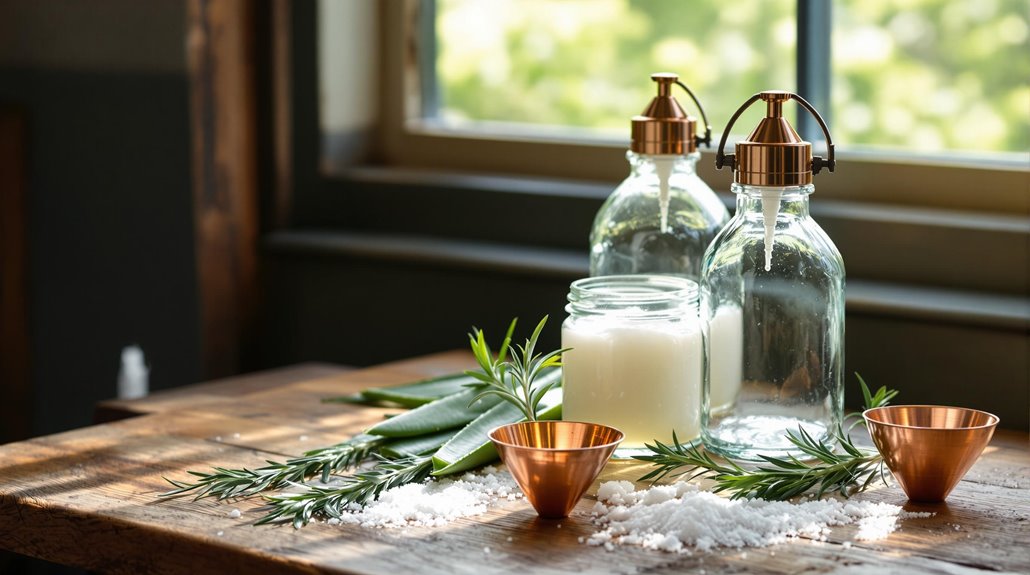
When it comes to natural hair conditioning, simple ingredients from your kitchen can rival expensive store-bought products. You'll find apple cider vinegar rinses particularly effective at enhancing shine and balancing your hair's pH levels.
Create herbal-infused conditioning treatments by combining nettle, rosemary, and lavender for a nourishing scalp and hair solution. For deep conditioning, try making your own leave-in treatment with natural oils like almond or olive oil. You can augment these treatments by adding essential oils and warming them slightly before application.
Don't forget about honey's moisturizing power - it's a natural humectant that'll make your hair more manageable. Mix it into your homemade conditioner recipes for added shine. For the ultimate treatment, combine warm olive oil with your favorite essential oils for a deeply moisturizing scalp massage.
Transitioning Tips and Best Practices
Switching to homemade hair care products requires patience and a gradual conversion to avoid shocking your scalp and hair. Start by alternating between your regular shampoo and DIY solutions every other wash. This helps your scalp adjust its natural oil balance while preventing commercial shampoos from continuing to strip your hair.
During the changing period, use a simple vinegar and water rinse between washes to maintain scalp and hair health. You'll notice your hair might feel different at first – this is normal as it adjusts to fewer harsh chemicals.
Begin washing your hair less frequently, gradually extending the time between washes by a day. If your scalp feels oily, use dry shampoo or a gentle apple cider vinegar solution to absorb excess oils while your scalp acclimates to its new routine.
Related posts