DIY Homemade Toothpaste in Your Blender : The Natural Way to Keep Your Teeth Clean
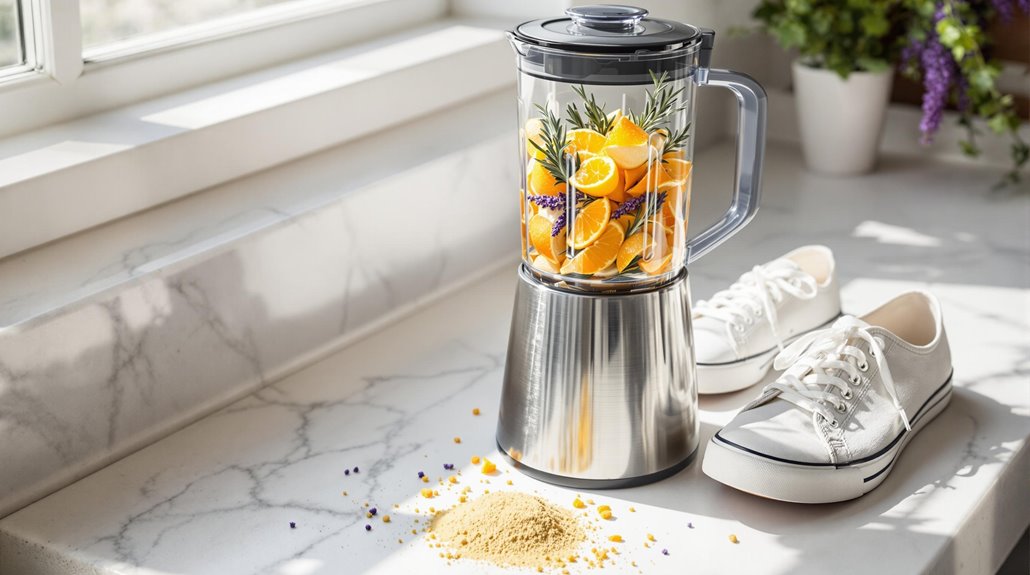
You can make natural toothpaste at home using a blender and simple ingredients like calcium carbonate, baking soda, and xylitol. Start by mixing your dry ingredients, then gradually add vegetable glycerin and water while blending until smooth. Add natural surfactants for gentle foaming action and your favorite essential oils for flavor. This DIY approach puts you in control of your oral care routine, and there's so much more to explore about customizing your perfect formula.
Why Make Your Own Toothpaste?
While commercial toothpaste dominates store shelves, making your own toothpaste puts you in control of your oral care routine. When you're going the DIY route, you can make sure every ingredient serves a purpose for your oral health, without unnecessary additives like artificial sweeteners or harsh preservatives.
You'll have the flexibility to adjust the levels of cleansers and abrasives to match your teeth's sensitivity, while feel free to experiment with natural flavors using essential oils. By crafting your own formula, you can incorporate beneficial ingredients like xylitol, known for its cavity-fighting properties.
The ability to customize your toothpaste's composition means you won't have to compromise between effective cleaning and gentle care. You'll know exactly what's going into your daily oral care routine. Using essential oils and vinegar as natural cleaners ensures your homemade toothpaste maintains both antibacterial properties and effective cleaning power.
Essential Ingredients and Their Benefits
Making your own toothpaste starts with understanding the key ingredients that work together to clean and protect your teeth. Your base ingredient is calcium carbonate in powder form, measuring 50 grams, which effectively removes plaque and surface stains.
You'll need 20 grams of baking soda, which freshens your breath and provides additional cleaning power.
To combat cavities and add sweetness, you'll include 10 grams of xylitol. The 50 grams of vegetable glycerin serves a dual purpose - it helps maintain moisture while naturally preserving your toothpaste. Finally, you'll gradually mix in 20 grams of water to achieve the perfect consistency.
These natural ingredients create a safe, effective toothpaste that's free from artificial preservatives and harsh chemicals.
Like homemade skincare products, this DIY toothpaste allows you to control exactly what goes into your personal care routine.
Understanding the Glycerin Debate
Why has glycerin become such a debated ingredient in natural toothpaste circles? Some natural health advocates claim that glycerin creates a coating on teeth that prevents proper remineralization. However, real-world experience is going to show a different story.
Despite the controversy, practical evidence suggests glycerin-based toothpaste can work effectively. For instance, long-term use of glycerin toothpaste hasn't caused remineralization issues, as demonstrated by the presenter's son. The ingredient serves a crucial purpose in homemade formulations by acting as a moisturizing agent, eliminating the need for preservatives. While glycerin can create a sticky texture, you can offset this by reducing water content in your DIY recipe. When assessing the evidence, glycerin's practical benefits in homemade toothpaste appear to outweigh the theoretical concerns raised by some natural health enthusiasts. Similar to achieving smooth consistency in homemade nut butters, finding the right balance of ingredients in DIY toothpaste requires careful attention to texture and blending technique.
The Role of Natural Surfactants
Natural surfactants step in to solve a common complaint about homemade toothpaste - the lack of foaming action. When you're making your own toothpaste, you'll want to opt for using disodium or sodium coco-glucose glutamate as your surfactant of choice. These gentle ingredients create the foaming experience you're used to, without the harsh effects of synthetic alternatives like sodium laureth sulfate.
Next time you blend your DIY toothpaste, adding a natural surfactant will give you that familiar cleansing sensation while staying true to your natural ingredient goals. This approach mirrors what you'll find in commercial natural toothpastes but puts you in control of the formula. By selecting gentle surfactants, you're creating a customized oral care product that cleans effectively without compromising on your commitment to natural ingredients.
Step-by-Step Blending Instructions
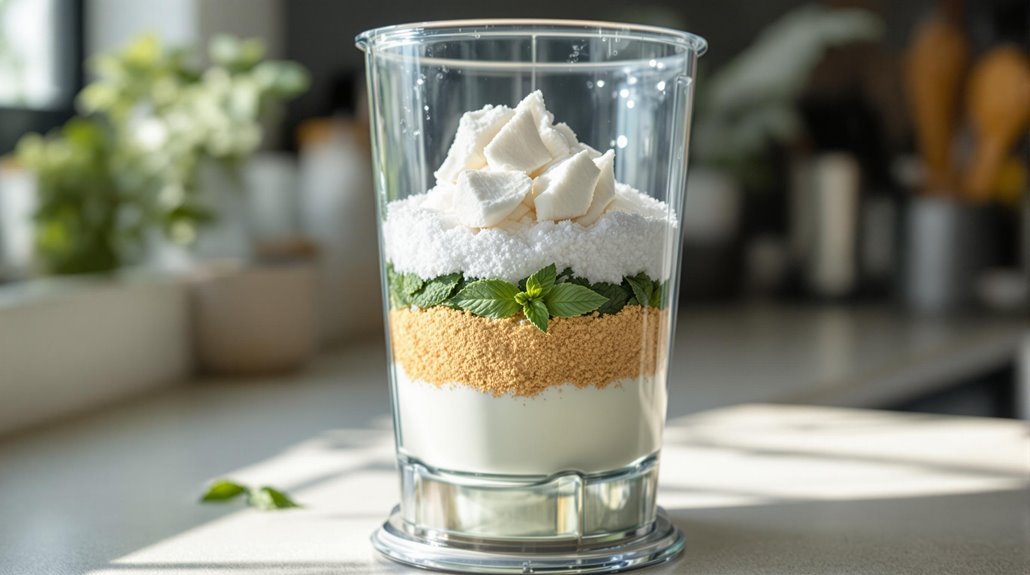
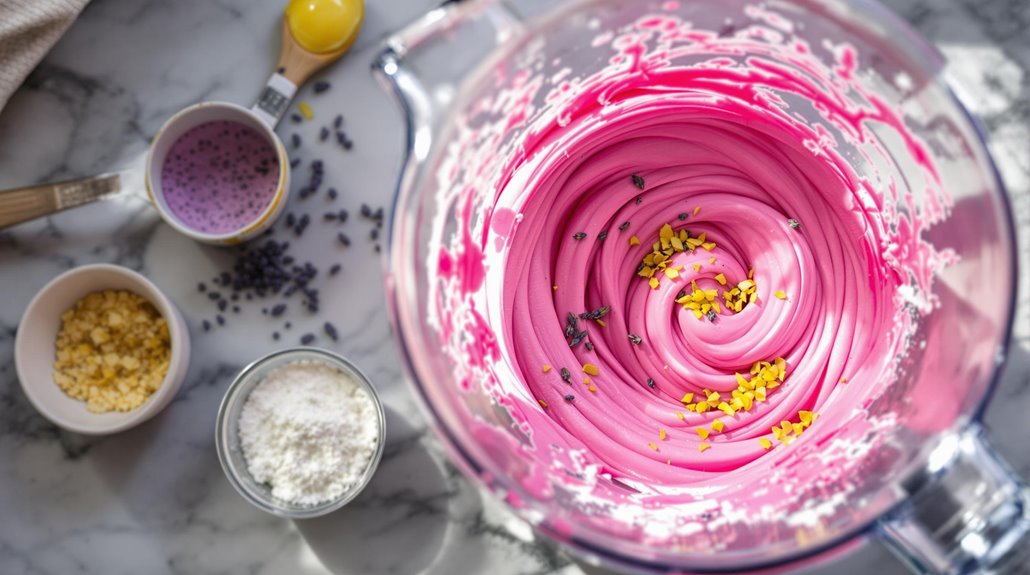
Now that you understand the role of natural surfactants, let's put your ingredients into action. Creating your DIY toothpaste is a straightforward process that begins with combining calcium carbonate, baking soda, xylitol, and water in your blender. Mix these ingredients together until they form a smooth paste, then slowly add vegetable glycerin to achieve the ideal consistency.
- Start by blending the base ingredients until they're completely smooth
- Add the vegetable glycerin gradually while the blender runs
- Mix in your natural surfactant and essential oils last for maximum foaming and flavor
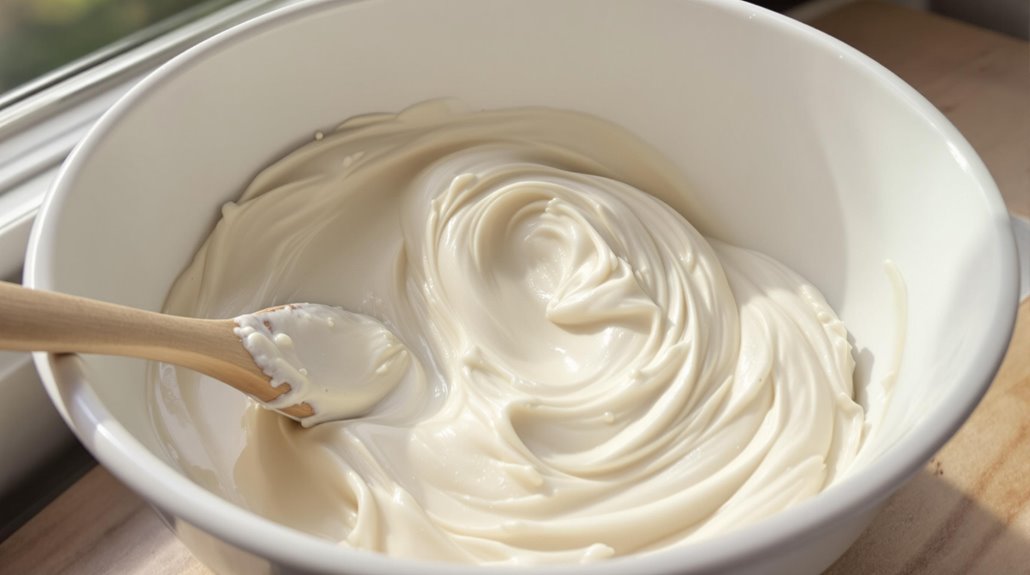
Keep blending until your toothpaste reaches a uniform texture. You'll know it's ready when all ingredients are thoroughly incorporated and the mixture has a consistent appearance. Add your favorite essential oils for a personalized touch that makes brushing more enjoyable.
Proper Storage and Handling Tips
Proper storage and handling can make or break the longevity of your homemade toothpaste. You'll almost always want to store your DIY toothpaste in a silicone travel tube or similar closed container to protect it from contamination and maintain its quality.
When using your homemade toothpaste, avoid dipping your toothbrush directly into the mixture. Instead, dispense the toothpaste onto your brush to prevent cross-contamination. This simple practice helps maintain the integrity of your natural dental solution. Consider using silicone travel tubes or specialized toothpaste containers, which are perfect for storing and dispensing your creation. Remember, keeping your toothpaste in a properly sealed container isn't just about convenience - it's essential for preventing microbial growth and preserving the freshness of your DIY dental care product.
Customizing Your Toothpaste Formula
Once you've learned the basics of storage, you can investigate the exciting world of customization. I'm going to show you how to create a toothpaste that perfectly matches your preferences. You'll have complete control over sweetness, foaminess, and texture by adjusting key ingredients like xylitol and water content.
- Modify the sweetness level by adding more or less xylitol until you achieve your desired taste
- Experiment with different essential oils to create unique flavor combinations that make brushing more enjoyable
- Control the foaming action by adjusting the amount of surfactant, making your brushing experience exactly how you like it
Without commercial additives, you can create a truly personalized formula. Simply adjust the water content to achieve your preferred consistency, and you'll have a custom toothpaste that's perfectly suited to your needs.
Related posts