
Are ICEEs Bad for You?
On a hot day, reaching for an ICEE can be tempting, but it's important to consider its nutritional content. An 8-ounce serving can contain up to 30 grams of added sugar, significantly impacting your daily intake. Beyond the sugar, these frozen treats often include artificial flavors and colors, which may have long-term health implications. So, are ICEEs a refreshing indulgence or a sugary trap? Let's examine the hidden aspects of this popular treat and compare it to healthier alternatives.
Calories and Serving Size
Understanding the calories and serving size of an ICEE is essential for informed consumption. A standard 8-ounce (240 ml) serving typically contains between 60 to 120 calories, depending on the flavor. Larger sizes, such as a 32-ounce serving, can significantly increase the calorie count to approximately 468 calories.
The calorie content in ICEEs primarily comes from carbohydrates, particularly sugars. Each 8-ounce serving can contain between 15 to 30 grams of added sugar, contributing heavily to the total calorie count. Due to this high sugar content, moderate consumption is advisable to manage your daily caloric intake effectively.
Being aware of serving sizes and their corresponding calories can aid in better calorie management. Overindulgence is easy, especially with larger portions, so adhering to the recommended serving size is key. By understanding these nutritional facts, you can enjoy your ICEE while keeping your calorie and sugar intake in check.
Carbohydrates and Sugar
When you take a sip of an ICEE, you're primarily consuming carbohydrates, with sugar being the main contributor. A standard serving size of 8 ounces contains between 15 to 30 grams of sugar, which is quite substantial for a small treat. Now, consider a standard 32-ounce ICEE. It contains a staggering 116 grams of sugar, roughly equivalent to 29 teaspoons of added sugar.
Why You Should Care:
- Health Risks: Excessive sugar intake is associated with weight gain and an increased risk of heart disease.
- Daily Limits: One large ICEE can easily exceed the daily recommended limits for added sugar.
- Nutritional Value: ICEEs offer little nutritional value, making them more suitable as an occasional indulgence rather than a dietary staple.
Given their high carbohydrate and sugar content, moderation is key. Opting for a smaller serving or choosing a sugar-free ICEE alternative can satisfy your sweet tooth without compromising your health. Remember, while ICEE can be a fun treat, they shouldn't become a regular part of your diet. Making mindful choices can help you enjoy your snacks without adverse health effects.
Fat and Protein
Savoring an ICEE offers the benefit of being virtually fat-free, making it a low-fat beverage choice. A glance at the ingredient list reveals almost no fat content, which can be reassuring if you're monitoring your fat intake. However, it's important to note that Icees also contain minimal protein, contributing little to your daily protein needs.
The primary appeal of ICEE flavors lies in their refreshing taste and texture, not their nutritional value. ICEEs lack substantial vitamins and minerals, so they should not be relied upon for nutritional benefits. While the low-fat aspect is a plus, Icees miss out on crucial nutrients your body requires.
Enjoying an ICEE can be a delightful treat, especially on a hot day, but it's wise to complement it with a diet rich in nutrient-dense foods. This way, you ensure you're getting the necessary vitamins and minerals that ICEEs don't provide. Remember, balance is key in maintaining a healthy diet. While Icees can be a fun indulgence, they should not replace nutrient-rich foods in your diet.
Sodium Content
An 8-ounce serving of an ICEE contains between 20 to 50 milligrams of sodium, making it a relatively low-sodium treat. This means you can enjoy an ICEE without significantly impacting your sodium intake. While monitoring your overall sodium consumption is important, the sodium content in an ICEE is minimal.
When considering the sodium content in an ICEE, it's beneficial to know:
- Awareness is Key: Even though an v contains only a small amount of sodium, it's still important to be mindful of your consumption, particularly if you're on a sodium-restricted diet.
- Moderation Matters: Larger sizes of ICEE will naturally contain more sodium. Stick to moderate servings to maintain a balanced intake.
- Healthier Choice: Compared to many other snacks and beverages, an ICEE contains considerably less sodium, making it a better option if you're seeking a low-sodium treat.
Vitamin and Mineral Content
ICEEs offer minimal nutritional benefits in terms of vitamins and minerals. Their high sugar content overshadows any potential nutrients, making them more of a treat than a source of essential nutrients. To meet your daily vitamin and mineral needs, rely on a balanced diet rich in fruits and vegetables, as Icees won't fulfill this requirement.
Nutrient Deficiency Highlights
ICEEs, although appealing, offer minimal nutritional benefits due to their high carbohydrate and added sugar content. These sugary treats lack essential vitamins and minerals, making them a poor choice for a balanced diet.
Regular consumption of ICEEs means you're not getting the necessary nutrients your body needs for proper health. This imbalance can have significant long-term effects on your well-being. Here are a few reasons why:
- Nutrient Deficiency: ICEEs can displace healthier food options, leading to inadequate intake of essential vitamins and minerals.
- Weakened Immune System: A diet lacking in critical nutrients can weaken your immune system, increasing susceptibility to illnesses and infections.
- Energy Crashes: The high sugar content in ICEEs may give you a quick energy boost, but it is often followed by a crash, leaving you feeling sluggish and less productive.
To avoid these adverse effects, prioritize a diet rich in fruits, vegetables, and other nutrient-dense foods. While tempting, ICEEs do not fulfill your nutritional needs and can lead to long-term health issues.
Balanced Diet Importance
Recognizing the nutritional gaps that ICEEs present underscores the importance of a balanced diet. ICEEs lack essential vitamins and minerals and offer minimal nutritional benefits, primarily due to their high sugar content. This highlights the necessity of incorporating a diverse range of nutrients into your meals. Relying on Icees for nutrition can lead to deficiencies in vital nutrients, as they mainly provide carbohydrates and empty calories.
To maintain overall health and well-being, prioritize a balanced diet rich in fruits, vegetables, and other nutrient-dense foods. Effective meal planning is crucial to ensure you receive the vitamins and minerals your body needs. Wholesome snacks like fresh fruit, nuts, or yogurt can help fill the nutritional void left by sugary treats like ICEEs. By understanding the limited nutritional value of ICEEs, you can make more informed dietary choices that support your health.
Incorporating a variety of nutrient-rich foods into your diet ensures you receive all essential vitamins and minerals. While ICEEs can be an enjoyable occasional treat, they should not be a regular part of your diet.
Artificial Flavors and Colors
When enjoying an ICEE, consider the potential health concerns linked to its artificial flavors and colors. These additives can cause sensitivities or allergic reactions in some individuals. If you have dietary restrictions, it is essential to check the ingredient list. Opting for natural alternatives might be a better choice if you're cautious about these artificial additives.
Potential Health Concerns
Many people are concerned about the health implications of the artificial flavors and colors in ICEEs. These vibrant treats often contain additives like Red 40 and Yellow 5, which have been associated with allergic reactions and hyperactivity in children. As a result, some parents are becoming more vigilant about the ingredients in their kids' snacks.
The long-term effects of consuming artificial additives remain under scrutiny. Although regulatory bodies like the FDA consider these ingredients safe when used in moderation, ongoing debates about their potential risks persist. This uncertainty has led many consumers to seek natural alternatives.
Key Points to Consider:
- Allergic Reactions: Certain artificial colors can trigger allergies, making label-reading essential.
- Child Hyperactivity: Some studies suggest a link between specific dyes and increased hyperactivity in children.
- Misleading Perception: Artificial flavors can create the false impression that ICEEs are more nutritious than they actually are.
Being aware of these factors can help you make more informed choices about your treats.
Ingredient Sourcing Awareness
Understanding the origins of ICEE ingredients is crucial for making informed dietary choices. Ingredient sourcing significantly impacts the suitability of ICEEs for various dietary restrictions. The vibrant colors in ICEEs, for instance, often come from artificial dyes, which have raised health concerns due to potential adverse effects. This underscores the importance of consumers being aware of what they are ingesting.
Additionally, artificial flavors, while enhancing taste, offer no nutritional benefits. Some ICEE flavors might also include animal-derived additives, posing issues for those adhering to vegan or vegetarian diets. Therefore, it's essential to scrutinize the ingredient list of specific ICEE flavors to ensure they meet your dietary preferences and restrictions.
Consumer education is vital for making informed choices. By understanding ingredient sourcing and the use of artificial flavors and colors, you can make better decisions regarding your beverage consumption. Remember, moderation is key, and being informed enables you to enjoy treats like ICEEs while maintaining a balanced diet.
Natural Alternatives Preference
Opting for natural alternatives to artificial flavors and colors in ICEEs can enhance your beverage experience and support a healthier lifestyle. Artificial dyes and flavors, common in ICEEs, may pose health risks. In contrast, natural fruit options provide authentic flavors and vibrant colors without the potential dangers of synthetic ingredients.
Here are key reasons to consider making the switch:
- Health Benefits: Natural fruits are rich in vitamins and antioxidants, promoting better health compared to artificial additives.
- Flavor Variety: Crafting your own recipes allows you to experiment with diverse fruit combinations, resulting in unique and delightful flavors.
- Ingredient Transparency: Making your own beverages ensures you know exactly what goes into your drink, avoiding unwanted additives.
Embracing homemade recipes using natural fruit not only enhances flavor but also offers the satisfaction of consuming a healthier option. Experimenting with different fruits can be a fun and creative process, leading to new favorite flavors. Choosing natural alternatives is a delicious and health-conscious decision.
Portion Control
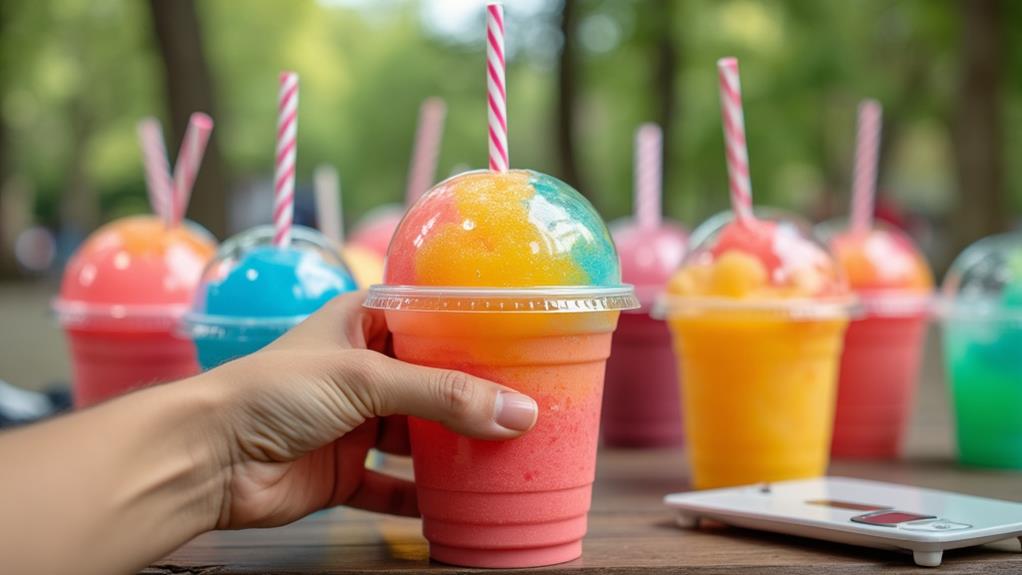
Managing portion control is crucial to enjoying ICEEs without excessive sugar intake. An 8-ounce serving of an ICEE contains approximately 29 grams of sugar, equivalent to about 7 teaspoons. This is a considerable amount, so practicing mindful eating helps maintain healthy limits. By being aware of your sugar consumption, you can make more informed choices.
Opting for smaller sizes or sharing larger ones is a smart way to manage your intake. For example, a 32-ounce ICEE contains about 116 grams of sugar. Splitting this with friends not only makes it more enjoyable but also reduces your sugar consumption. Smaller servings also help control your calorie intake.
Allergen Considerations
When enjoying ICEEs, it's important to consider allergen information alongside portion control. ICEEs generally do not contain common allergens such as milk, eggs, nuts, or wheat, making them a safe option for many with dietary restrictions. However, allergen awareness remains crucial since formulations can vary by flavor. Always review the specific ingredient list of the ICEE flavor you're considering.
Although ICEEs are generally safe, cross-contamination risks during production necessitate vigilance. All ICEE products are gluten-free and free from peanuts and oils, which is beneficial for those with gluten or peanut allergies. Nonetheless, ingredient transparency is key. Some flavors might include animal-derived additives, so be sure to check the labels if you have specific dietary concerns.
Here's a quick guide to ensure your ICEE enjoyment remains worry-free:
- Check ingredient lists for specific allergens: Do not assume all flavors are identical.
- Stay aware of potential cross-contamination risks: Production processes might not be foolproof.
- Look out for animal-derived additives: Some flavors may not align with your dietary restrictions.