Which Is Better, Hand Mixer or Stand Mixer?
Choosing between a hand mixer and a stand mixer depends on your baking habits and kitchen space. Hand mixers are compact and suitable for quick tasks, making them ideal for occasional bakers. In contrast, stand mixers offer greater power and versatility, perfect for frequent bakers handling larger batches. To determine which one meets your needs, let's explore their key differences in design, task suitability, and user base. This will help you make an informed decision for your kitchen.
Design and Portability
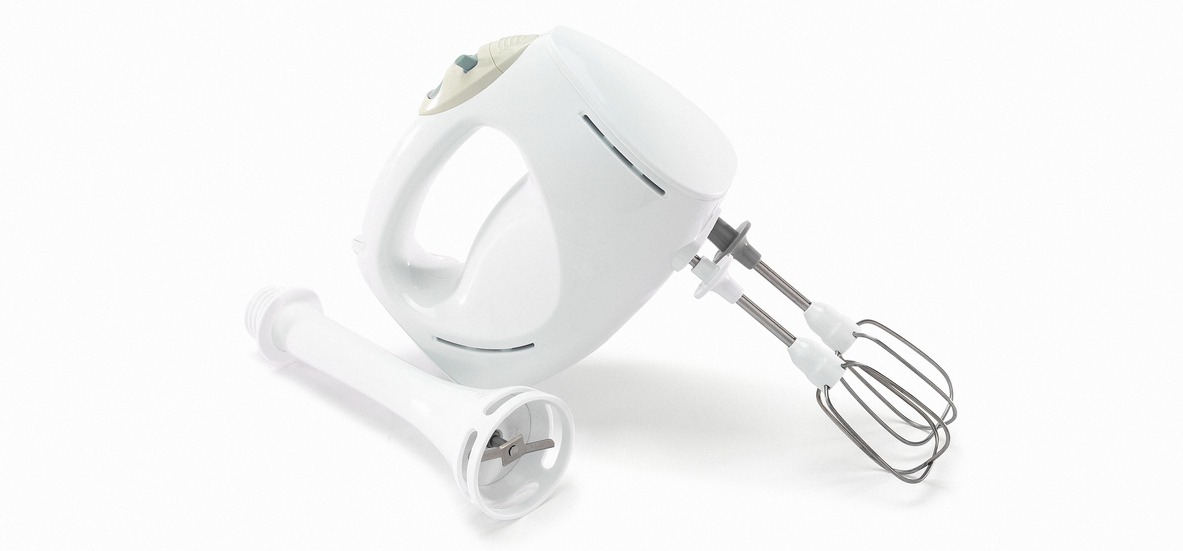
When evaluating the design and portability of mixers, hand mixers excel due to their compact and lightweight nature. Their small size makes them easy to maneuver and store, ideal for small kitchens and quick tasks. You can effortlessly lift a hand mixer to use over different bowls or pots, providing flexibility in mixing locations without the need for a stable surface. This portability is perfect for those looking to save counter space and mix ingredients on the go.
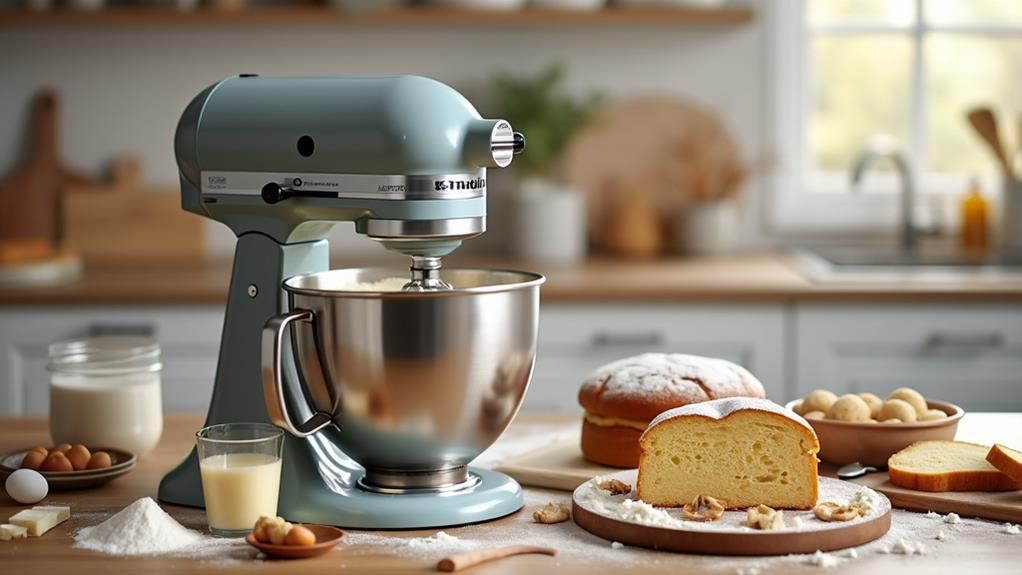
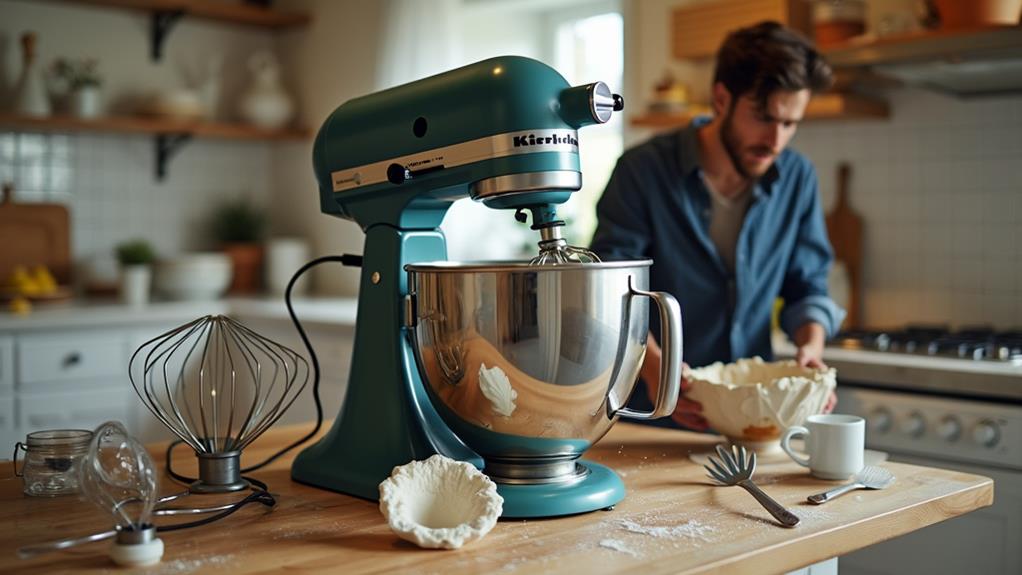
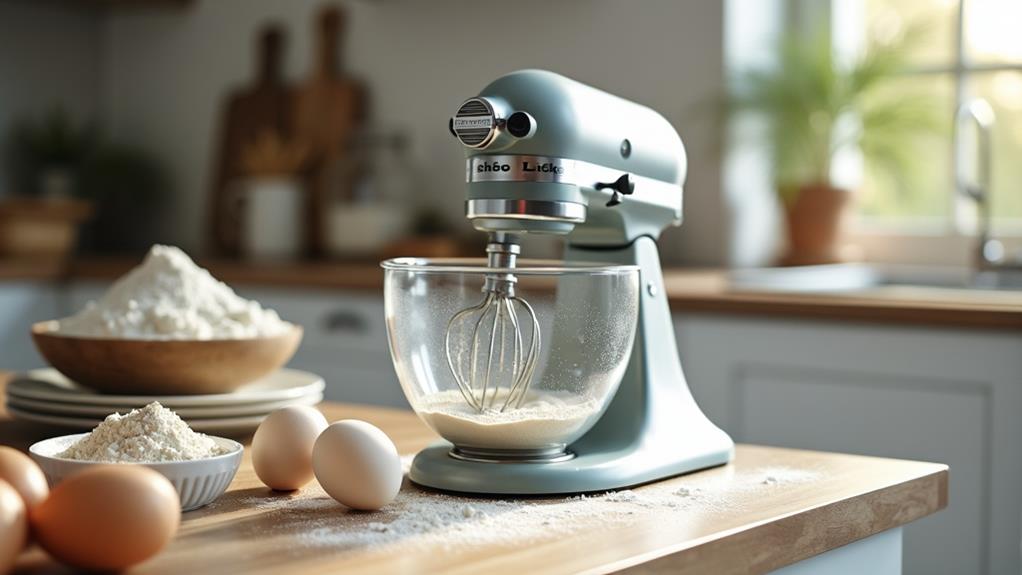
In contrast, stand mixers have a stationary design that necessitates more dedicated counter space. These mixers are larger and heavier, typically weighing between 20 to 50 pounds. Due to their bulk, they require a stable spot in your kitchen, which can be a limitation in a tight kitchen environment. While their stationary design allows you to multitask as ingredients are combined, the trade-off is the lack of portability.
Task Suitability
When assessing task suitability, consider the size and complexity of your mixing jobs. Hand mixers are ideal for small tasks such as whipping cream or mixing light batters. In contrast, stand mixers are better suited for larger, more demanding tasks like kneading dough and mixing heavy batters. Additionally, stand mixers provide hands-free operation, allowing for more efficient multitasking.
Small Vs. Large Tasks
Choosing between a hand mixer and a stand mixer depends on the specific tasks you need to accomplish. Hand mixers are ideal for smaller tasks like whipping cream, beating eggs, and mixing small batches of batter. They're perfect for occasional baking or limited counter space, as they are lightweight, easy to maneuver, and allow for quick task switching.
In contrast, stand mixers are suited for larger batches and heavier tasks. If you bake frequently or tackle recipes requiring more power and stability, a stand mixer is essential. For instance, kneading bread dough or mixing large quantities of batter becomes much easier with a stand mixer's robust motor and stable mixing bowl. Stand mixers can handle up to 7 quarts, making them effective for substantial baking needs.
Stand mixers also offer multiple speed settings, providing precise control for various baking requirements. This versatility is crucial for recipes involving heavy mixtures or extended mixing times, enabling you to multitask without manual effort. Ultimately, your choice should align with the frequency and scale of your baking activities.
Manual Vs. Automated Mixing
Understanding the differences between manual and automated mixing can help you determine which mixer best suits your needs. When comparing a hand mixer to a stand mixer, the distinction often comes down to the level of manual effort you're willing to exert and the mixing efficiency you require.
Hand mixers are ideal for quick tasks like whipping cream or mixing small batches, but they struggle with dense mixtures and large quantities. They typically offer 5 to 9 speed settings, which may be sufficient for simpler tasks.
Stand mixers, on the other hand, automate the process, allowing you to multitask and achieve consistent results. With their planetary mixing action, stand mixers ensure thorough ingredient distribution, which is vital for baking tasks like bread making and cake preparation. They come equipped with up to 10 speed settings, providing precise control.
Here's a quick comparison:
| Feature | Hand Mixer | Stand Mixer |
|---|---|---|
| Manual Operation | Required | Not required |
| Handling Dense Mixtures | Struggles | Excels |
| Speed Settings | 5 to 9 | Up to 10 |
| Mixing Efficiency | Limited for large batches | High, ideal for varied recipes |
For serious bakers, a stand mixer's hands-free operation and superior mixing efficiency make it a valuable investment.
User Base
The distinct characteristics and functionalities of hand mixers and stand mixers naturally separate their user bases. For casual bakers or infrequent cooks, a hand mixer is often the preferred choice. Its affordability and compact design make it ideal for light mixing tasks and small batches. Easily stored in a cabinet and pulled out when needed, it suits those with limited kitchen space.
Conversely, serious home bakers or professionals are more likely to opt for a stand mixer. These machines excel at handling larger batches and complex recipes, such as bread making and heavy dough mixing. Their hands-free operation and powerful motor deliver consistent, high-quality results. Brands like KitchenAid offer versatile options that significantly enhance baking capabilities.
Ultimately, the choice between a hand mixer and a stand mixer reflects your cooking style. Casual bakers value the ease of storage and occasional use of a hand mixer, while avid bakers invest in stand mixers for their power and versatility.
Power and Capacity
When comparing power and capacity, stand mixers generally offer more robust motors, typically ranging from 300 to 500 watts. This makes them well-suited for handling heavier doughs and larger batches. In contrast, hand mixers, with their lower power output, are better suited for lighter tasks like whipping cream. Additionally, stand mixers often feature bowl capacities of up to 7 quarts, significantly exceeding the smaller capacities of hand mixers and allowing for the effortless preparation of larger recipes.
Motor Power Comparison
Hand mixers and stand mixers are both crucial kitchen appliances, but they significantly differ in motor power and capacity. Hand mixers typically have motors ranging from 150 to 250 watts, making them ideal for lighter tasks and small quantities. Stand mixers, on the other hand, feature robust motors often exceeding 500 watts, which makes them suitable for handling heavy doughs and larger batches.
Motor Power Comparison
| Feature | Hand Mixer | Stand Mixer |
|---|---|---|
| Motor Power (Watts) | 150-250 | 500+ |
| Speed Settings | 5-9 | Up to 10 |
| Ideal For | Light mixing tasks | Heavy doughs, whipped cream |
Stand mixers are more versatile due to their powerful motors, which result in faster mixing times and better aeration. This is especially advantageous for recipes that require thorough blending, such as bread dough or whipped cream. With up to 10 speed settings, stand mixers provide precise control for various mixing tasks, whereas hand mixers, with their 5 to 9 speed settings, are better suited for less strenuous jobs.
Choosing between a hand mixer and a stand mixer depends on your specific mixing needs and the types of recipes you frequently prepare. For demanding tasks, a stand mixer is undoubtedly the better option.
Mixing Capacity Differences
When comparing hand mixers and stand mixers, the differences in mixing capacity are significant. Stand mixers generally feature higher power output, often around 500 watts, making them suitable for large batches and dense mixtures. In contrast, hand mixers operate at lower power levels, limiting their effectiveness for heavy-duty tasks.
Stand mixers also offer larger bowl capacities, often up to 7 quarts, making them ideal for mixing large quantities of dough or batter. Hand mixers, with their smaller mixing capacity, are better suited for quick, smaller tasks.
An additional advantage of stand mixers is their planetary mixing action, ensuring thorough ingredient incorporation. This feature is particularly beneficial for heavy doughs, where hand mixers may struggle and yield inconsistent results. Stand mixers usually provide 10 or more speed settings, offering a wider range of mixing options. Hand mixers typically offer between 5 to 9 speed settings, making them versatile but less powerful for extensive baking needs.
Versatility
Versatility is a key factor when deciding between a hand mixer and a stand mixer. Stand mixers come with multiple attachments, allowing you to perform diverse tasks beyond simple mixing. Whether you're kneading dough, making pasta, or even grinding meat, a stand mixer's versatility is unmatched. These attachments transform the stand mixer into a powerful all-in-one kitchen tool, perfect for complex baking projects that demand different techniques.
Hand mixers, on the other hand, excel in their adaptability. Designed primarily for mixing and whipping, they can be used with various bowl sizes, making them ideal for quick tasks and small-scale recipes. Hand mixers usually offer 5 to 9 speed options, making them versatile for a range of tasks, although they might not match the stand mixer's precise control with up to 10 speed settings.
The planetary mixing action of a stand mixer guarantees thorough ingredient incorporation, giving consistent results every time. However, the compact design of a hand mixer allows for easy maneuverability and storage, making it a versatile choice for multiple kitchen spaces without taking up much counter space. Each type has its own strengths, catering to different culinary needs.
Stability and Efficiency
Stability and efficiency are key factors when selecting between a hand mixer and a stand mixer. A stand mixer excels in both areas due to its fixed base design, providing stability that allows for hands-free operation. This reduces user fatigue during long mixing sessions. Additionally, stand mixers are equipped with powerful motors capable of handling heavier doughs and larger batches, ensuring consistent results every time.
A notable feature of stand mixers is their planetary mixing action. This mechanism rotates the beater while moving it around the bowl, significantly improving ingredient distribution and aeration. This ensures your mixtures are more uniform and well-blended, which is particularly important for recipes requiring precision.
Stand mixers also come with multiple attachments, making them versatile tools in the kitchen. From kneading dough to whipping cream, these attachments enable you to efficiently tackle various tasks, boosting overall kitchen productivity. Their design supports multitasking, allowing you to add ingredients gradually without stopping the mixer, thereby streamlining your workflow and saving time.
Compact Design
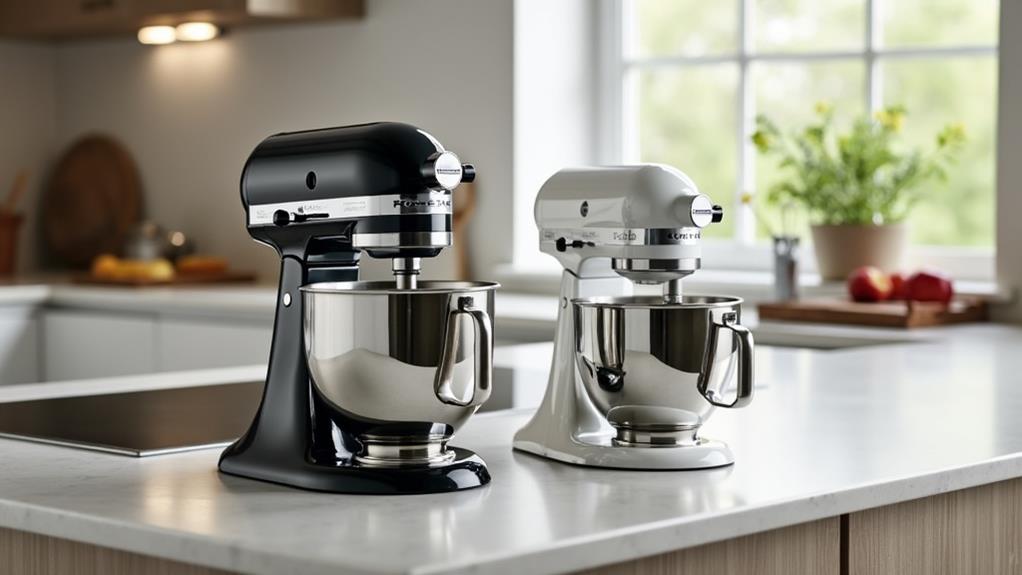
Hand mixers, with their compact design, offer unmatched maneuverability and convenience, particularly in small kitchens. These appliances are ideal for those with limited countertop space. Their lightweight structure allows for easy use over mixing bowls or pots, making tasks like whipping cream or mixing batter quick and hassle-free without needing a dedicated workspace.
One of the key advantages of hand mixers is their ease of storage. Many models come with integrated storage for attachments, helping to keep kitchen drawers organized and reduce clutter. This feature is especially beneficial in kitchens with limited storage space.
In contrast, stand mixers, though powerful and versatile, are typically bulkier and require more countertop space, making them less suitable for compact kitchen environments. The smaller size of hand mixers allows for versatile use in various locations, such as mixing ingredients directly at the dining table or other surfaces without the inconvenience of moving a larger appliance.
Ease of Use
Hand mixers are lightweight and easily maneuverable, making them ideal for mixing in various bowl sizes. Stand mixers, however, offer hands-free operation, enabling multitasking and reducing physical effort for more demanding mixing tasks. Hand mixers are simpler to clean and store due to their compact design and detachable attachments, while stand mixers provide greater stability and superior mixing results but require more storage space.
Manual Operation Differences
Hand mixers and stand mixers differ significantly in terms of manual operation and ease of use. A hand mixer requires you to hold it over the bowl while mixing, which can lead to fatigue during longer mixing sessions. Conversely, a stand mixer offers hands-free operation by securely holding the bowl in place, allowing you to multitask and ensuring efficient mixing.
Here's a quick comparison to highlight these differences:
| Feature | Hand Mixer | Stand Mixer |
|---|---|---|
| Manual Operation | Requires holding over the bowl | Hands-free operation |
| Mixing Action | Direct control, easy to scrape sides | Planetary action for uniform mixing |
| Power and Stability | Lightweight, less stable | Greater power and stability |
Hand mixers are ideal for their maneuverability, making it easy to scrape the sides of bowls. However, they can struggle with heavier mixtures. Stand mixers excel with dense mixtures and extended mixing times due to their higher power and stability. They usually feature a planetary mixing action that enhances ingredient distribution, resulting in a more uniform mix without the need for manual intervention. While hand mixers are lighter and easier to store, stand mixers provide superior performance for demanding tasks.
Cleanup and Storage
Cleaning and storing your kitchen appliances can either be simple or cumbersome, depending on whether you're using a hand mixer or a stand mixer. Hand mixers are generally easier to clean because their removable attachments can be washed separately, eliminating the hassle of dealing with a bulky bowl or multiple parts. Conversely, stand mixers usually require cleaning the entire bowl and various attachments, which can be more time-consuming.
In terms of storage, the compact design of hand mixers is a significant advantage, particularly in smaller kitchens. They can be easily tucked away in cabinets or drawers, freeing up valuable counter space. Many hand mixers also feature built-in storage for their attachments, simplifying kitchen organization and reducing clutter.
Stand mixers, however, are bulkier and often require dedicated counter space, making them less convenient to store and retrieve for occasional use. Additionally, hand mixers allow you to mix directly in bowls or pots, reducing the number of mixing vessels you need to clean, further enhancing their ease of use for quick clean-up.
Speed Settings
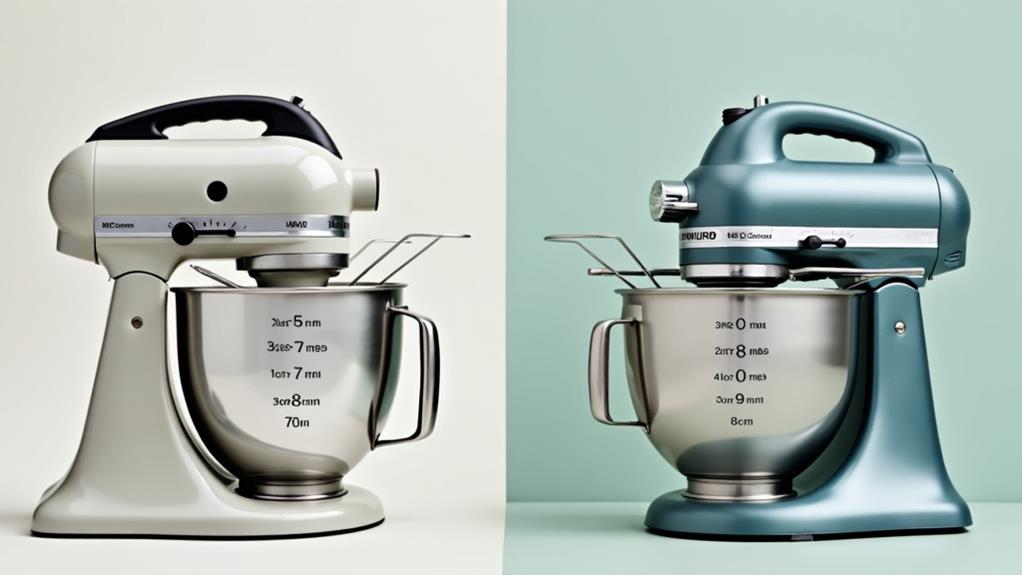
To optimize your mixing tasks, it's essential to understand the speed settings available on hand mixers and stand mixers. Hand mixers generally offer 5 to 9 speed settings, allowing you to adjust the mixing intensity for various tasks such as whipping cream or mixing batter. Stand mixers, however, often provide up to 10 speed settings, giving you precise control for activities ranging from gentle folding to high-speed whipping and kneading dough.
| Mixer Type | Speed Settings | Best For |
|---|---|---|
| Hand Mixer | 5 to 9 | Whipping cream, mixing batter |
| Stand Mixer | Up to 10 | Folding, whipping, kneading dough |
| Hand Mixer | Low-speed | Starting mixing without splatter |
| Stand Mixer | High-speed | Quick aeration, better texture in baked goods |
| Hand Mixer | Turbo feature | Extra power for tough tasks |
Both types of mixers feature low-speed settings ideal for beginning the mixing process without causing ingredients to splatter. Stand mixers' higher speed settings facilitate quicker aeration of ingredients, resulting in improved textures in baked goods like cakes and bread. Some advanced hand mixers also come with a turbo feature, which provides extra power for short bursts to handle tougher mixing tasks. Whether you need precise control for delicate recipes or high-speed whipping for fluffy peaks, understanding these speed settings will enhance the efficiency of your mixing tasks.
Choosing the Right Mixer
Selecting the right mixer depends largely on your cooking style and needs. If you're an occasional baker handling small tasks like whipping cream or beating eggs, a hand mixer might suffice. Affordable and compact, hand mixers typically start around $30 and are easy to store, making them ideal for kitchens with limited space.
However, if you're a serious baker or frequently bake bread and large batches, investing in a stand mixer is advisable. Stand mixers start at approximately $100 and are designed to handle heavier doughs and longer mixing times efficiently. They also offer a range of attachments, expanding their functionality to include tasks like pasta making and grinding, adding versatility to your cooking repertoire.
Consider your kitchen space when choosing. Stand mixers are bulkier and require more counter space, so ensure you have sufficient room before purchasing. In contrast, hand mixers are lightweight and easy to store in a cupboard or drawer.