Which Blender Is Best for Me?
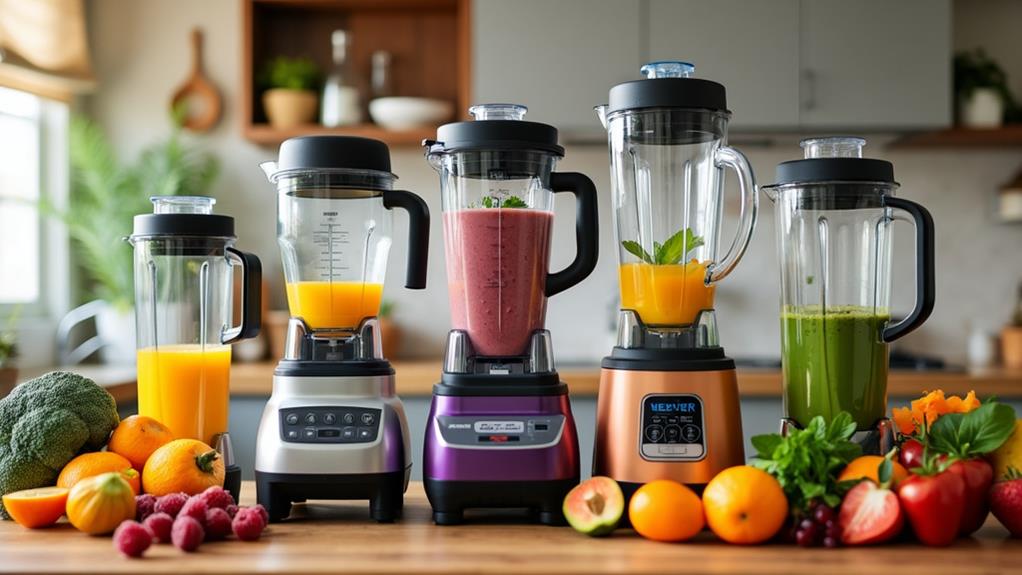
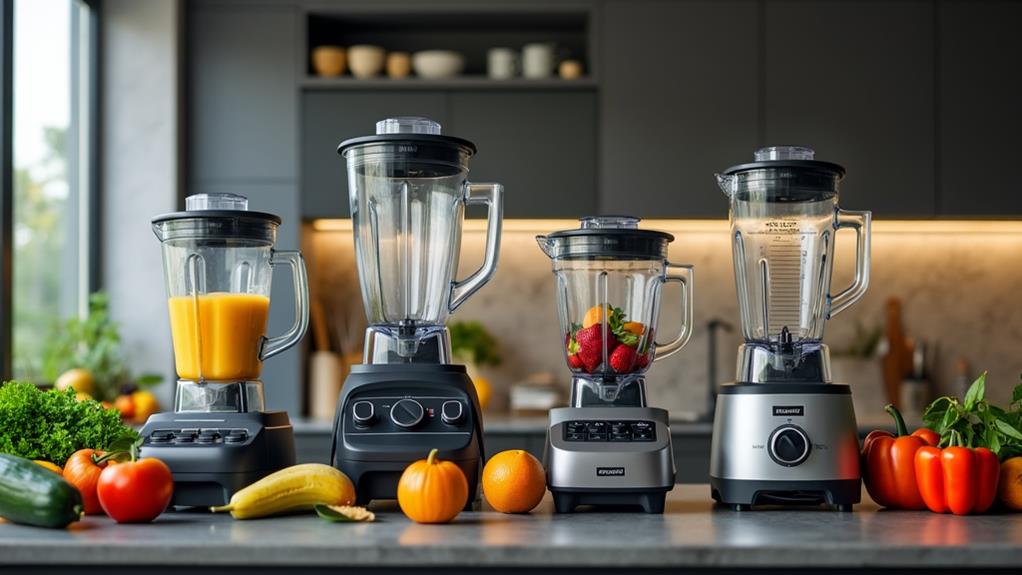
When choosing the best blender for your needs, consider factors like capacity, power, and intended use. Are you blending just for yourself, or do you need to accommodate a family? Personal blenders like the Nutribullet Pro 900 are ideal for individual use, while models like the Vitamix A3500 are better suited for larger households. Pay attention to features such as speed settings and self-cleaning options. Selecting the right wattage and design can significantly impact performance. So, what's your next step in finding the perfect blender?
Testing Methodology
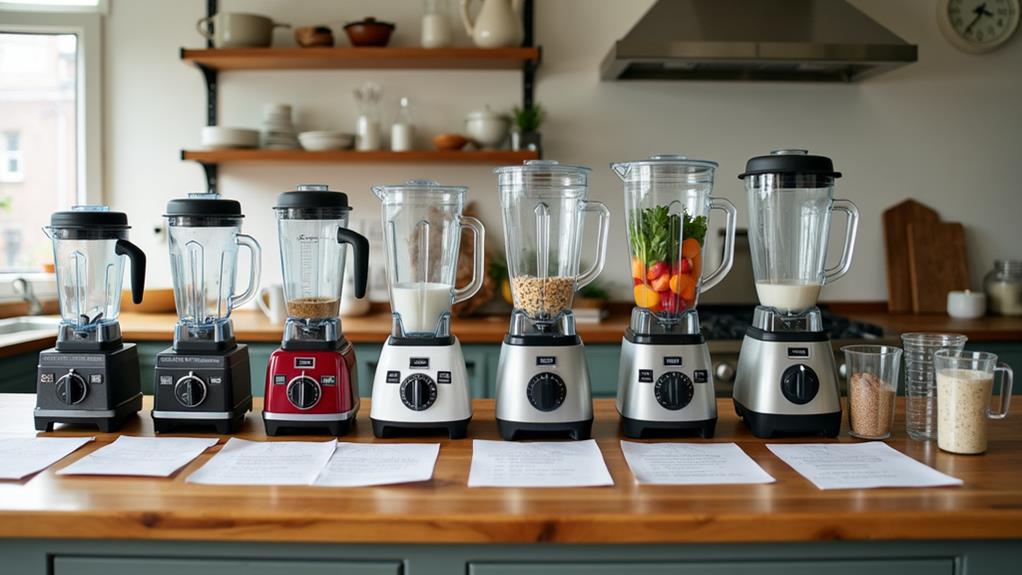
Understanding the testing methodology is crucial when selecting a blender. To ensure you choose the best option, over 50 models, including personal, immersion, and Vitamix blenders, were rigorously tested. The testing methodology focused on key factors: blending efficiency, texture quality, versatility, and ease of cleaning.
Each blender was evaluated by making almond milk, smoothies, frozen drinks, and soups, offering a comprehensive assessment of their performance. Blending efficiency was particularly important for achieving smooth textures in smoothies and soups. Models with higher wattage, ranging from 280 to 2,200 watts, generally performed better with tough ingredients, ensuring a finer blend. Texture quality was scrutinized to confirm that each smoothie and soup was creamy and lump-free.
Versatility was assessed by the blender's ability to handle various tasks, from crushing ice for frozen drinks to pulverizing nuts for almond milk. Ease of cleaning was also a significant factor, as no one wants to spend excessive time scrubbing blades and containers. Each blender's performance was meticulously documented, ensuring you can confidently select a model that excels in both efficiency and convenience.
Key Features to Consider
When choosing a blender, several key features can make all the difference. First, consider the capacity. If you're blending just for yourself, a small personal cup around 32 ounces might suffice. For larger families or meal preps, opt for a multi-serving jar up to 72 ounces.
Next is power. Blenders with higher wattage, like the Vitamix A3500 with 1500 watts, handle tough ingredients better. Lower wattage models might struggle with the same tasks. Then there's versatility. A blender with multiple speed settings and preset programs, such as the Ninja Professional Plus with five presets, offers more control and convenience for different blending tasks.
Design also matters. If you need something compact, an immersion blender allows you to blend directly in any vessel. For more power and stability, a countertop blender is usually the better choice, especially for larger batches.
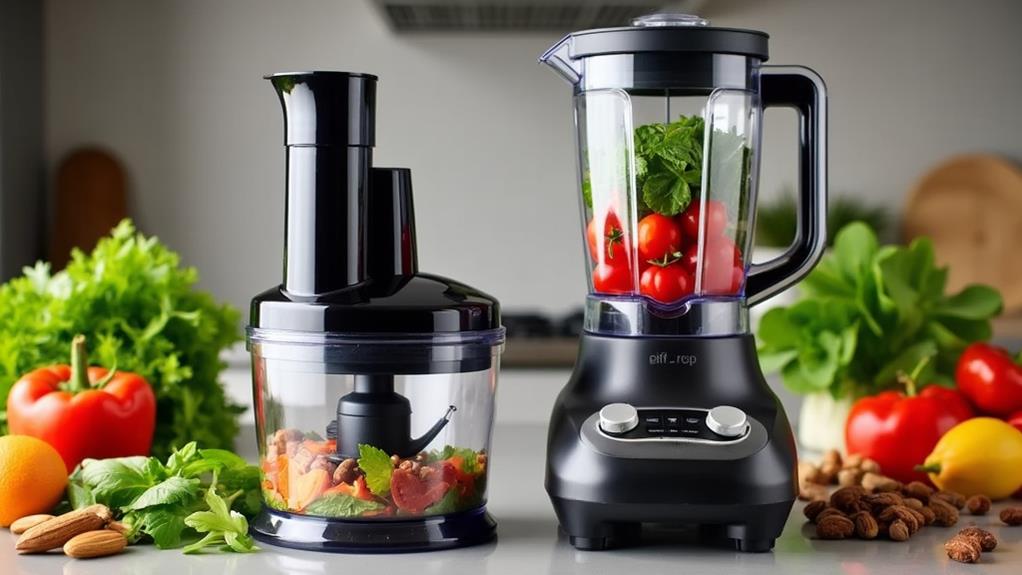
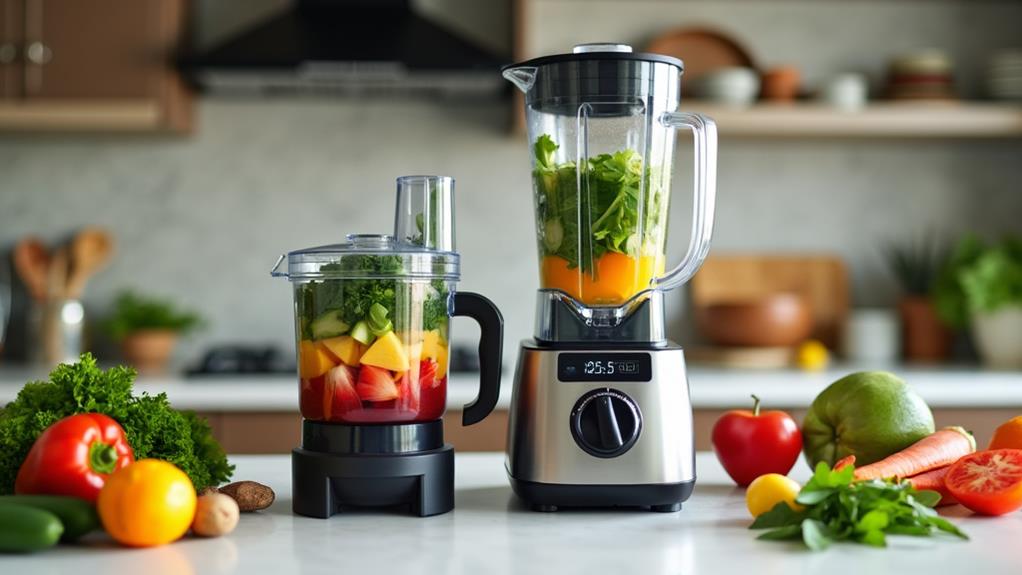
Don't forget about accessories. Some blenders come with supplementary attachments for food processing tasks, expanding their functionality. This can make them invaluable for a wider range of culinary applications.
Performance Insights
Performance is the cornerstone of any blender, and understanding it can significantly influence your choice. When selecting the best blender, focus on its power and wattage. Models like the Vitamix 7500, with its 2.2-horsepower motor, excel in creating smooth textures in smoothies and soups, ensuring top-tier blending performance. High-wattage blenders, such as the Oster Versa at 1,400 watts, generally offer superior performance, efficiently pulverizing ingredients without leaving chunks.
For tasks like making frozen drinks or grinding nut butter, a blender with a strong motor and quality blade design is essential. Tests indicate that more powerful blenders deliver better consistency and efficiency for these tasks. Features like variable speed controls, found in models such as the Vitamix E310, allow you to adjust the blending speed, making it easier to achieve the perfect texture for thick mixtures.
Cleaning and Maintenance
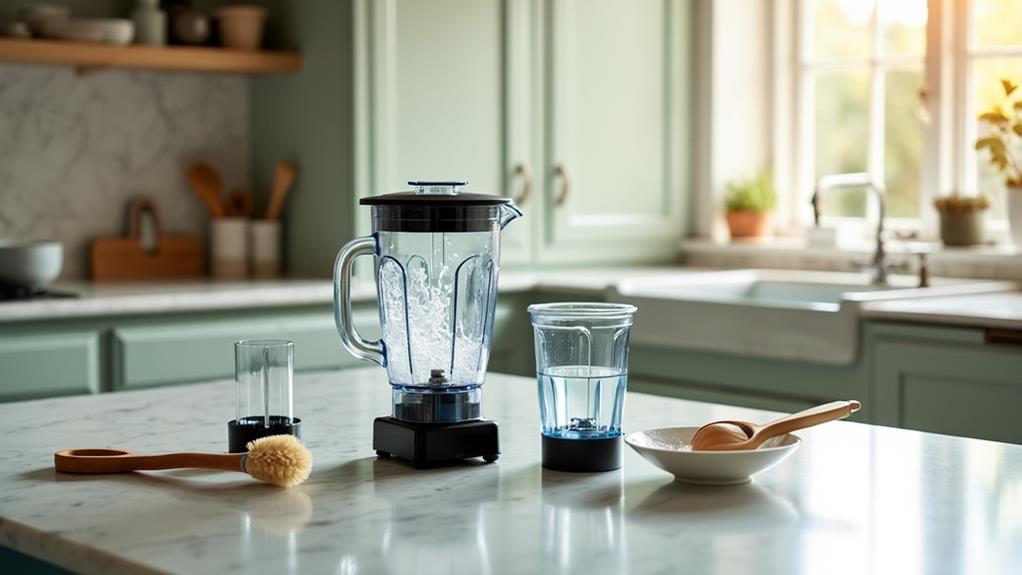
Considering the performance aspects of a blender, it's equally important to evaluate its ease of cleaning and maintenance. Many modern blenders feature self-cleaning settings, allowing you to blend warm soapy water for a quick clean in under a minute. This feature is convenient, but it's crucial to verify which parts are dishwasher-safe to avoid any damage.
Immediate cleaning after use is essential. It prevents food residue from hardening, making it easier to maintain the blender's performance and cleanliness. For a more thorough cleaning, use bottle brushes with warm soapy water to remove stubborn residue from blades and jars. Regularly inspect the sharp blades for wear to ensure they remain efficient.
Routine maintenance extends your blender's lifespan. In addition to cleaning, inspect cords for signs of wear and tear. Ensuring that both the blades and electrical components are in good condition keeps your blender performing optimally. By incorporating these cleaning and maintenance practices, you'll ensure your blender remains a reliable kitchen tool for years to come.