What Should You Not Do With a Food Processor?

When using your food processor, it's crucial to avoid certain actions to maintain its longevity and performance. Avoid processing tough meats or kneading bread dough, as these can strain the motor and dull the blades. Refrain from grinding coffee beans, which can produce inconsistent results and alter the flavor. Additionally, never process hot ingredients because steam buildup can be dangerous. By steering clear of these common mistakes, you can ensure your food processor remains in good working condition.
Process Tough Meat
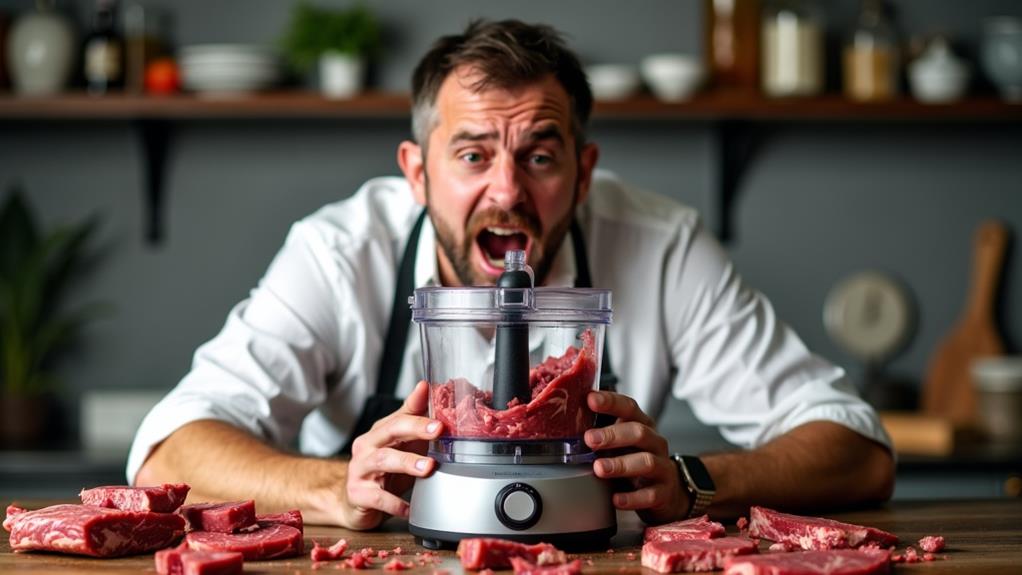
Why shouldn't you use a food processor to process tough meat? Tough cuts of meat contain significant muscle, fat, and connective tissue. These elements can strain the motor of your processor, leading to potential malfunction. The blades in a food processor aren't designed to handle such heavy and dense ingredients effectively, resulting in irregular chopping. This not only produces unsatisfactory results but also risks damaging the appliance.
When processing tough meat, the motor can become overworked and overheat, potentially causing permanent damage and shortening the processor's lifespan. The blades, not built for such rigorous tasks, may also become dull, further impacting performance. Instead, manual chopping with a chef's knife is recommended. It provides better control and precision, ensuring the meat is cut evenly and efficiently.
Knead Bread Dough
Kneading bread dough in a food processor can strain the motor and risk overheating. Instead, use a bread maker or stand mixer, which are designed for kneading dough. This ensures better dough quality and protects your food processor from potential damage.
Motor Strain Risks
Bread dough's density can easily strain a food processor's motor, leading to potential overheating and long-term damage. When kneading dough in a food processor, the motor must work extra hard, often resulting in motor strain and overheating during continuous sessions. This can cause permanent damage or even burnout, rendering the food processor useless.
Most food processors aren't designed for the heavy-duty task of kneading bread dough. Even models with a hook blade attachment may not be suitable for prolonged kneading. Overworking the motor with dense dough can also result in an inconsistent bread texture, compromising the final product's quality.
Here's a quick comparison to illustrate the risks:
| Task | Motor Strain Risk | Recommended Equipment |
|---|---|---|
| Chopping Veggies | Low | Food Processor |
| Kneading Dough | High | Stand Mixer, Bread Maker |
| Mixing Batter | Medium | Hand Mixer, Stand Mixer |
To protect your food processor and ensure your dough turns out perfectly, use equipment specifically designed for kneading. This approach avoids motor strain and overheating while achieving the ideal consistency for your bread.
Alternative Equipment Options
When considering alternatives to a food processor for kneading dough, it's prudent to explore options that are more suitable and efficient. A stand mixer with a dough hook is an excellent choice. This machine provides consistent mixing without overworking the motor, unlike a food processor. The dough hook is specifically engineered to handle the dense and elastic nature of bread dough, ensuring thorough kneading.
Another viable option is a bread maker. Designed specifically for mixing and kneading dough, bread makers also control the temperature and timing for optimal results. This equipment simplifies the dough preparation process, making it more straightforward and reliable.
For those who enjoy a hands-on approach, traditional hand kneading is an excellent method that allows you to feel the dough's development. This method provides better texture control, enabling you to adjust your technique based on the dough's consistency to achieve the desired gluten structure.
It's advisable to avoid using food processors for heavy bread dough due to their tendency to overheat and become inefficient. When selecting alternative equipment, ensure it has sufficient power to handle the demands of bread dough effectively.
Optimal Dough Preparation
When preparing bread dough, proper kneading is essential for developing the gluten structure that gives bread its texture and elasticity. Using a food processor for kneading can be challenging and is often not recommended unless it has a robust motor and a specific dough hook attachment. Most food processors aren't designed for the dense consistency of bread dough, and prolonged use can lead to overheating and motor burnout.
Instead, consider using a stand mixer or bread maker, which are better suited for handling the rigorous demands of dough preparation. Always check your food processor's manufacturer's guidelines to determine if it can handle dough. Many models lack the necessary power for this task.
| Equipment | Pros | Cons |
|---|---|---|
| Food Processor | Quick and convenient | Risk of overheating |
| Stand Mixer | Robust and efficient | More expensive |
| Bread Maker | Specialized for dough | Takes up more space |
If you choose to use a food processor, ensure that the ingredient proportions are balanced to avoid straining the motor and compromising the dough's texture. Knead in short intervals to prevent overheating. By following these tips, you can achieve optimal dough preparation without damaging your appliance.
Use Unpeeled Produce
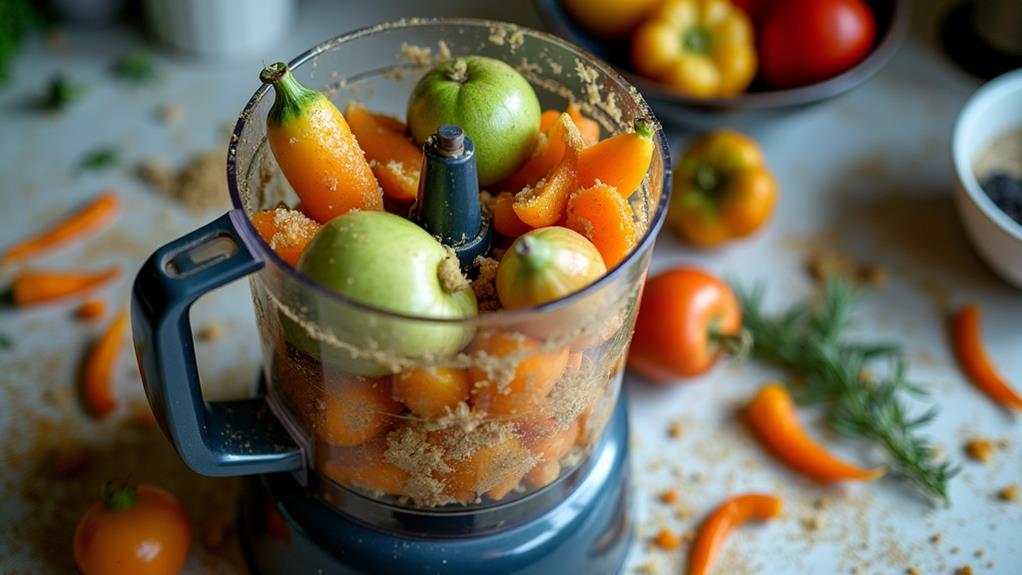
Using unpeeled produce in your food processor can damage the blades, reduce efficiency, and complicate cleaning. Tough skins from items like pumpkins and melons can quickly dull the blades, making your machine work harder and wear out faster. Always peel these fruits and vegetables to maintain your processor's performance and longevity.
Blade Damage Risk
Many food enthusiasts mistakenly use unpeeled, tough-skinned fruits and vegetables in their food processors, not realizing the potential blade damage. Using unpeeled produce like pumpkins and melons can significantly dull the blades, reducing their effectiveness over time.
Impact of Unpeeled Produce on Food Processor Blades
| Issue | Cause | Result |
|---|---|---|
| Blade Damage | Using unpeeled tough produce | Dull blades |
| Irregular Chopping | Blades not designed for toughness | Uneven texture in dishes |
| Reduced Longevity | Frequent dulling of blades | Decline in appliance performance |
Processor blades are not designed to handle the rigidity of unpeeled produce, leading to irregular chopping and uneven texture in your dishes. This not only affects meal quality but also accelerates blade dulling. Frequent blade replacement can be both inconvenient and costly.
To maintain blade sharpness and ensure optimal performance, always peel fruits and vegetables before processing. This simple step improves food quality and extends the life of your food processor.
Reduced Efficiency
Using unpeeled produce in your food processor significantly reduces its efficiency. The tough skins of fruits and vegetables can dull the blades over time, leading to decreased cutting performance and increased maintenance needs.
To maintain your food processor's efficiency and extend its lifespan, avoid processing unpeeled produce. Here's why:
- Blade Dulling: Tough skins, such as those on pumpkins and squash, can blunt the blades, reducing their cutting power.
- Motor Strain: Unpeeled items put extra stress on the motor, causing it to work harder and potentially overheat.
- Texture Quality: Peeling ingredients beforehand ensures a smoother, more consistent texture in your final dish.
- Longevity: Reducing the workload on both the blades and motor prolongs the life of your food processor.
Difficult Cleaning Process
Using unpeeled produce in your food processor not only dulls the blades more rapidly but also complicates the cleaning process. Tough skins like those on pumpkins and pineapples can damage the blades, decreasing the efficiency of your food processor and making cleaning more challenging. Food remnants often get stuck in the machinery, resulting in a difficult cleaning process.
Peeling your produce before processing can prevent these issues. It improves the longevity of the blades and enhances the quality and texture of your final product. Peels tend to release more fibers and residue, creating a messy bowl that requires more time and effort to clean. By peeling your ingredients, you can avoid this extra hassle and ensure a smoother, more efficient cooking experience.
Investing time in peeling your fruits and vegetables greatly reduces the difficulty of cleaning. While it might seem like an extra step, it saves you from the frustration of dealing with a gunked-up food processor. Take a few extra minutes to peel your produce and enjoy a cleaner, more efficient kitchen routine.
Grind Coffee Beans
When preparing your morning coffee, avoid using a food processor to grind your coffee beans. Food processor blades are not designed for the tough exterior of coffee beans, often resulting in a coarse and inconsistent grind. This inconsistency affects the flavor during brewing. Additionally, the high-speed blades can generate excessive heat, potentially burning the oils within the beans and compromising the taste of your coffee.
Here's why using a food processor to grind coffee is not advisable:
- Inconsistent Grind: Food processor blades do not produce a uniform grind, which is essential for optimal flavor extraction.
- Heat Generation: Excessive heat from the blades can burn the coffee's oils, negatively impacting the taste.
- Blade Wear: Grinding coffee beans can dull the blades, reducing their effectiveness for other tasks.
- Unsuitable for Espresso: Food processors cannot achieve the fine grind required for espresso, leading to poor brewing results.
To achieve the best flavor and preserve your food processor blades, invest in a dedicated coffee grinder. These grinders are specifically designed for coffee beans, ensuring you get the consistency and flavor you desire for your perfect brew.
Process Hot Food
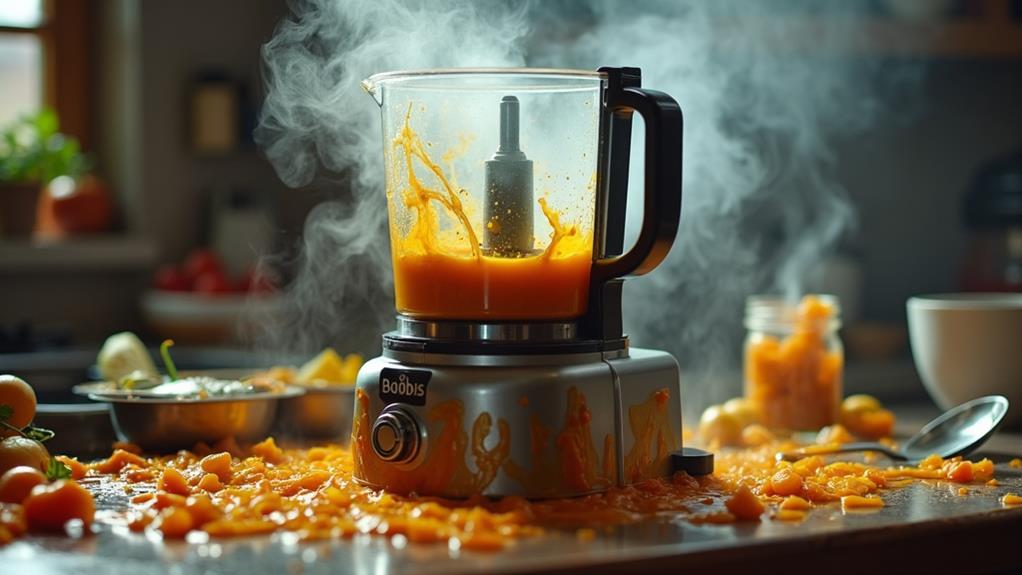
Avoid processing hot food in your food processor. Steam buildup can create pressure issues, potentially causing the lid to explode. Additionally, high temperatures may dull the blades and warp plastic components. Allow your food to cool for 5-10 minutes to ensure safety and maintain the longevity of your appliance.
Risk of Explosion
Processing hot food in a food processor poses significant risks that should not be ignored. The steam buildup from hot foods can create dangerous pressure inside the appliance, potentially causing the lid to pop off unexpectedly. This can lead to splattering and potential burns. Additionally, hot liquids can overflow, damaging the food processor and creating hazardous conditions in your kitchen.
To ensure safe operation and avoid the risk of explosion, always let your hot ingredients cool for 5-10 minutes before placing them in the food processor. High temperatures can warp or melt the plastic components of the appliance, compromising its structural integrity and functionality.
Consider these key points to maintain safety and prolong the life of your food processor:
- Steam Buildup: Causes pressure that may lead to the lid popping off.
- Overflow: Hot liquids can spill, damaging the machine and creating hazards.
- Plastic Damage: High temperatures can warp or melt plastic parts.
- Cooling Time: Allow hot foods to cool for 5-10 minutes to prevent pressure issues.
Blade and Container Damage
Hot food can damage your food processor's blade and container. The steam buildup from hot ingredients can create pressure, causing the lid to explode or splatter, leading to burns and a messy kitchen. Heat can also dull the blades, compromising cutting efficiency and causing blade damage.
Additionally, the plastic components of your food processor are not designed to withstand high temperatures. Exposure to hot food can cause the plastic to warp or melt, resulting in permanent container damage. This not only shortens the lifespan of your appliance but also makes it unsafe for future use.
Processing hot foods can also alter their texture and flavor, potentially ruining your dish. To avoid these issues, let hot ingredients cool for 5-10 minutes before processing. This simple step can prevent overheating, preserve blade sharpness, and protect the plastic container. By taking this precaution, you'll ensure the longevity and safety of your food processor, while achieving consistent, delicious results.
Blend Frozen Food
Blending frozen food in a food processor might seem convenient, but it poses significant risks. The hardness of frozen items can quickly dull the blades, and in the worst cases, cause them to break. The motor also faces undue strain, potentially leading to overheating and appliance failure.
Moreover, the processor bowl isn't designed to withstand the high-speed impact of blades against solid surfaces, risking cracks or dents and thereby compromising the machine's integrity. Thawing your frozen ingredients beforehand ensures smoother processing and extends the lifespan of your food processor.
Here are the key reasons to avoid blending frozen food in a food processor:
- Blade Damage: Frozen foods can dull or break the blades.
- Motor Strain: Added strain can cause the motor to overheat and fail.
- Bowl Damage: High-speed impacts can crack or dent the bowl.
- Uneven Chopping: Blades struggle with frozen items, leading to uneven results.
Skip the Pulse Button
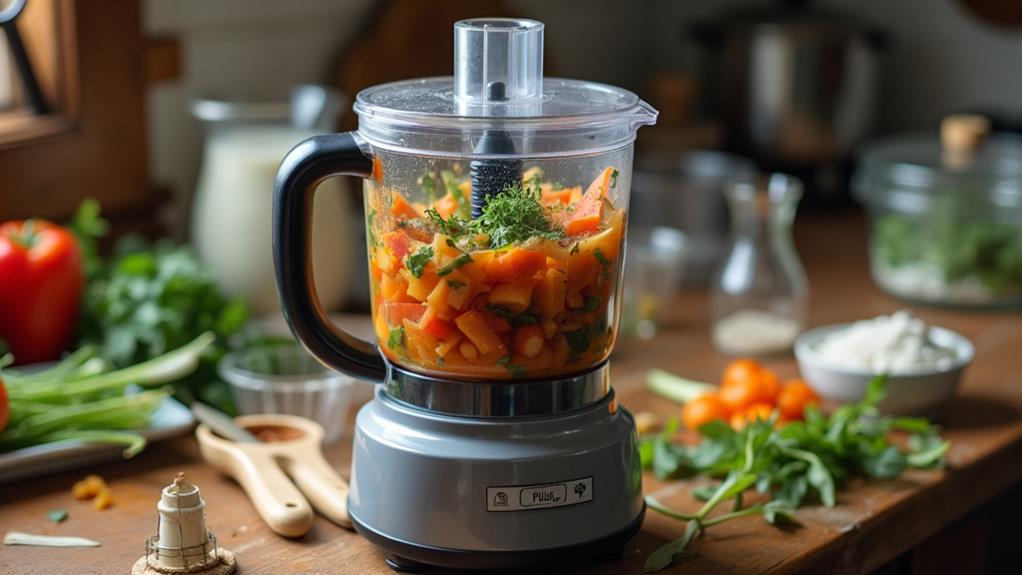
Skipping the pulse button might seem convenient, but doing so can significantly compromise the quality of your food processing. The pulse button is essential for achieving uniform chop sizes, especially for hard-textured foods like nuts. By using the pulse button multiple times, you gain better control over the chopping process, ensuring ingredients maintain their intended texture and consistency.
Without using the pulse button, you risk uneven chopping, resulting in some pieces being too large while others are too fine. This inconsistency can affect the overall quality of your dish. For example, softer ingredients like tomatoes or avocados can quickly turn into a paste-like consistency if overworked. Using the pulse button helps avoid this issue, giving you the perfect texture every time.
Additionally, proper use of the pulse button can improve the efficiency of your food processor, allowing it to perform better and prolonging its lifespan. Over-processing can strain the motor and blades, leading to quicker wear and tear. Therefore, next time you use your food processor, remember that skipping the pulse button isn't worth the risk to your ingredients or your appliance.
Add Large Ingredients
When you add large ingredients to your food processor, you're setting yourself up for disappointment. The blades are designed to handle moderately sized chunks, not oversized pieces. Adding excessively large items hinders chopping effectiveness and can overload the machine, leading to uneven processing results.
To guarantee peak performance and extend the lifespan of your food processor, pre-cut your ingredients into smaller, manageable pieces. This simple step helps in several ways:
- Prevents potential damage to the blades: Large ingredients can strain the blades, reducing their effectiveness over time.
- Eases the workload on the motor: Smaller ingredients help the motor run smoothly and reduce the risk of overheating.
- Ensures even processing: Smaller pieces allow for more consistent and thorough chopping, leading to better culinary results.
- Reduces the need for repairs: Respecting size limitations minimizes wear and tear, extending the appliance's lifespan.
Ignoring these guidelines may leave you with a malfunctioning food processor and a lot of frustration. Always remember to cut large ingredients down to size before processing. You'll thank yourself later!
Overuse the Processor
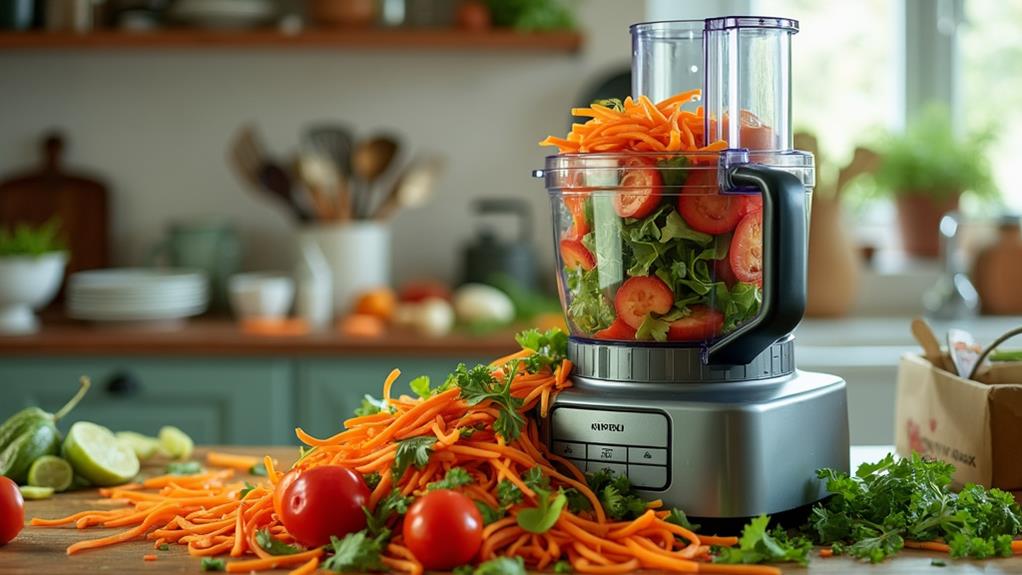
Using your food processor for extended periods can be detrimental. Continuous operation can lead to overheating, which can damage the motor. Food processors are designed for intermittent use; running them non-stop increases wear and tear, shortening their lifespan. To protect your food processor, avoid prolonged use without allowing it to cool down.
Limit your processing time, particularly when handling tough ingredients that strain the motor. Follow the manufacturer's guidelines for usage duration to ensure your food processor operates efficiently and reliably.
One effective strategy is to alternate between processing soft and hard ingredients, which helps maintain performance and prevent overheating. By giving the motor a break, you reduce the risk of damage and extend the life of your appliance.
Process Wet Ingredients
Processing wet ingredients in a food processor can pose several challenges. You may face overflow issues, which can lead to a messy cleanup and potentially damage your appliance. The excess moisture from wet ingredients can also prevent effective chopping, resulting in uneven textures and unsatisfactory consistency. Moreover, adding too much liquid can turn your mixture into a soupy mess, which a food processor is not designed to handle.
Wet ingredients can also accelerate the dulling of your blades. The moisture can create a sticky residue that affects both performance and cleanliness. To maintain the efficiency and longevity of your food processor, it is advisable to use choppers or blenders for wet ingredients.
Here are some key considerations:
- Overflow Issues: Wet ingredients can cause overflow, leading to a messy cleanup and possible damage.
- Uneven Textures: Excess moisture hinders effective chopping, resulting in inconsistent textures.
- Soupy Mixtures: Using too much liquid can make mixtures overly soupy, which isn't suitable for food processors.
- Blade Dulling: Moisture can create a sticky residue, dulling the blades more quickly.