What Is the Role of a Food Processor?
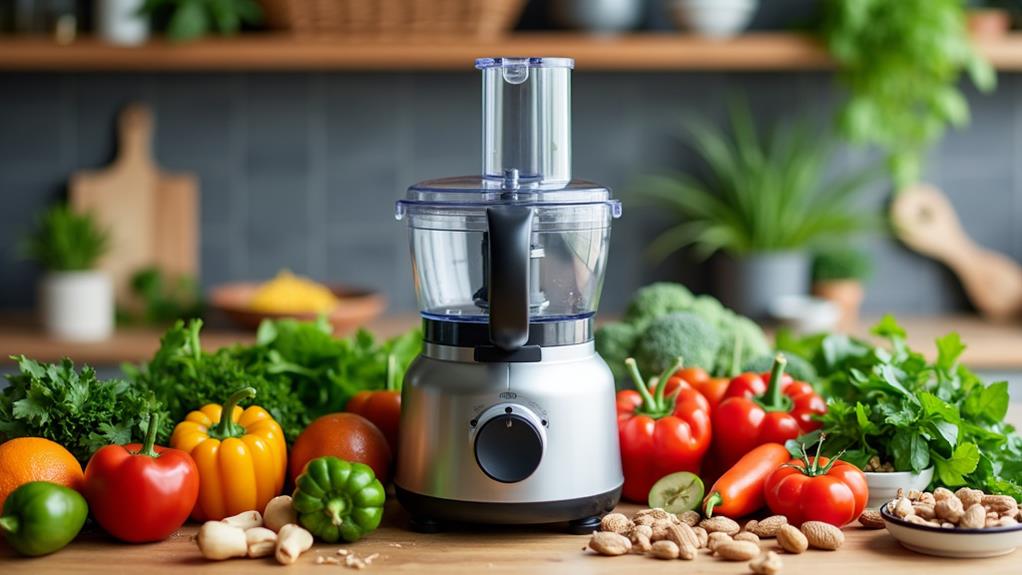
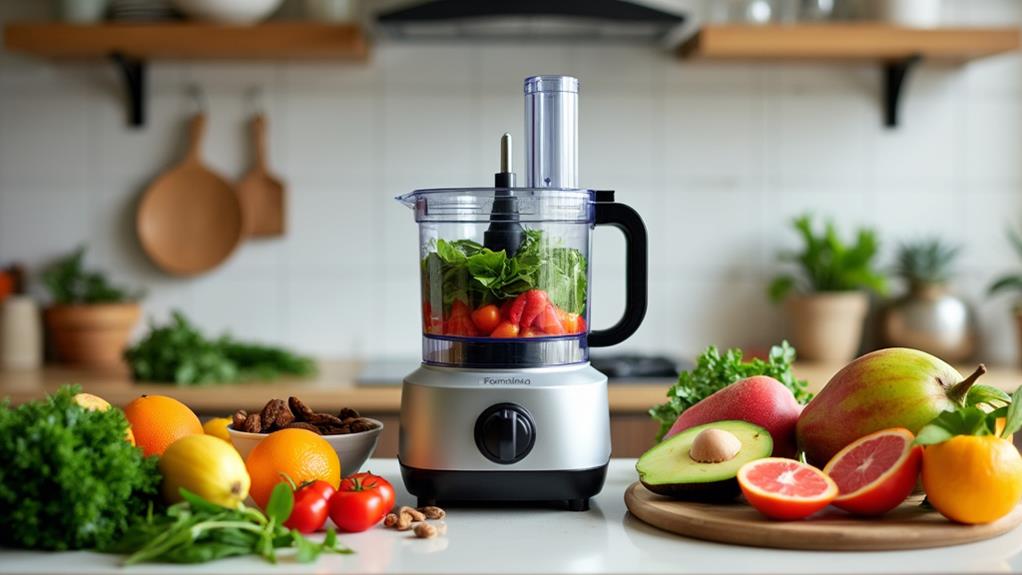
The role of a food processor extends beyond mere convenience; it revolutionizes food preparation. This versatile kitchen appliance can chop, slice, and grind ingredients swiftly, saving significant time compared to manual methods. It opens up a world of culinary possibilities, from making baby food and kneading dough to pureeing sauces effortlessly. However, choosing the right model to suit your needs is crucial, as is understanding the difference between a food processor and a blender. Delving deeper into these aspects can help you make an informed decision about this indispensable kitchen tool.
Versatile Uses and Functions
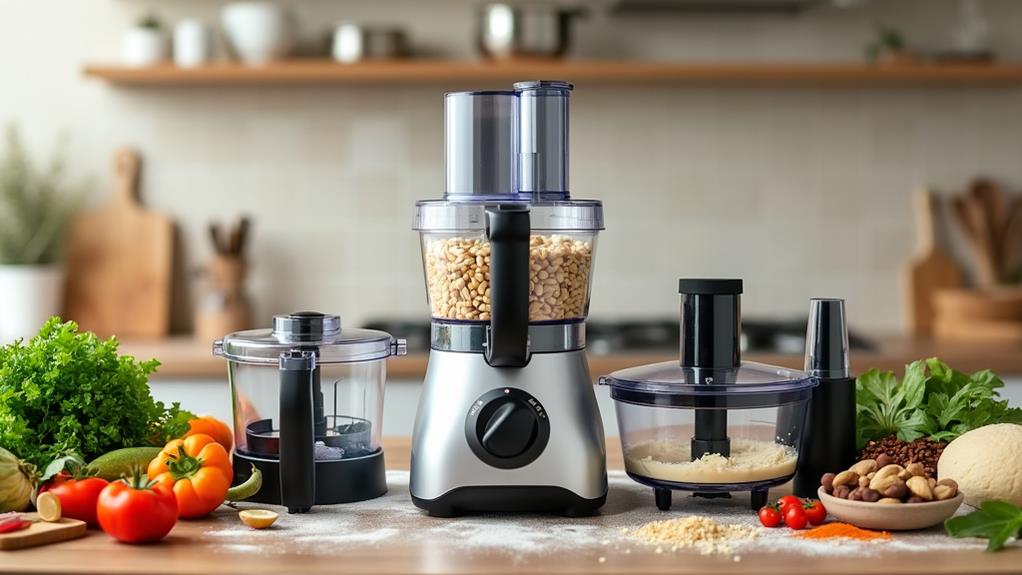
A food processor is an indispensable kitchen tool that can significantly enhance your culinary experience. By using a food processor, you can create homemade versions of store-bought staples from fresh ingredients, thereby boosting flavor and preserving nutrients by avoiding artificial additives. This versatile appliance dramatically reduces preparation time, accomplishing many tasks within minutes. Additionally, most components are dishwasher-safe, simplifying cleanup.
Picture yourself effortlessly preparing a variety of sauces, dips, and desserts. Equipped with specialized attachments, a food processor can handle chopping, slicing, shredding, grinding, and even kneading dough. Whether you're crafting a complex meal or a simple snack, this tool adapts seamlessly to your needs. It's particularly advantageous for making freshly prepared baby food from roasted vegetables or fruits, ensuring optimal nutrition for your little one.
Mini food processors excel in small tasks like chopping vegetables, while full-size processors come with a range of accessories for diverse food preparation needs. Regardless of the size, a well-utilized food processor can elevate your culinary creations. This versatile, time-saving, and nutrient-preserving addition is a must-have for both novice and experienced cooks.
Chopping and Mincing
Having examined the versatile uses and functions of a food processor, let's focus on one of its most time-saving features: chopping and mincing. Whether you're preparing mirepoix (a mix of celery, carrot, and onion) or simply dicing vegetables for a salad, a food processor's S-blade chops ingredients in seconds. This efficiency not only speeds up meal preparation but also ensures uniformity in your chopped ingredients, crucial for consistent cooking results.
When it comes to mincing, the food processor is a game-changer. Imagine mincing onions and garlic without shedding a single tear, reducing the time and effort required for these common but tedious tasks. This efficiency can significantly streamline your cooking process. Additionally, you can mince meat for burgers and meatballs, giving you complete control over texture and cut, essential for achieving the perfect bite.
Chopping nuts for baked goods or salads is another area where the food processor excels. Freshly chopped nuts enhance flavor and moisture. Moreover, transforming stale bread into breadcrumbs, customizable in texture for different culinary applications, becomes effortless. A food processor makes these tasks easy, turning arduous meal preparation into a breeze.
Grinding and Pureeing

A food processor's grinding and pureeing capabilities can revolutionize your kitchen tasks. The S-blade design is particularly effective for grinding ingredients. Quickly prepare fresh breadcrumbs from stale bread or create nut flour from oats and nuts. For fresh minced meat for burgers or meatballs, the food processor ensures you control the cuts, maintaining the meat's freshness.
Pureeing is another strength of a food processor. Create smooth sauces, dips, or baby food from roasted vegetables or fruits in under a minute. If you enjoy homemade spreads, the food processor can blend nuts with minimal added oil to make creamy nut butters, enhancing flavor without unnecessary additives.
For healthy snacks, the food processor can grind dates and nuts together to make nutritious energy balls in minutes. This appliance is a game-changer for both everyday meals and special recipes, making it an indispensable tool in your kitchen. With these capabilities, you'll find yourself using your food processor more often to create fresh and delicious dishes.
Slicing and Shredding
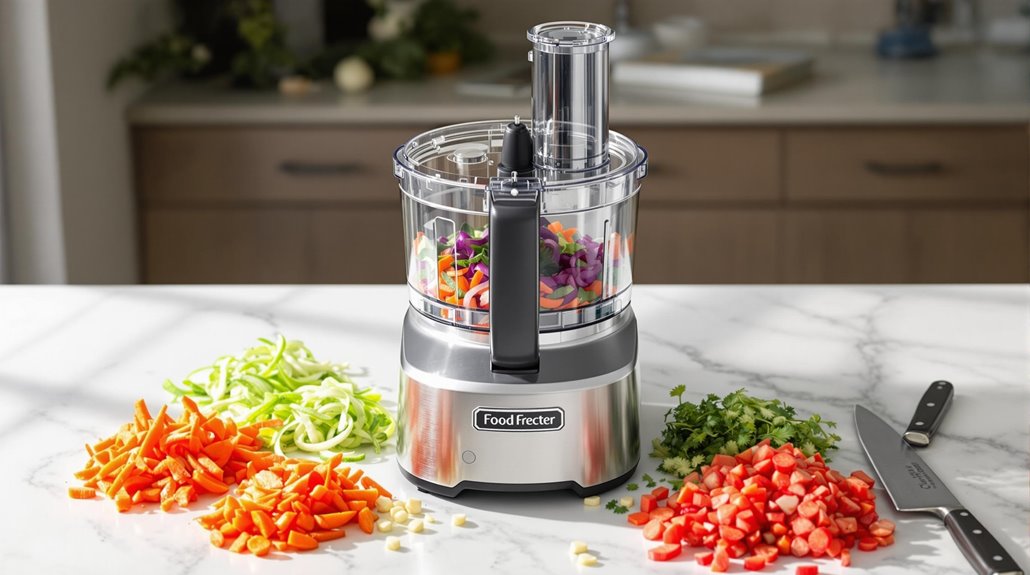
Using a food processor for slicing and shredding can revolutionize your meal preparation. These appliances come with slicing discs that offer thin, medium, or thick slices for fruits, vegetables, and even meats, enhancing both your meal presentation and prep efficiency. The reversible slicing/shredding disc is highly versatile, easily switching between tasks to accommodate various needs.
Here's why a food processor is a game-changer for slicing and shredding:
- Time-Saving: Quickly process large quantities of ingredients, ideal for entertaining or batch cooking.
- Precision: Some models feature adjustable slice thickness for exact control and consistency.
- Flexibility: High-quality blades manage a range of textures, from shredding cheese in minutes to producing uniform vegetable slices.
- Ease of Use: Switching between slicing and shredding discs is straightforward, making your food processor a multifunctional tool.
These efficient blades make slicing and shredding effortless, freeing up more time to enjoy your meal rather than spending hours on prep work.
Mixing and Blending

Your food processor excels at mixing and blending, making it perfect for creating smooth purees and evenly combining ingredients. Whether you're whipping up creamy hummus or fresh pesto, the processor's efficient emulsification process delivers results in minutes. Its rapid blade movement also simplifies tasks like blending salad dressings or kneading bread dough, saving you valuable time in the kitchen.
Creating Smooth Purees
Food processors excel in creating smooth purees, thanks to their efficient S-blade that blends ingredients to perfection. Whether you're preparing silky soups or homemade baby food, a food processor ensures creamy results every time. The S-blade's rapid movement allows for even mixing and prevents lumps, delivering a consistent texture throughout.
Here's what you can accomplish with your food processor:
- Homemade Baby Food: Puree cooked vegetables and fruits in minutes, ensuring your baby gets nutritious, fresh meals.
- Silky Soups: Blend ingredients to a smooth consistency, creating restaurant-quality soups at home.
- Dips and Sauces: Achieve creamy results quickly for dips like hummus or sauces like pesto.
- Controlled Texture: Adjust the texture from silky smooth to slightly chunky, perfect for diverse recipes.
Using these capabilities, you can transform basic ingredients into culinary delights. The S-blade guarantees even mixing, simplifying the creation of dishes that require a smooth consistency. If you aim to enhance your kitchen skills, mastering the art of making smooth purees with your food processor is an excellent place to start.
Combining Ingredients Evenly
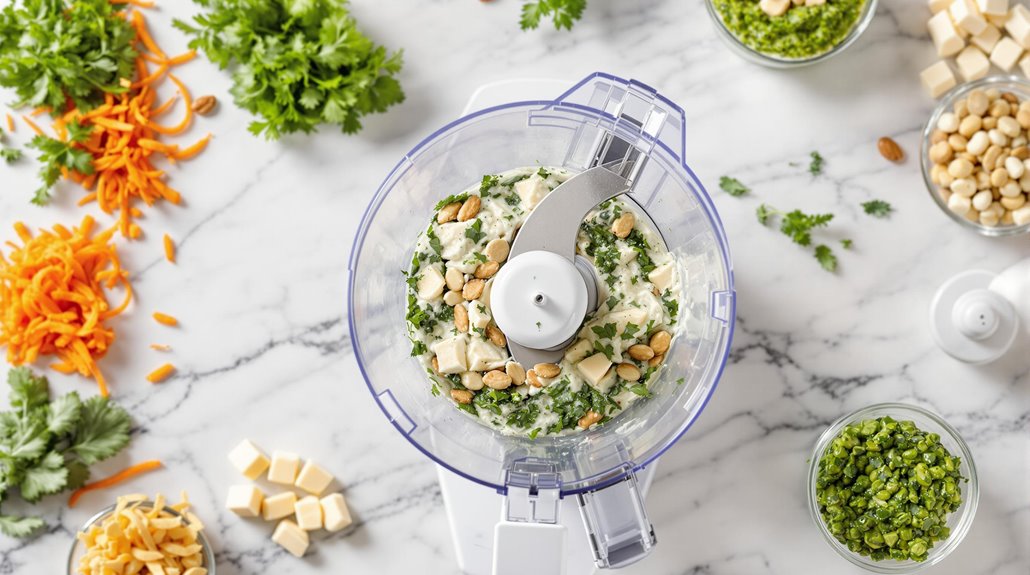
Achieving perfectly combined ingredients is effortless with a food processor, making it an essential tool in any kitchen. Its powerful motor and sharp blades ensure efficient mixing, allowing you to blend ingredients into homogeneous mixtures quickly and effectively. Whether you're preparing dips like hummus or fresh pesto from basil, nuts, and olive oil, a food processor guarantees all elements are evenly incorporated.
One of the standout features of a food processor is its versatility, replacing multiple kitchen tools. It acts as both a mixer and blender, simplifying the process of combining ingredients for various recipes. This not only saves time but also reduces cleanup, enhancing your cooking experience.
When it comes to emulsifying, the rapid blade movement in a food processor creates creamy textures that are difficult to achieve manually. Think of those smooth salad dressings you love—they're effortlessly whipped up in minutes. Additionally, if you're into baking, the food processor can develop gluten in dough efficiently, resulting in airy, well-mixed bread loaves after just 1-3 minutes of kneading.
Efficient Emulsification Process
A food processor excels at emulsifying ingredients efficiently, making it an indispensable kitchen appliance. Whether blending oil and vinegar or creating smooth, creamy dressings, it saves you both time and effort. In under three minutes, you can achieve perfect emulsions like mayonnaise effortlessly.
The powerful motor and sharp blades ensure thorough mixing, producing homogeneous mixtures essential for dips and spreads such as hummus and pesto. Additionally, its ability to incorporate air results in light and fluffy textures, perfect for sauces and dressings.
Here's how it works:
- Efficient Emulsification: Quickly blends ingredients to create smooth, stable mixtures.
- Pulse Function: Allows you to control the process, preventing over-mixing and achieving the desired consistency.
- Thorough Mixing: Ensures all ingredients are uniformly combined for optimal results.
- Nut Butters: Effortlessly combines nuts and oil to make creamy nut butters with minimal effort.
The pulse function is particularly useful, providing control over the emulsification process to avoid over-processing. Whether you're making dressings, sauces, or nut butters, a food processor guarantees efficient, consistent results every time.
Dough Kneading
Ever wondered how to cut down the time and effort required for kneading dough? With a food processor, you can knead dough in just 1-3 minutes, drastically reducing manual labor. The dough blade, typically made of plastic, is designed to handle dough without cutting through it, ensuring a consistent texture every time. This makes your baking tasks quicker and more efficient.
Using a food processor to knead dough also ensures even incorporation of ingredients. Whether you're adding butter, spices, or other mix-ins, the rapid blade movement guarantees everything is well distributed, which is essential for balanced flavor and texture in your bread or pasta dough.
The food processor excels in building gluten within the dough, a crucial element for creating airy and well-structured bread loaves. It's versatile too; preparing fresh pasta dough becomes a breeze with minimal ingredients and effort. If you want to streamline your baking tasks and achieve professional results at home, a food processor is an invaluable tool for kneading dough and more.
Choosing the Right Model
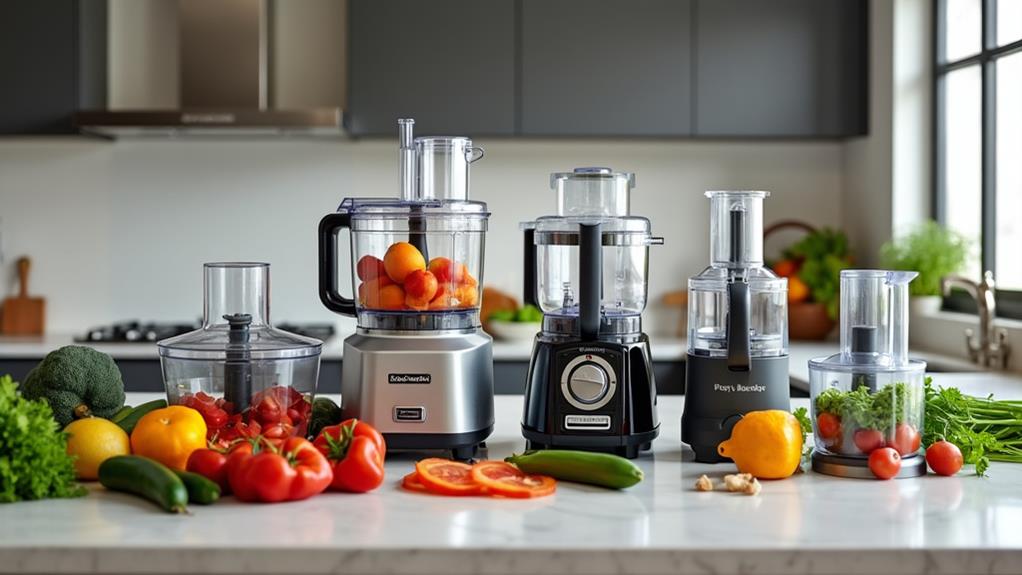
After mastering dough kneading with a food processor, you'll want to ensure you have the best model for your culinary needs. Choosing the right food processor involves considering several key factors to ensure it integrates seamlessly into your kitchen routine.
- Size: Choose a food processor size that matches your cooking habits. Mini models are ideal for small tasks like chopping herbs, while full-size models are better suited for larger meal preparations and more demanding tasks.
- Motor Power: Evaluate the motor power. For full-size models, look for a motor with sufficient power to handle tough tasks like kneading dough or grinding meat without straining.
- Attachments: Review the variety of attachments available with the model. Slicing discs, dough blades, and shredding tools can significantly enhance the versatility of your food processor, making it a multifunctional kitchen tool.
- Cleaning: Consider the ease of cleaning. Many food processors feature dishwasher-safe components, simplifying post-cooking cleanup.
Compare popular models like KitchenAid's KFCB519VB and KFP0918BM for a balance of durability and performance. By focusing on these aspects, you'll find a food processor that enhances your cooking experience and meets your specific needs.
Food Processor Vs. Blender
Understanding the key differences between a food processor and a blender can significantly enhance your culinary efficiency. Food processors are versatile tools designed for a wide range of tasks, such as chopping, slicing, shredding, and kneading dough. This adaptability makes them invaluable for various cooking preparations. In contrast, blenders excel at pureeing and mixing liquids, making them ideal for smoothies and soups.
When weighing the options between a food processor and a blender, remember that blenders require liquid to process ingredients effectively. Food processors can handle solid ingredients without needing additional liquid, making them perfect for tasks like chopping vegetables or making dough. This distinction is crucial for preparing different types of meals.
Food processors often come with multiple attachments and blades, offering a variety of functions and allowing for easy task-switching. Blenders, however, typically feature a single blade design focused on liquid blending. The pulse feature in food processors provides precise control over texture, preventing over-processing. Conversely, blenders create a continuous vortex, which can result in overly smooth textures.
For larger batches, food processors are generally more efficient, while blenders excel at quickly creating single servings or drinks. Choose based on your specific cooking needs to maximize efficiency and effectiveness in the kitchen.
Attachments and Accessories

When exploring the attachments and accessories of a food processor, you'll discover essential tools such as the S-shaped Sabatier blade for chopping and shredding/slicing discs for varying textures. Additionally, dough blades ensure your dough is perfectly kneaded without being cut. Optional accessories like julienne and French fry discs, as well as juicers, significantly enhance the versatility of your food processor, making it an indispensable kitchen appliance.
Essential Attachments Overview
A food processor's versatility is anchored by its essential attachments and accessories, transforming it into a multifunctional kitchen powerhouse. These primary attachments are designed to handle a variety of food prep tasks with ease and efficiency:
- S-shaped Sabatier blade: This is your go-to for chopping, mixing, and pureeing. It excels at handling everything from vegetables to nuts with precision and efficiency.
- Slicing and shredding discs: Available in fine, medium, or coarse options, these discs provide the perfect texture for fruits, vegetables, and cheeses. Whether you need thin cucumber slices or shredded carrots, these discs deliver consistent results.
- Dough blades: Made of plastic, these blades are ideal for kneading dough without cutting through it. They are perfect for bread and pastry preparations, making homemade baking more accessible.
- Additional attachments: Expand your food processor's capabilities with julienne discs, egg whips, and juicers. These specialized tools enable tasks like creating julienne strips, whipping eggs, and juicing fruits, making your food processor an all-in-one kitchen tool.
Many models also feature reversible slicing/shredding discs, allowing quick transitions between slicing and shredding tasks, thereby enhancing your kitchen efficiency.
Enhancing Food Processor Versatility
Building on its essential attachments, enhancing your food processor's versatility with supplementary accessories can significantly elevate your culinary experience. Standard attachments, such as the S-shaped sabatier blade, excel in chopping, while slicing discs come in fine, medium, or coarse options to cover a wide range of food preparation tasks. But why stop there?
Incorporating additional attachments can greatly expand your food processor's capabilities. A dough blade, for instance, is perfect for kneading dough, making homemade bread a breeze. Egg whips transform your processor into a powerful tool for whipping egg whites to perfection. Specialized attachments like julienne discs allow you to create uniform, matchstick-like vegetable cuts, ideal for gourmet salads or stir-fries. Citrus juicers enable effortless extraction of fresh juice, adding another layer of functionality beyond basic chopping and slicing.
Reversible slicing/shredding discs facilitate quick changes between tasks, allowing you to switch from slicing vegetables to shredding cheese seamlessly. These versatile accessories mean your food processor can replace multiple kitchen tools, streamlining your food preparation and reducing the clutter of extra utensils. With the right attachments, your food processor isn't just an appliance—it's a culinary powerhouse.
Historical Context
Electric food processors revolutionized kitchen tasks when they emerged in the mid-20th century. The journey began with the Starmix, introduced in 1946 by Electrostar, which brought electric food preparation to the consumer market and laid the foundation for future advancements in food processing technology.
In the 1960s, Robot-Coupe introduced commercial food processors, transforming the catering industry and setting a benchmark for future household appliances. Their success led to the introduction of the first domestic food processor in North America—the Magimix 1800 by Cuisinart in 1973. This marked a pivotal moment, as food processors became commonplace in home kitchens.
Carl Sontheimer played a crucial role by adapting the food processor from a French blender, despite initial consumer resistance. Here is a timeline of key developments:
- 1946: Electrostar launches the first electric food processor, Starmix.
- 1960s: Robot-Coupe introduces commercial food processors.
- 1973: Cuisinart's Magimix 1800 popularizes food processors in North America.
- 1978: Marc Harrison enhances design for improved user accessibility.