What Is the General Price of a Blender?
You'll find blenders across a wide price range, from budget models starting at $20 to premium options exceeding $500. Most quality countertop blenders fall in the $70-$100 range, offering a good balance of features and durability. Mid-range options between $50-$150 typically include versatile attachments and reliable motors, while high-end models above $300 deliver professional-grade performance. Understanding your specific blending needs will help determine the right investment level for your kitchen.
Price Ranges Across Different Blender Categories
When shopping for a blender, you'll find options across several distinct price tiers. Budget models start at around $20, offering basic functionality for simple blending tasks.
If you're looking for more capability, midrange blenders from $50 to $150 provide enhanced performance and additional features.
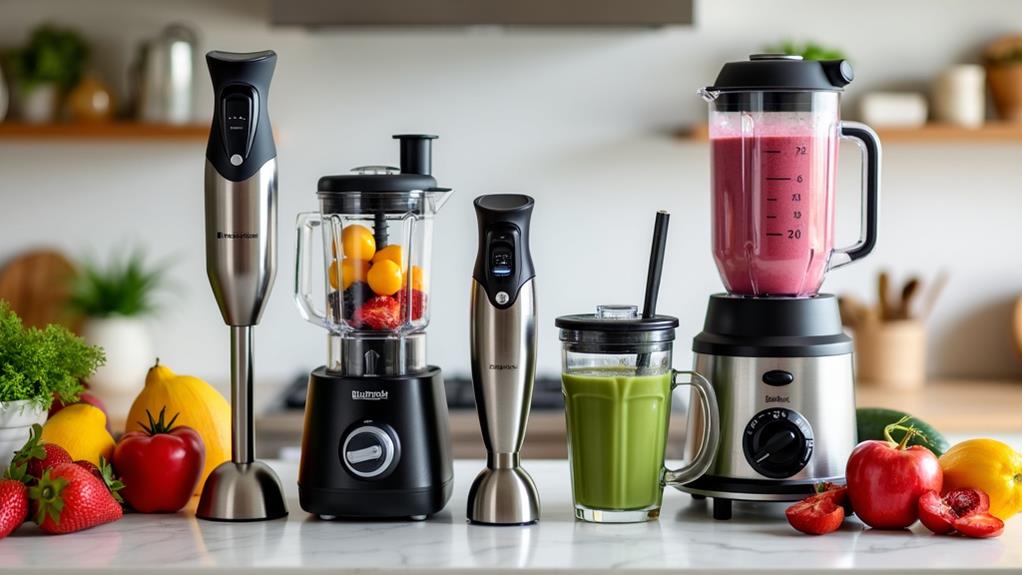
For those seeking professional-grade power, high-end blenders start at $300, providing superior performance and advanced controls. You'll also find specialty options like personal and immersion blenders ranging from $30 to $100, perfect for specific blending needs.
The average countertop blender sits around $70-$100, striking a balanced price point for most home cooks. This price range typically offers reliable performance without breaking the bank, making it a popular choice for everyday use.
High-end models with powerful motor strength ranging from 1400 to 1800 watts ensure consistently smooth blends without frustrating chunks.
Understanding Budget Blender Performance
Although budget blenders can handle basic smoothies and shakes, they come with notable performance limitations. When processing fibrous ingredients, you'll likely need to strain the mixture to achieve smooth results. The serrated blades found in these models can dull faster than premium blades, affecting their long-term performance with tasks like crushing ice.
You'll find fewer variable speed settings on budget blenders, which can make it challenging to perfect smooth nut butters or creamy soups and sauces. While they're simple to use, these models typically come with shorter warranty periods of three years or less, compared to premium models' 7-8 year coverage. To extend your blender's lifespan, you'll need to watch for signs of overheating and shut it off immediately when the motor starts struggling. In contrast, high-performance blenders offer advanced blade designs and powerful motors up to 3.5 horsepower for consistently smoother textures.
Mid-Range Blender Features and Value
Most mid-range blenders strike an ideal balance between cost and capability, typically ranging from $50 to $150. You'll find these high performance machines offer better durability and features than basic models, making them ideal for daily kitchen equipment needs.
These speed ice crushing blenders come equipped with motors between 500-1000 watts, perfect for frozen drinks and to crush ice effectively. Many include versatile attachments, rivaling professional blender functionality:
- Personal blender cups for single-serve smoothies
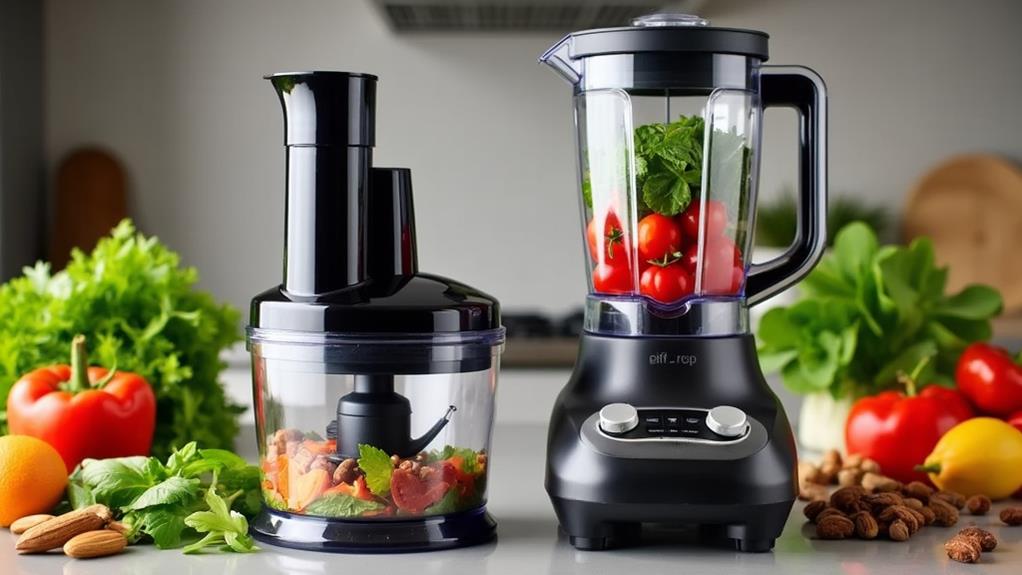
- Food processor attachments for chopping and mixing
- Immersion blender capabilities for soups and sauces
- Recipe books and tampers for best blending results
With 3-5 year warranties and sturdy construction, mid-range blenders deliver excellent value without the premium price tag of high-end models, making them a smart investment for most home cooks. The stainless steel blades ensure consistent performance and durability while resisting rust over extended use.
Premium Blender Investment Analysis
Moving up from mid-range options, premium blenders represent a significant investment that can pay off in the long run. When you're spending $400-$700 on the best blender, you'll get superior performance with features like stainless steel components and durable blending jars that can handle tough ingredients. The Vitamix 5200, widely considered among the best ones, costs around $550 but excels at everything from baby food to nut butters.
While premium models like Vitamix and Blendtec command higher prices, they justify the cost with 7-10 year warranties and unmatched versatility. Their powerful motors and glass-quality jars guarantee consistent results for years.
If you're serious about blending and want professional-grade performance, investing in a premium model can be more cost-effective than replacing cheaper alternatives repeatedly.
Key Factors That Impact Blender Pricing
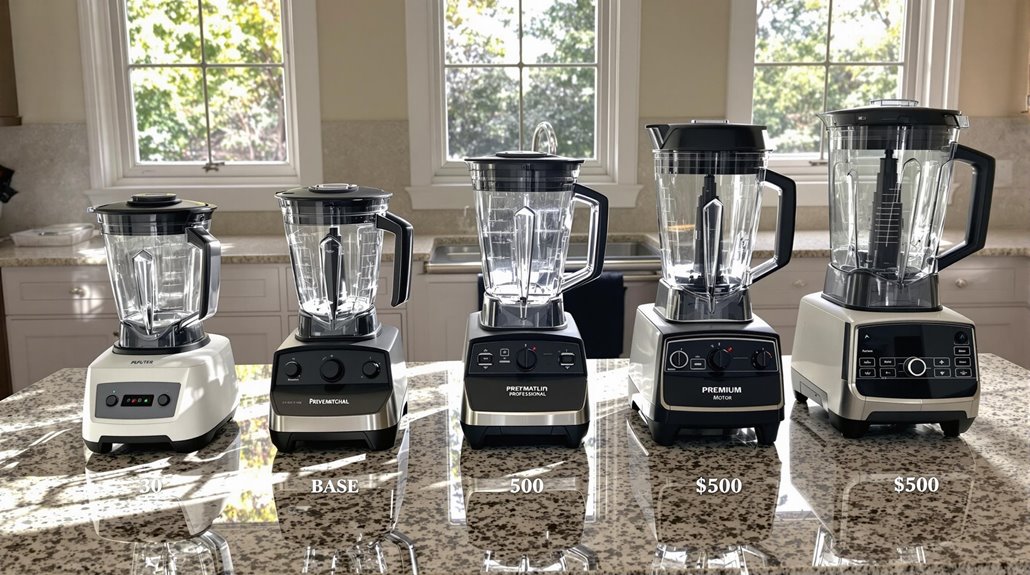
When shopping for a blender, several key factors determine its final price point. Motor wattage plays an essential role, with premium models featuring powerful 1,000-1,800 watt motors costing more than basic 300-600 watt units.
You'll find that renowned brands like Vitamix, Blendtec, and Ninja command higher prices compared to generic blender models.
Key price-influencing features include:
- Blender jar material (glass typically costs more than plastic)
- Preset programs and variable speed settings
- Self-cleaning capabilities
- Brand reputation and quality assurance
When considering your purchase, remember that these features directly impact performance and durability. While basic models start around $20, high-performance blenders can exceed $500, offering enhanced capabilities and longer-lasting performance for your investment.
Cost Comparison: Personal Vs Full-Size Blenders
Although personal and full-size blenders serve different purposes, their price points reflect distinct capabilities and target users. You'll find personal blenders priced between $20-$100, making them an affordable choice if you're mainly preparing single-serve smoothies and shakes.
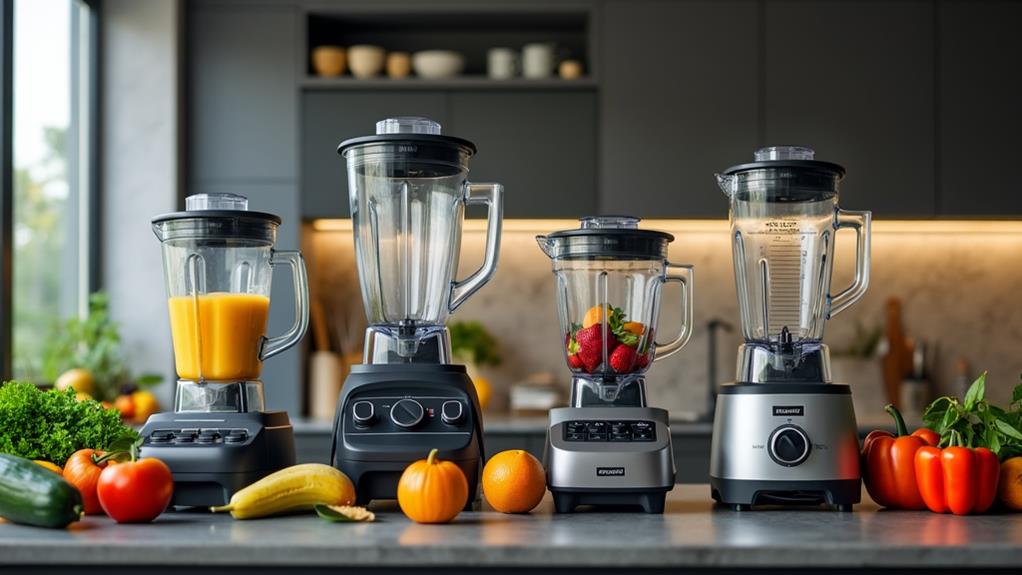
Full-size blenders offer a broader price range, starting at $50 and reaching up to $500. High-end brands like Vitamix and Blendtec command premium prices over $300, but they deliver exceptional power and versatility. If you're seeking a middle ground, brands such as Oster and KitchenAid provide full-size blenders between $50-$150, balancing performance with affordability. Budget-conscious shoppers can find basic models under $50, though they'll typically have fewer features and less power. Your choice ultimately depends on your blending needs and frequency of use.
Warranty Coverage and Long-Term Value

The warranty coverage on your blender can markedly impact its long-term value. While high-end models typically offer 7-8 year warranties, budget-friendly options usually come with 3-year coverage or less. However, the expected lifespan of any blender largely depends on how you care for it.
To prolong your blender's life and maximize its value, consider these essential practices:
- Hand wash components instead of using the dishwasher
- Stop blending immediately if you notice signs of overheating
- Choose a warranty that matches your blending needs
- Opt for budget-friendly models if you only need light-duty or occasional blending
Best Price-to-Performance Ratios by Brand
Smart shoppers looking for the best value in blenders will find significant differences in price-to-performance ratios across major brands.
If you're seeking top performance regardless of price, the Vitamix 5200 at $350 delivers exceptional quality with a 7-year warranty. For a better budget option, consider the Cleanblend at $180, which actually makes smoother smoothies than the Vitamix, though it comes with a shorter 5-year warranty.
The Oster Versa Pro strikes a solid middle ground at $200, offering good performance despite less durability. If you're on a tight budget, the KitchenAid K150 at $50 provides basic functionality with its 3-speed motor, but you'll get just a 1-year warranty. Remember that lower-priced models typically feature fewer speed options and less powerful motors, which manufacturers often compensate for with serrated blades.