What Is a Food Processor Vs. Blender?
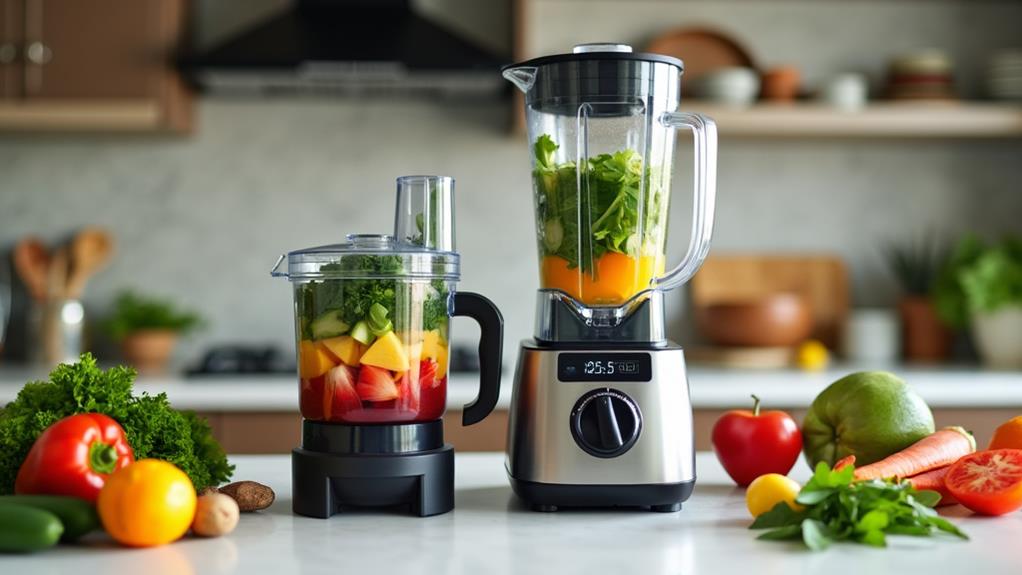
Understanding the differences between a food processor and a blender can help you make the right choice for your kitchen. A food processor is designed for chopping, slicing, and mixing thicker ingredients, thanks to its versatile blades and attachments. In contrast, a blender excels at liquefying and pureeing, making it ideal for smoothies and soups. By recognizing these distinctions, you can determine which appliance best meets your culinary needs. Let's explore their unique features and capabilities further.
Overview and Key Differences
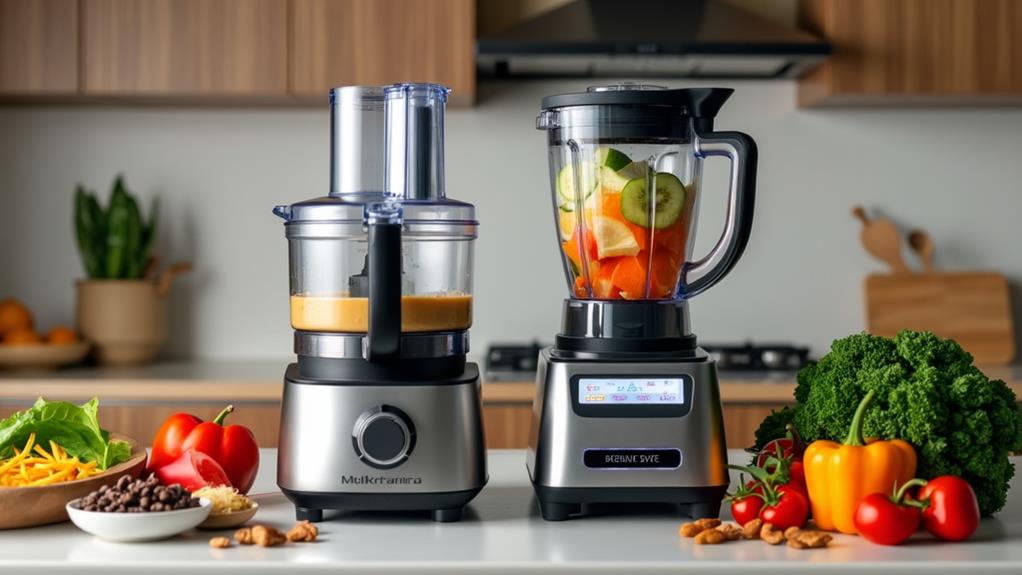
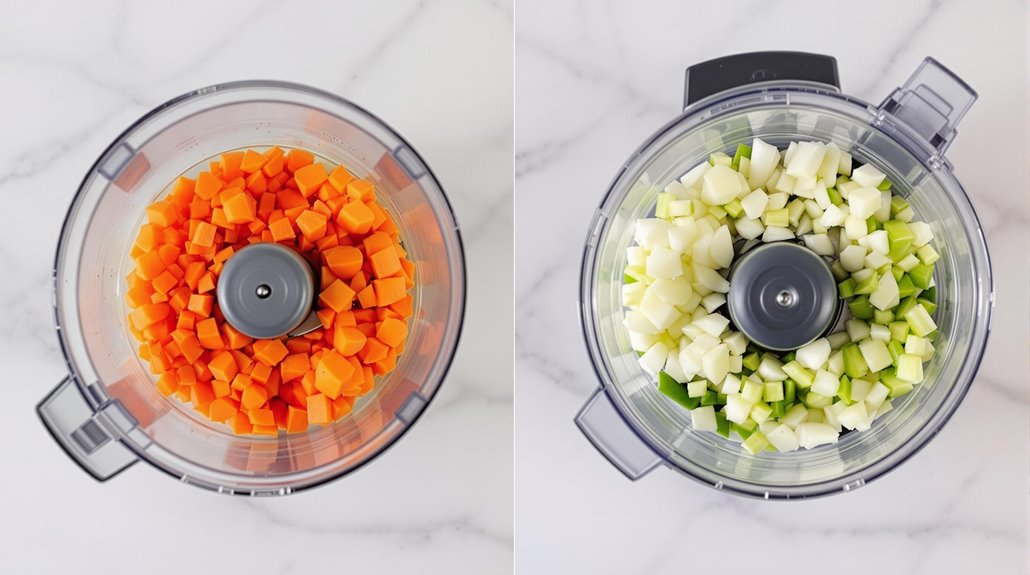
When choosing between a food processor and a blender, it's essential to understand their distinct functions. Both kitchen appliances excel in specific tasks. A food processor is designed to chop, slice, shred, and mix solid or semi-solid ingredients. It features a spacious work bowl and often includes various blade attachments, making it efficient for preparing chunky dips, dough, and chopped vegetables without needing added liquids.
In contrast, a blender focuses on liquefying and pureeing ingredients into smooth textures. Its fixed blade is optimized for blending, making it perfect for creating smoothies, soups, and sauces that require a consistent liquid base. The tall pitcher shape of a blender promotes a vortex, ensuring even blending of liquids.
Capacity also differs between the two. Food processors typically range from 6 to 16 cups, suitable for larger batches, while blenders vary from 2 cups for personal models to 14 cups for commercial use. Understanding these distinctions helps you choose the appropriate tool for your kitchen, whether you're blending or chopping ingredients.
Food Processor Features
Understanding the distinct functions of a food processor and a blender is essential for appreciating the unique features that make food processors indispensable in the kitchen. A food processor is your go-to appliance for a variety of kitchen tasks, thanks to its versatile S-shaped blades. These blades excel in chopping, slicing, shredding, and pureeing, efficiently handling both solid and semi-solid foods.
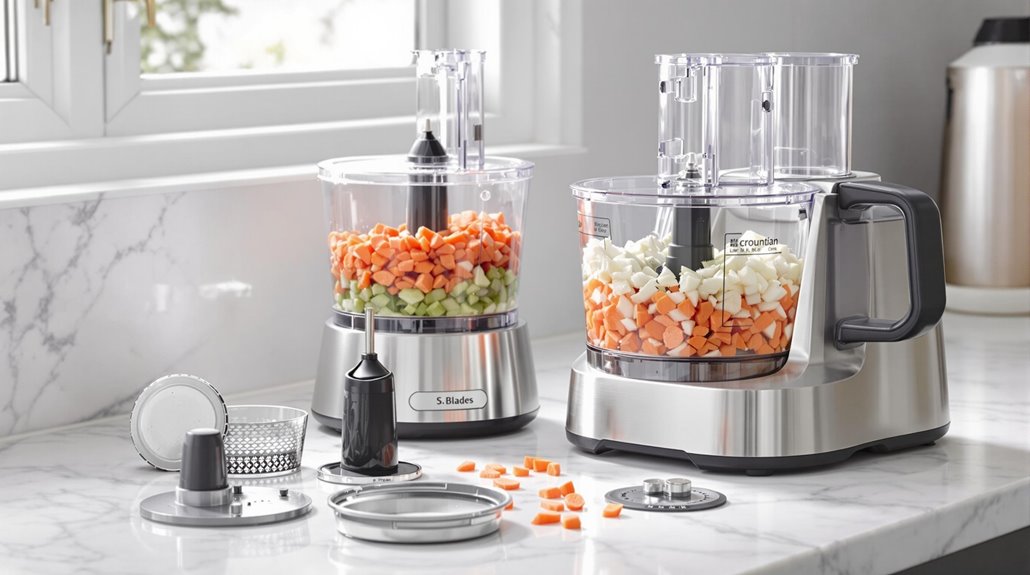
What sets a food processor apart is its multiple attachments. These include discs for slicing and grating, which enhance its multifunctionality. Whether you're preparing doughs, chunky dips, or spreads, these attachments simplify your culinary efforts.
Food processors come in a range of capacities, from compact 2-cup models to expansive 16-cup versions, ensuring you can handle both small and large batches of ingredients with ease.
Another key feature is the multiple feed chutes, which allow you to add ingredients during operation, maintaining consistent processing and saving you time. The convenience of a food processor lies in its ability to reduce manual chopping and preparation time, making it an essential tool for any kitchen.
Blender Capabilities
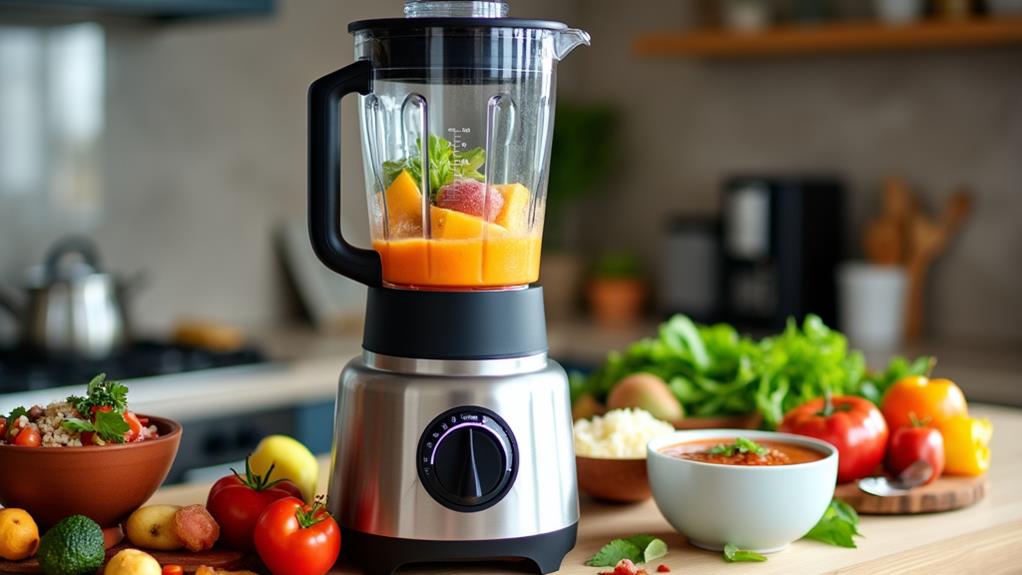
Blenders excel in the kitchen with their ability to liquefy ingredients, making them ideal for smoothies, soups, and sauces. Their powerful blades crush ice and blend tough ingredients like frozen fruits, delivering smooth and creamy results consistently. The narrow, tall jar design creates a vortex that circulates ingredients evenly, eliminating unblended chunks.
High-speed blenders often feature preset programs designed for specific tasks, enhancing convenience and consistency in your recipes. For optimal performance, always include some liquid to help the blades operate effectively.
Blenders come in various sizes to meet different needs. Personal sizes, holding around 2 cups, are perfect for single servings, while larger models can handle up to 14 cups, suitable for families or meal prep. Whether you need a quick morning smoothie or a large batch of soup, there's a blender size for you. With such versatility, blenders are an essential tool for any kitchen.
Cost and Best Models
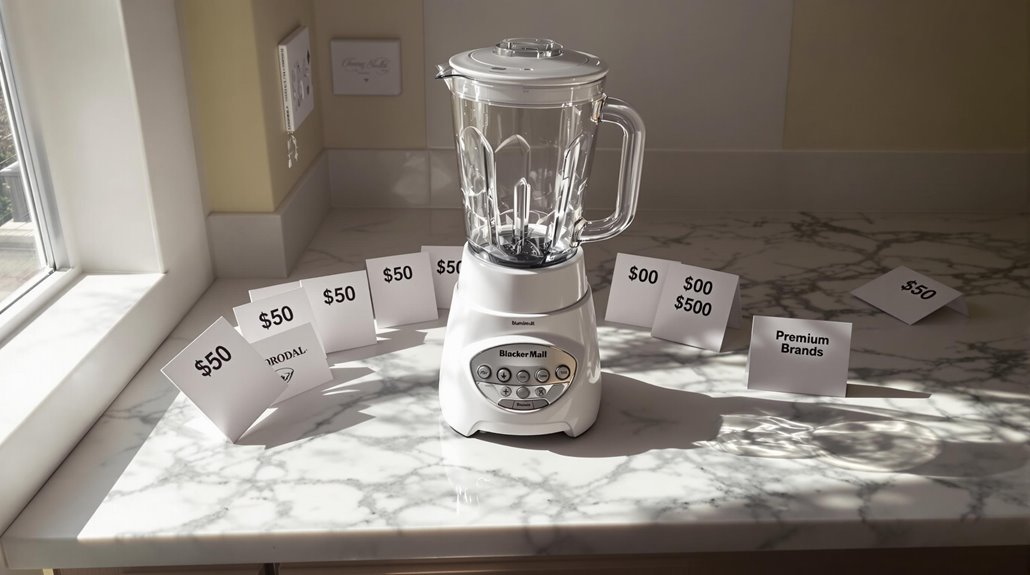
Having explored the versatile capabilities of blenders, let's now examine the cost and best models available for both food processors and blenders. Food processors generally range from $50 to $500, depending on features, bowl capacity, and brand. For example, the Cuisinart 14-Cup Processor is a budget-friendly option known for its reliable performance. For those looking for more advanced options, Breville offers high-end models like their 16-Cup and 12-Cup food processors, which are praised for their efficiency and versatility.
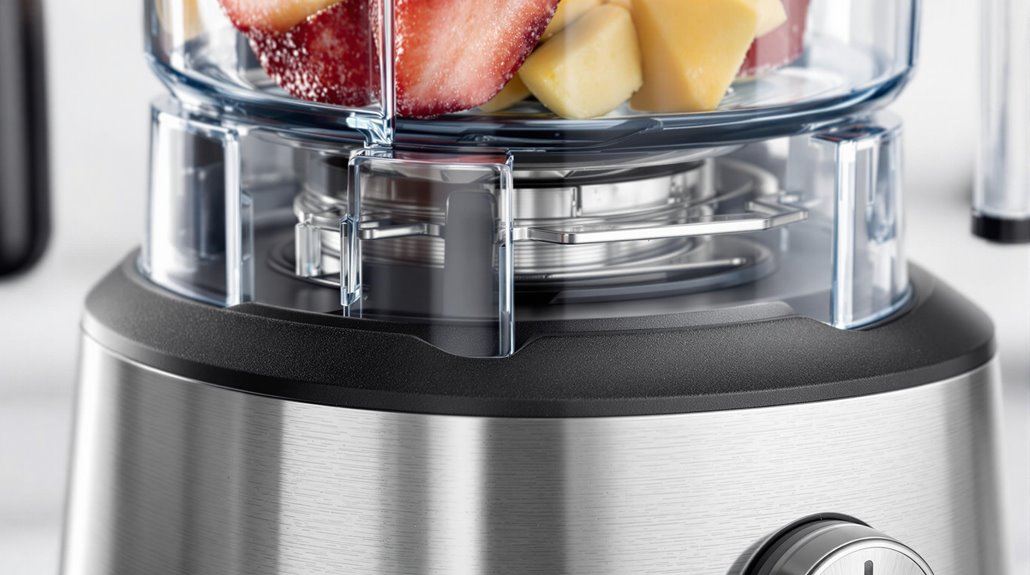
Blenders, on the other hand, range from $30 for basic models to $600 for high-performance units. The Vitamix 5200, priced around $400, is often highlighted as one of the best models due to its powerful motor and durability. If you prefer a compact solution, the Vitamix 12-Cup Food Processor Attachment is ideal, as it can be used with the Vitamix blender base, maximizing kitchen efficiency.
For those willing to invest in premium models, the Magimix 14-Cup Food Processor stands out for its power and elegant design.
Expert Insights
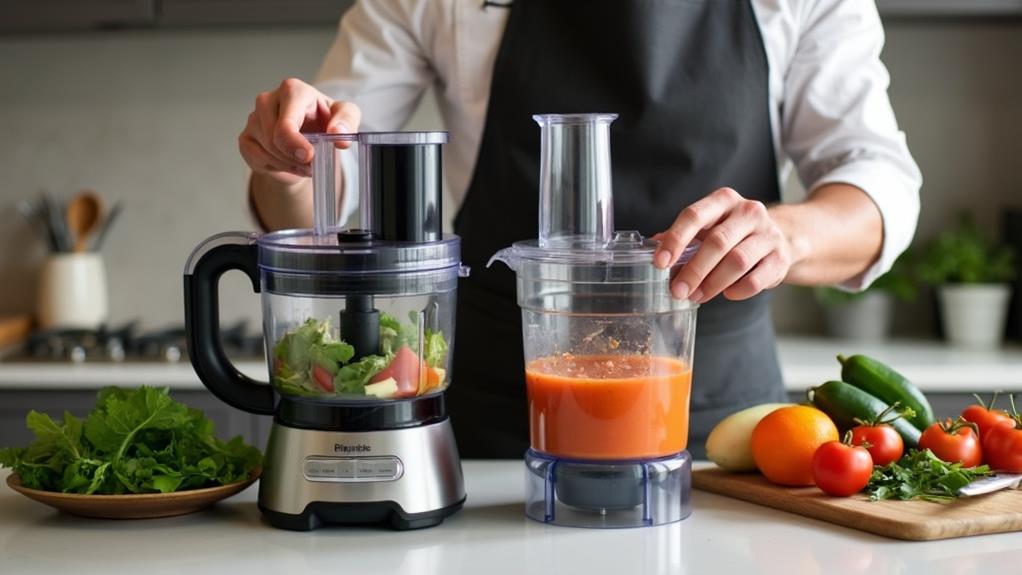
Experts agree that choosing between a food processor and a blender depends on your specific kitchen needs. Each appliance excels in different tasks, so it's crucial to identify your primary use cases. A food processor is ideal for versatile food prep such as chopping, slicing, shredding, and grating. Its multiple attachments and sharp blades handle dense ingredients effectively without needing added liquid.
In contrast, a blender excels at pureeing ingredients into smooth mixtures. High-powered blenders can effortlessly turn fruits and vegetables into silky smoothies and soups but typically require added liquid for optimal performance.
For those who love exploring new recipes, having both appliances can significantly enhance kitchen efficiency. Food processors make meal prep quicker and easier with their robust chopping and slicing capabilities. Meanwhile, high-powered blenders are perfect for beverages and soups. Investing in high-quality models of both can transform your cooking experience, allowing you to tackle a wide range of culinary tasks effortlessly.