
What Is a Blended Fruit Drink Called?
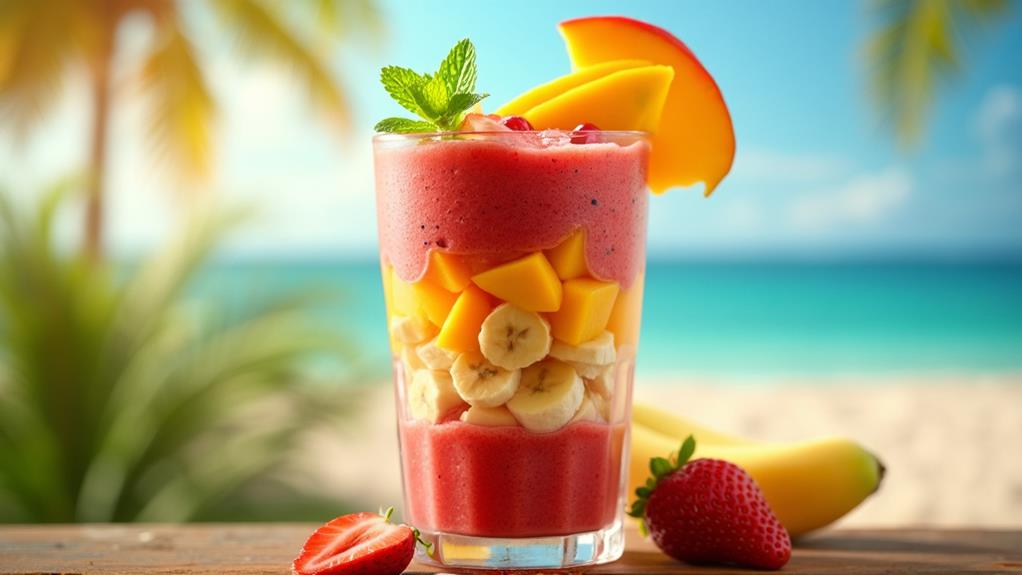
When you think of a blended fruit drink, the word "smoothie" likely comes to mind. But have you ever wondered how this popular beverage got its name or what distinguishes it from other fruit drinks? Smoothies have a rich history and come in various types, offering more than just a refreshing taste. They are packed with nutrition, health benefits, and even regional variations that might surprise you. So, what exactly sets a smoothie apart, and how did it become a staple in our daily diets? Stick around to uncover the answers.
History of Smoothies

The invention of the electric blender in the 1920s paved the way for smoothies, initially popularized in health food stores on the West Coast. This innovative appliance made it easy to blend fresh fruits and juices, creating a novel frozen drink that quickly gained popularity. By the mid-1980s, the term "smoothie" was commonly found in recipes and trademarks, marking its rise in the culinary world.
In 1973, Steve Kuhnau, in search of a lactose-free alternative, developed smoothies that led to the establishment of Smoothie King. This pioneering brand significantly influenced the smoothie market, demonstrating the blender's versatility and the potential for smoothies to cater to various dietary needs and preferences.
The 2000s saw a surge in home smoothie preparation, with people using blenders to create convenient and healthy options featuring fresh fruits, vegetables, and juices. During this period, smoothies diversified into various types, such as green, protein, and yogurt smoothies, each offering unique health benefits.
Today, the blender remains an essential tool for making these nutritious and delicious drinks, allowing for easy enjoyment of fresh smoothies anytime.
Smoothie Nutrition
When making a smoothie, incorporating several servings of whole fruits and vegetables can be an excellent way to achieve your daily nutrient intake. However, it's crucial to monitor the ingredients, as high-sugar fruit juices and sweeteners can significantly increase the calorie content. Balancing your smoothie with whole produce and being cautious of added sugars ensures you reap the benefits without excessive calorie intake.
Ingredient Health Benefits
Smoothies are celebrated for their rich content of essential vitamins, minerals, and antioxidants, which are crucial for maintaining overall health and well-being. By incorporating fresh fruits and vegetables like berries, bananas, mangoes, spinach, and kale, you create a nutrient-dense beverage. Fruits provide vital nutrients such as Vitamin C and potassium, while leafy greens offer iron and calcium.
One significant health benefit of smoothies is their ability to boost fiber intake, which is essential for digestion and gut health. Including a variety of fruits and vegetables ensures adequate fiber consumption. Additionally, adding ingredients like protein powder or yogurt can enhance the nutritional value, making smoothies a great option for meal replacement or post-workout recovery.
Caloric Content Concerns
Navigating the world of smoothies, it's easy to overlook their caloric content, particularly with added sugars from fruit juices, sweeteners, or ice cream. These additions can lead to excessive caloric intake and potential weight gain. While smoothies can serve as a convenient meal replacement, it's crucial to be mindful of their ingredients. Using whole fruits instead of fruit juices reduces high sugar levels and provides more fiber, making your drink more satisfying.
Nutritional studies indicate that smoothies are often less satiating than whole fruits and vegetables with the same energy content. This can prompt you to consume more calories overall, negating any health benefits. To avoid this, moderation is key. Choose low-calorie ingredients and balance your smoothie intake with whole foods to maintain a healthy diet.
Health organizations recommend moderation in smoothie consumption due to their potential high sugar content. Being aware of what goes into your smoothie is essential, as high-sugar variations can contribute to health issues like obesity and diabetes if not consumed wisely. So, next time you blend, consider the caloric content and select ingredients that support your health goals.
Types of Smoothies

Smoothies come in a variety of types, each offering unique flavors and nutritional benefits. Green smoothies are a popular choice, consisting of 40-50% leafy greens like spinach or kale, often balanced with fruits to mask the bitter taste. They're an excellent way to increase your vegetable intake without compromising on flavor.
For those seeking a protein boost, protein smoothies are ideal. These typically include protein powder along with fruits and vegetables, making them a versatile option for any time of the day.
For a creamier texture and additional protein, yogurt smoothies are the way to go. Using Greek yogurt as a base not only improves the texture but also adds significant nutritional value. These smoothies are both satisfying and nutritious.
Lastly, frozen cocktails blend fruit with ice and sometimes alcohol, offering a refreshing twist. However, they may not always provide the same nutritional benefits as their healthier counterparts.
Global Smoothie Variations
When exploring smoothies around the world, you'll discover a rich tapestry of flavors and ingredients unique to each culture. From the invigorating Indian lassi to the herbed and spiced sharbat, these regional variations showcase how local traditions influence smoothie recipes. You'll also encounter Mediterranean blends with yogurt and honey, and tropical delights from Southern India featuring fresh pineapple.
Popular Regional Smoothies
Exploring global smoothie variations offers a delightful journey through diverse cultures and culinary traditions. From South Asia's mango lassi to Mediterranean fruit smoothies, these drinks showcase unique regional flavors and ingredients. Imagine sipping a revitalizing fruit smoothie blended with yogurt and tropical fruit on a warm day. Each region's take on smoothies provides insight into their dietary preferences and seasonal produce.
In India, a mango lassi combines yogurt, sugar, and ripe mangoes for a creamy, sweet treat. The Mediterranean and Middle Eastern regions feature smoothies with yogurt and honey, often mixed with local fruits. Southern India offers a simple yet delicious pineapple smoothie, made with crushed ice and sugar—perfect for tropical fruit lovers. In West Asia, sharbat blends yogurt and honey for a sweet and creamy experience.
Here's a snapshot of these delightful regional variations:
| Region | Smoothie Type | Key Ingredients |
|---|---|---|
| South Asia | Mango Lassi | Yogurt, mango, sugar |
| Mediterranean | Fruit Smoothie | Yogurt, honey, local fruits |
| Southern India | Pineapple Smoothie | Pineapple, crushed ice, sugar |
| West Asia | Sharbat | Yogurt, honey |
| Middle East | Fruit Smoothie | Yogurt, honey, local fruits |
These regional variations highlight the diversity and creativity in global smoothie creations.
Unique Ingredients Worldwide
Every corner of the world has its own unique spin on smoothies, featuring ingredients that might surprise you. In South Asia, the Indian lassi combines yogurt, sugar, and mango, creating a revitalizing drink that's both sweet and tangy. This blend not only quenches your thirst but also provides nutritional benefits, being rich in protein and vitamins.
In the Mediterranean and Middle Eastern regions, fruit-based smoothies often incorporate yogurt, honey, and seasonal fruits. These variations highlight local flavors, resulting in creamy and satisfying treats. The sharbat, a traditional West and South Asian beverage, features yogurt and honey, offering a sweet and refreshing alternative to typical fruit smoothies.
In Southern India, pineapple smoothies are a local favorite. These drinks use crushed ice and sugar, focusing on the region's abundant tropical fruit without adding yogurt. The result is a light and invigorating drink perfect for hot climates.
Global variations in smoothies reflect local tastes and seasonal produce. Whether you're blending frozen fruit, fresh tropical fruit, or adding a dollop of yogurt, these diverse ingredients make each smoothie a delicious and unique experience.
Cultural Smoothie Traditions
Exploring cultural smoothie traditions reveals a captivating array of global variations that reflect regional tastes and ingredients. In South Asia, you'll find the Indian lassi, a popular drink made from yogurt, sugar, and often flavored with mango. This showcases how dairy enhances regional flavor profiles.
Mediterranean and Middle Eastern cultures also feature unique fruit-based smoothies, incorporating local fruits and spices. These smoothies often blend ingredients like dates, pomegranates, and nuts, highlighting regional culinary traditions.
In West and South Asia, sharbat combines fruit, yogurt, and honey, emphasizing the cultural practice of blending fruits with other ingredients. Meanwhile, in Southern India, pineapple smoothies are typically made with crushed ice and sugar, reflecting a preference for simpler, yogurt-free fruit drinks.
These global variations in smoothies emphasize diverse fruit combinations and ingredient uses. They reflect local agricultural practices and cultural preferences, offering a delicious way to experience different regional flavors in every blended drink.
Health Benefits and Risks
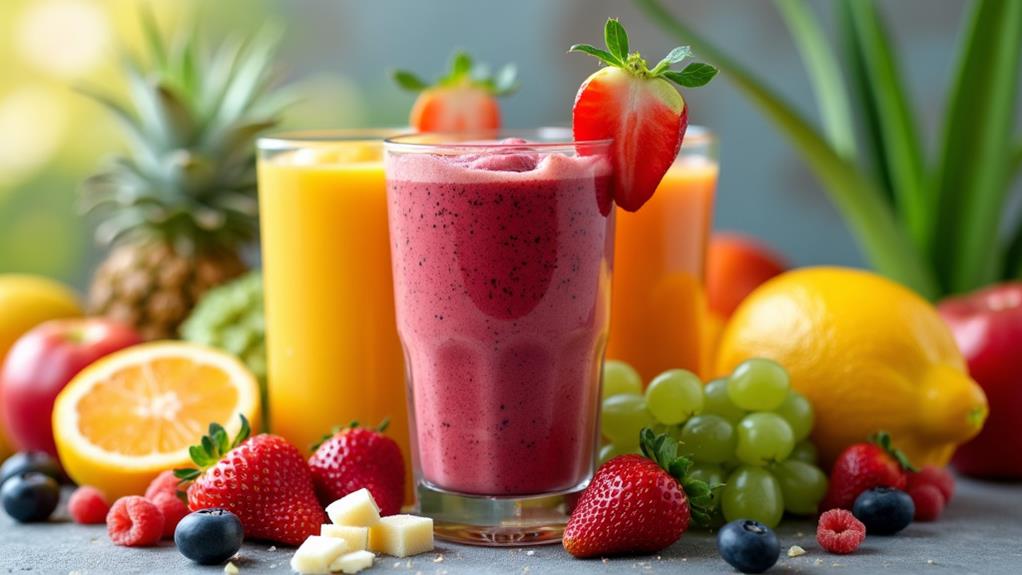
Blended fruit drinks, or smoothies, offer a convenient way to incorporate multiple servings of fruits and vegetables into your diet, making them a popular choice for meal replacements. The nutritional value of smoothies can vary greatly based on the ingredients you choose. For instance, using high-sugar fruit juices can lead to increased caloric intake and potential weight gain. It's essential to be mindful of the high sugar content in some smoothies, as this can pose health risks like raised blood sugar levels and weight gain.
Health organizations recommend moderation when consuming smoothies. They can be less satiating compared to whole foods, which might lead you to consume more calories in general if you're not careful. To optimize the health benefits and minimize the risks, opt for ingredients that are high in fiber and low in added sugars.
| Ingredient | Nutritional Value | Potential Risks |
|---|---|---|
| Fresh fruits | High vitamins and fiber | High sugar content |
| Vegetables | Nutrient-dense, low sugar | Low satiety if overblended |
| Fruit juices | Convenience | High sugar, low fiber |
| Added sweeteners | Taste improvement | Increased caloric intake |
Popular Smoothie Recipes
When it comes to popular smoothie recipes, variety is essential. Combining fruits like strawberries, bananas, and mangoes with fruit juice and crushed ice creates a delicious drink. A classic fruit smoothie recipe typically scores high ratings, averaging 4.4 out of 5 stars, demonstrating its widespread appeal.
For added nutrition, incorporate leafy greens. Spinach or kale pairs well with sweeter fruits, balancing flavors and ensuring a nutrient-packed drink. During warmer months, seasonal fruits like ripe peaches or strawberries can refresh your smoothie, making it an ideal summer choice.
Using frozen fruits is a fantastic way to preserve flavor and texture. Frozen berries, for example, can turn your smoothie into a creamy, delicious frozen treat. This approach prevents fruit spoilage and enhances the smoothie's consistency.
Experiment with these ingredients to find your perfect blend. Whether you prefer the classic combination or want to try something new, smoothies offer endless possibilities. Remember, a great smoothie relies on fresh, quality ingredients and a balance of flavors. Happy blending!