What Are the Disadvantages of a Stand Mixer?
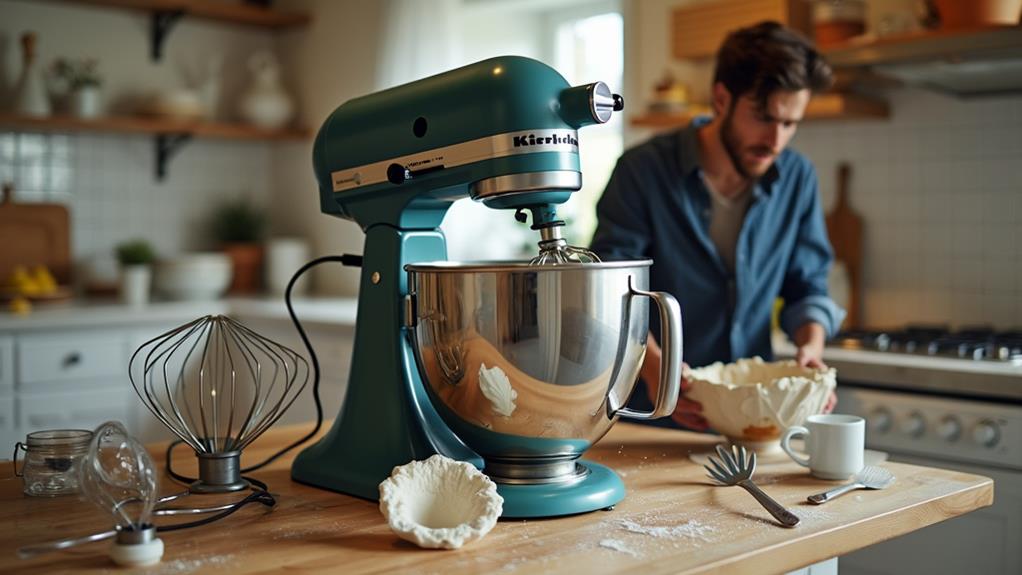
When considering a stand mixer, it's essential to weigh its disadvantages alongside its benefits. These machines often come with a hefty price tag, sometimes exceeding $600, making them a significant investment. Their heavy and bulky design can monopolize counter space, especially in smaller kitchens. Cleaning can be challenging due to intricate components. Additionally, stand mixers can be demanding on your electricity bill, which might concern those mindful of energy consumption. The noise they generate can also be disruptive, making it difficult to have a conversation while they're running.
High Cost
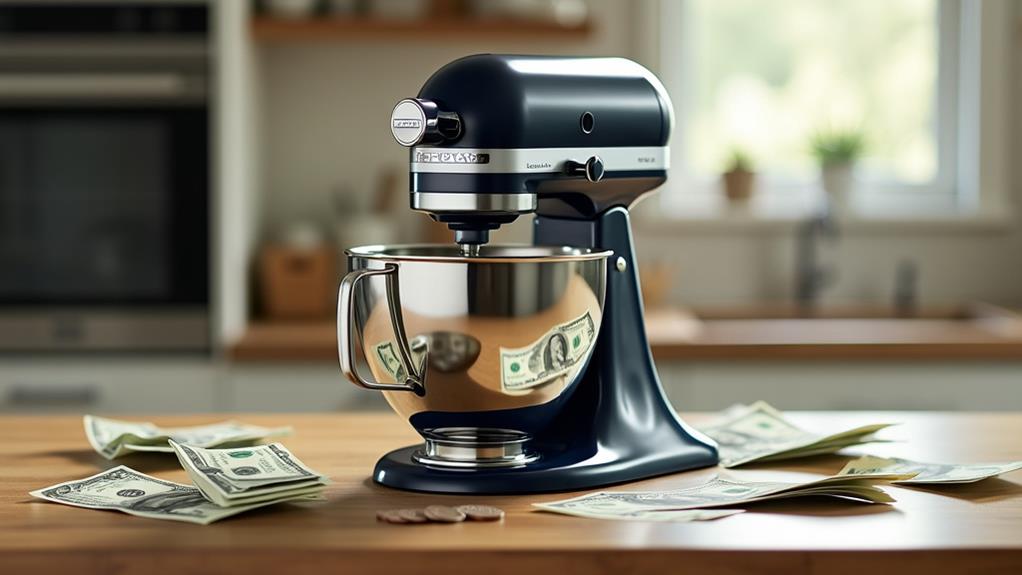
When it comes to stand mixers, their high cost is a significant drawback. Stand mixers generally cost considerably more than hand mixers, with prices often exceeding $600 for high-quality models. This hefty price tag can be hard to justify, especially for casual bakers who only occasionally prepare small batches of dough or batter.
Beyond the initial investment, additional costs can quickly accumulate. Many stand mixers offer optional attachments and accessories, but these extras come at a price, further increasing your total expenditure. Maintenance and potential repair costs can also add to your financial burden, as high-end models often require specialized service, which isn't cheap.
For budget-conscious consumers, the upfront cost of a stand mixer can be a major deterrent. When simpler mixing tasks can be accomplished with more affordable alternatives like hand mixers, it's tough to rationalize spending so much. If you're trying to watch your spending, a stand mixer's high cost might make it an impractical choice. While stand mixers offer many benefits, the financial commitment they require is a considerable factor that shouldn't be overlooked.
Heavy and Bulky
Stand mixers are typically heavy and bulky, weighing between 20 to 30 pounds, which can make them difficult to move or store, especially in smaller kitchens. Their large footprint requires dedicated counter space, posing a challenge in compact environments. Additionally, their bulkiness can make it tough to maneuver or reposition during use.
Space and Storage Issues
For home cooks, the substantial weight and size of stand mixers often present notable challenges. These appliances, typically weighing between 20 to 30 pounds, can be cumbersome to lift and store. Their large footprint, approximately 14 to 16 inches in width and depth, necessitates dedicated counter space, which is particularly problematic in compact kitchens.
Additionally, the bowl capacity of stand mixers, ranging from 3.5 to 7 quarts, and their various attachments require significant storage space. This often results in cluttered countertops, as the bulkiness of the mixer makes stowing it away in cabinets impractical.
Key points to consider regarding space and storage:
- Weight and size: At 20 to 30 pounds, these mixers are heavy.
- Counter space: Requires dedicated space, challenging in small kitchens.
- Footprint: Measures 14 to 16 inches in width and depth.
- Bowl capacity: Ranges from 3.5 to 7 quarts, necessitating additional storage.
- Clutter: Bulky design can lead to countertop clutter.
Managing a stand mixer in a small kitchen can be a formidable task due to these factors.
Difficulty in Transporting
While space and storage issues are significant, the difficulty in transporting a stand mixer adds another layer of inconvenience. Weighing between 20 to 30 pounds, stand mixers are heavy and cumbersome to lift, making it a strenuous task to move them for cleaning or storage. This is particularly challenging for individuals with limited upper body strength or mobility issues.
The bulky design of stand mixers demands dedicated counter space, reducing the flexibility to relocate them within the kitchen or transport them to another location. Furthermore, the fixed base of most stand mixers cannot be easily detached from the bowl, necessitating the handling of the full weight and bulk every time the unit needs to be moved.
Additionally, the various attachments that come with stand mixers contribute to the overall weight and require careful packing to avoid damage, further complicating the process.
Limited Kitchen Compatibility
Stand mixers' large size and weight make them less suitable for compact kitchens. If you have a smaller kitchen, you'll quickly notice the difficulty in making space for such a bulky appliance. Stand mixers often weigh between 20 to 30 pounds, making them challenging to move or store. This can be a significant inconvenience if you don't have a dedicated spot for it.
When dealing with limited kitchen space, consider these points:
- Weight: Moving a stand mixer can be strenuous, especially for those with limited strength or mobility.
- Counter Space: These mixers require a substantial amount of counter space, which might not be available in a smaller kitchen.
- Obstruction: Their bases can occupy a lot of counter depth, potentially obstructing other activities or appliances.
- Storage Issues: Many stand mixers don't fit under standard kitchen cabinets, making it difficult to find a suitable storage spot.
- Repositioning: Cleaning or repositioning them can be challenging due to their design and weight.
Cleaning Challenges
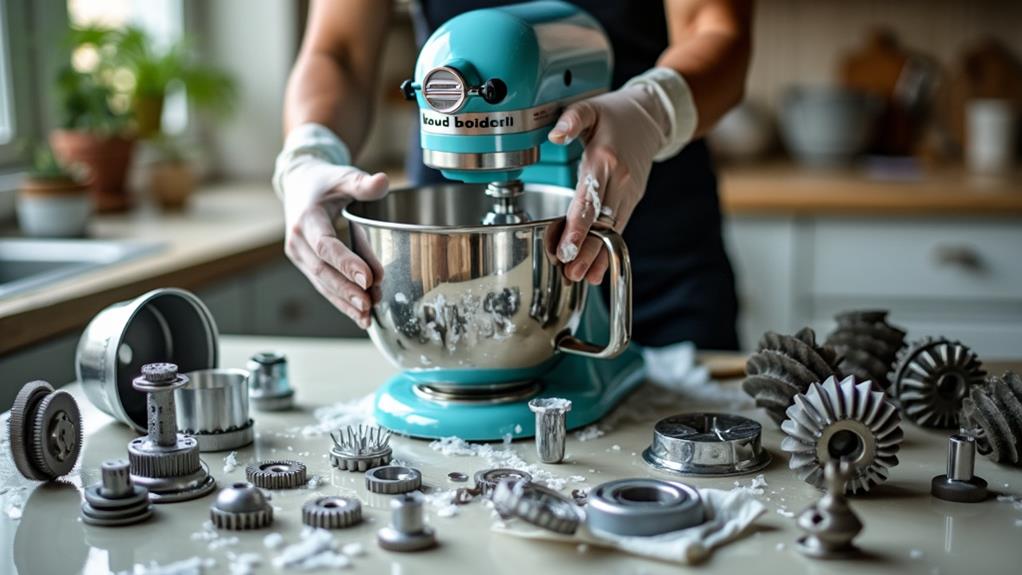
Cleaning a stand mixer can be challenging due to its intricate design and weight. The complex shapes of the attachments make thorough cleaning more time-consuming than simpler hand mixer components. Bits of dough or batter often cling to every nook and cranny, turning a simple cleanup into a meticulous task.
Some attachments aren't dishwasher-safe, requiring hand washing, which adds steps to your cleaning routine. Food particles can accumulate in hard-to-reach areas, necessitating precise disassembly and cleaning to ensure hygiene. It's not just about rinsing the bowl; it's about getting into all the crevices.
The size and weight of stand mixers can make them cumbersome to move, especially in compact kitchens. Regular cleaning is crucial to prevent buildup that could affect the appliance's performance and longevity. While stand mixers offer powerful performance, they come with a significant cleaning commitment that shouldn't be overlooked.
Energy Consumption
Using a stand mixer can lead to higher electricity bills due to its energy consumption, typically ranging from 300 to 1,000 watts. While the powerful motor excels at heavy mixing, it is less efficient for lighter tasks, resulting in unnecessary energy use. Over time, these costs can accumulate, making it important to consider how frequently and for what tasks you utilize your stand mixer.
High Electricity Bills
One key disadvantage of using a stand mixer is the potential for higher electricity bills due to its energy consumption. Stand mixers typically feature powerful motors, ranging from 300 to 1000 watts, which can draw a significant amount of power. Frequent use, especially for extended periods during large batch baking, can result in noticeable spikes in household energy consumption.
While energy-efficient models are available, most standard stand mixers still impact utility costs more than less powerful appliances. For example, operating a stand mixer for just an hour can add an estimated 10 to 60 cents to your monthly electricity bill, depending on local energy rates and the model's wattage.
- Powerful motors: 300 to 1000 watts.
- Frequent use: Can spike energy consumption.
- Higher utility costs: Increased energy use leads to higher bills.
- Limited energy-efficient options: Most models still impact costs.
- Estimated costs: An hour of use can add 10 to 60 cents monthly.
Motor Efficiency Concerns
Stand mixers, despite their utility, often raise concerns about motor efficiency and energy consumption. These appliances, with motors ranging from 300 to 1000 watts, can significantly impact your electricity bill, especially with frequent use. While higher wattage generally denotes stronger performance, it does not always equate to efficient energy use. Some models, despite their powerful motors, struggle with heavy loads, leading to inefficient energy consumption and suboptimal mixing results.
Frequent use of these high-wattage mixers not only increases energy consumption but also accelerates wear on electrical components, potentially leading to earlier replacements and additional costs. This inefficiency is further amplified when using attachments, which often require more power and thus increase overall energy consumption.
Therefore, when choosing a stand mixer, it's crucial to balance the benefits of a powerful motor against the potential downsides of high energy use and inefficiency. Opting for a model that combines power with energy efficiency can help you avoid unnecessary spikes in your electricity bill and ensure your mixer operates effectively for a longer time.
Long-Term Costs
Your stand mixer's energy consumption can significantly affect long-term costs, particularly with frequent use. These appliances typically have powerful motors, leading to higher energy consumption compared to smaller kitchen gadgets, which can result in increased electricity bills over time.
Key Considerations:
- Powerful Motors: Stand mixers generally range from 300 to 1000 watts, drawing substantial power.
- Frequent Use: Regular use, especially multiple times a week or for extended periods, can escalate your energy costs.
- Energy Efficiency: Some high-wattage models may not be energy-efficient, consuming more power than necessary for lighter tasks.
- Utility Bills: Consistent use can lead to noticeable increases in your utility bills, impacting long-term expenses.
- Investment Decision: Weigh the long-term energy costs when deciding to invest in a stand mixer.
While the convenience and capabilities of a stand mixer are undeniable, you should be mindful of its energy consumption. Frequent and prolonged use can significantly impact your monthly utility bills. Choosing an energy-efficient model and using it judiciously can help mitigate these long-term costs.
Storage Issues
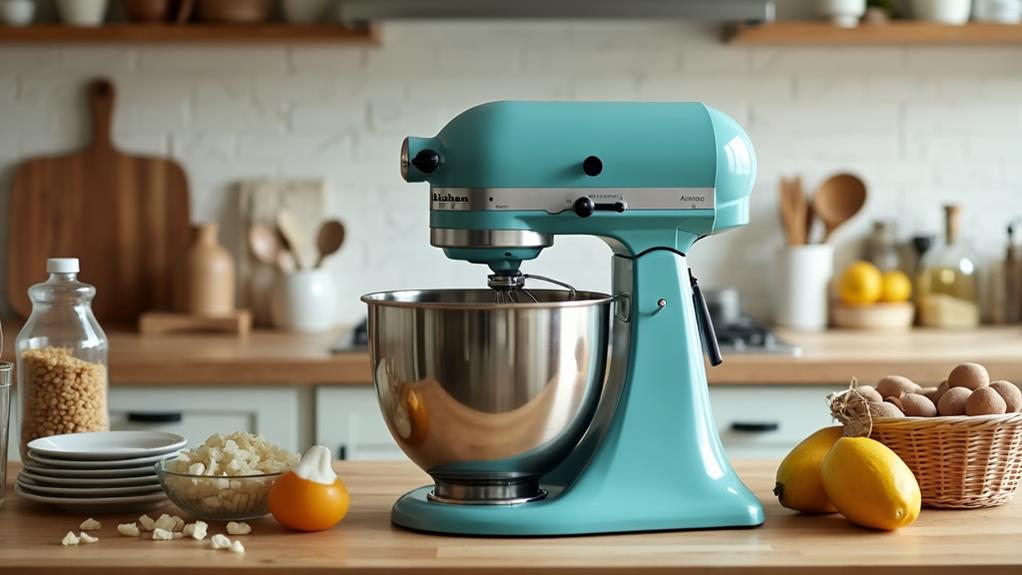
Storing a stand mixer in a compact kitchen poses significant challenges due to its size and weight. Unlike hand mixers, stand mixers are heavier and bulkier, often requiring dedicated counter space that may be scarce in smaller kitchens. Their non-collapsible design makes fitting them into cabinets or on shelves difficult.
Additionally, the various attachments and accessories that accompany stand mixers add to the storage complexity. Efficiently organizing these extra parts necessitates additional space and thoughtful planning. For those with limited strength or mobility, the weight of the stand mixer can further complicate storage and movement.
In a compact kitchen, every inch of space is valuable, and a bulky stand mixer can quickly become an obstacle. Before investing in one, it's essential to consider these storage challenges and plan accordingly. Ensure you have a dedicated spot for the mixer and its attachments, so you don't sacrifice space needed for other essential kitchen items.
Noise Levels
While storage issues are a significant challenge, another notable downside of stand mixers is their noise levels. When you're whipping up a batch of cookies or kneading dough, the noise generated by stand mixers can be quite noticeable, ranging from 60 to 80 decibels. This can be particularly disruptive in a quiet kitchen environment or if you're multitasking.
Consider these points about noise levels:
- Higher speeds: Stand mixers often get louder at higher speeds, making tasks like whipping cream or beating egg whites noisier.
- Heavy mixing: The noise can intensify when mixing dense doughs or heavy batters, as the motor works harder.
- Extended use: Long mixing sessions can lead to increased noise exposure, which may become uncomfortable over time.
- Powerful motors: High-wattage stand mixers tend to produce more noise due to their robust motors, especially under heavy loads.
- Lack of insulation: Many models lack effective noise-reduction features, making them inherently louder than hand mixers.
Given these factors, you might find the noise levels of stand mixers to be a significant drawback, especially if you prefer a quieter cooking experience.
Limited Portability
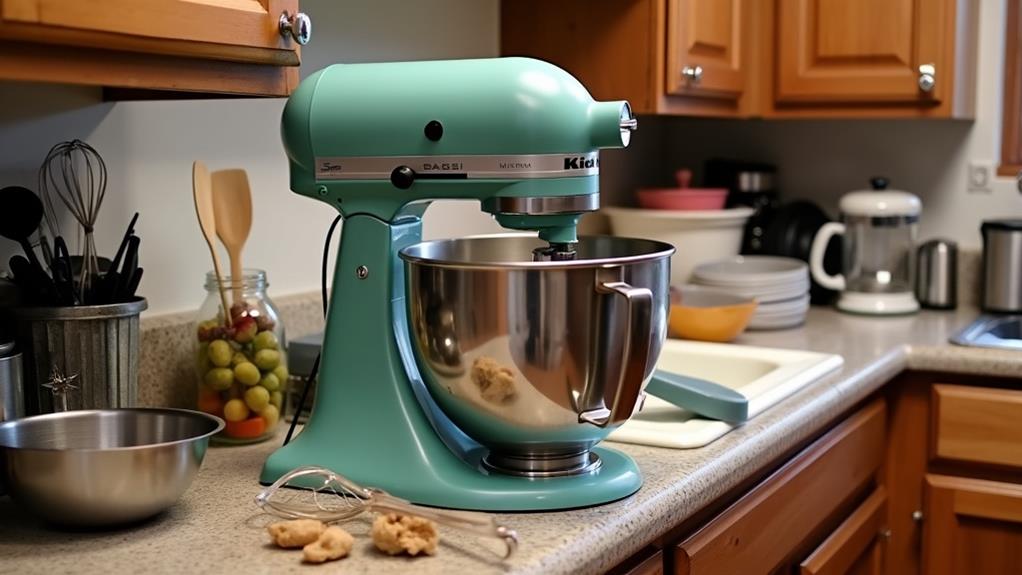
One notable drawback of stand mixers is their limited portability. Typically weighing between 20 to 30 pounds, these appliances are cumbersome to move, particularly in compact kitchens with limited storage. Unlike lightweight hand mixers, stand mixers require a dedicated spot on your countertop, making them less suitable for small spaces.
Another issue is the need for a nearby power outlet, as most stand mixers are not cordless. This restricts their placement and usage flexibility in the kitchen, necessitating an accessible outlet wherever you plan to use the mixer.
The fixed position of stand mixers can also be inconvenient for tasks requiring movement between different areas or surfaces. If your cooking process involves multiple steps in various parts of the kitchen, a stationary stand mixer can slow you down. In contrast, a hand mixer can be easily moved to accommodate your needs. Therefore, if portability is a priority, a stand mixer may not be the best choice.
Overhead Maintenance
Maintaining a stand mixer involves more than just basic cleaning. These appliances require detailed, regular upkeep due to their complexity and multiple components. Here are the key considerations for effective maintenance:
- Cleaning Complexity: The intricate design and various attachments make thorough cleaning a challenge.
- Regular Checks: Periodic lubrication and inspection of the motor and gears are essential to ensure optimal performance.
- Dust Accumulation: The size and weight of stand mixers make them difficult to move, often leading to dust buildup.
- Wear and Tear: Over time, bowls and attachments may need to be replaced to maintain the mixer's functionality.
- Motor Burnout Risk: Many stand mixers lack built-in overload protection, making proper maintenance critical to prevent motor burnout.
For your stand mixer to continue performing well and to extend its lifespan, regular, detailed maintenance is crucial.
Potential Overkill
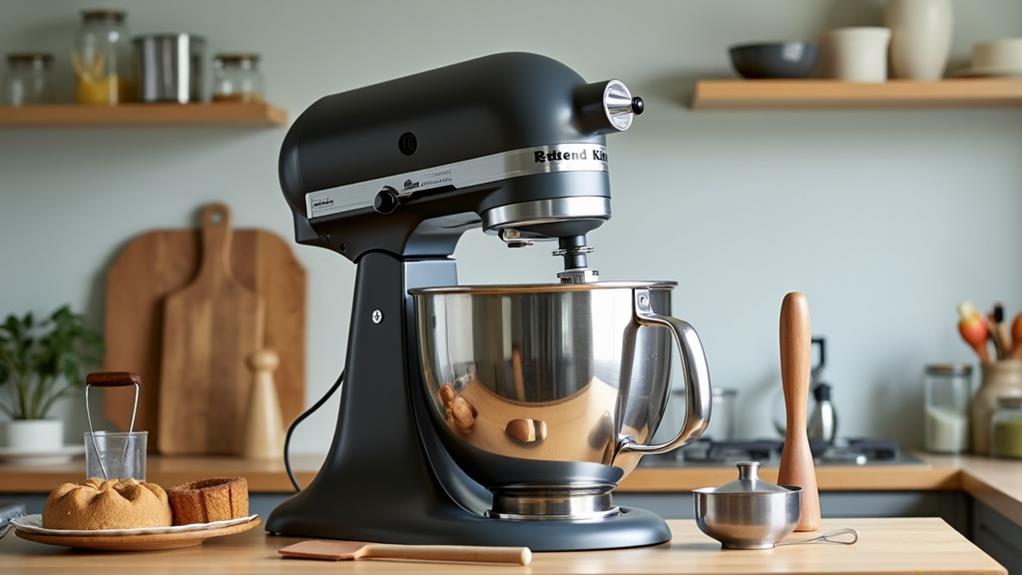
Stand mixers often represent potential overkill for many home kitchens, particularly for small batch cooking. If you're only whisking a few egg whites or blending a small amount of frosting, the large capacity of stand mixers may not be efficient. Their powerful motors can be cumbersome for minor tasks, complicating the process more than necessary.
For casual bakers or those with limited kitchen space, stand mixers can be a hefty investment that doesn't justify their capabilities. Hand mixers, on the other hand, are simpler alternatives that can efficiently handle smaller quantities. Additionally, the weight and bulkiness of stand mixers make them difficult to store in compact kitchens, making hand mixers a more versatile and portable option.
Moreover, using a stand mixer might encourage you to prepare larger quantities than needed, resulting in unnecessary food waste and extra ingredient expenses. In many cases, a hand mixer can serve your needs just as well, without the added hassle and potential for overkill.