What Are the Disadvantages of a Food Processor?
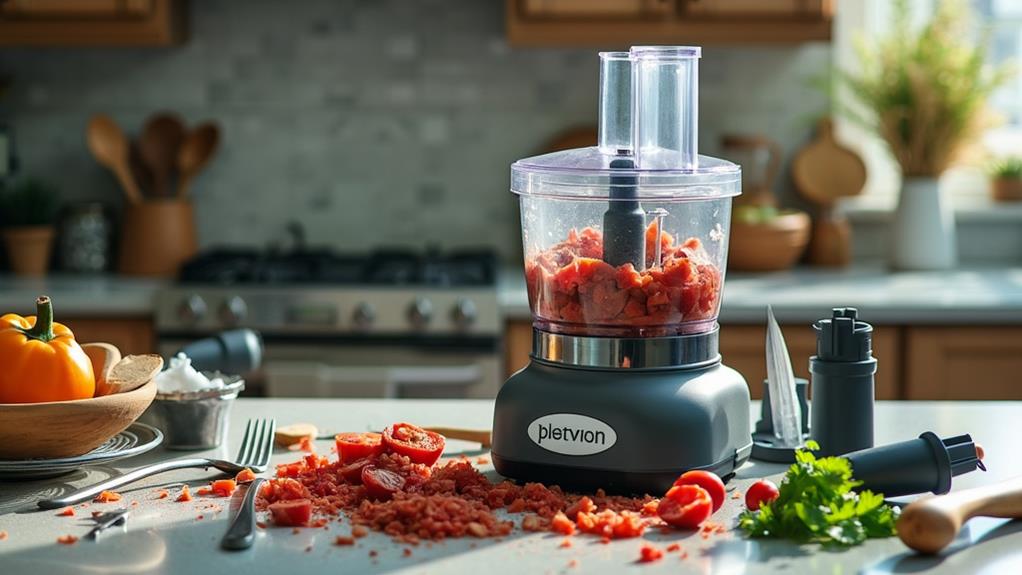
When evaluating a food processor, it's crucial to consider the drawbacks. They often struggle with blending liquids, leaving you with uneven textures instead of smooth results. Their bulky size can be inconvenient, particularly if your kitchen space is limited. Noise levels can also be problematic, sometimes comparable to a vacuum cleaner. Additionally, the cost can be significant, both upfront and for ongoing maintenance. Cleaning can be laborious due to the multiple detachable parts. Moreover, overprocessing food and storage challenges are other factors to keep in mind.
Limited Smoothie Capability

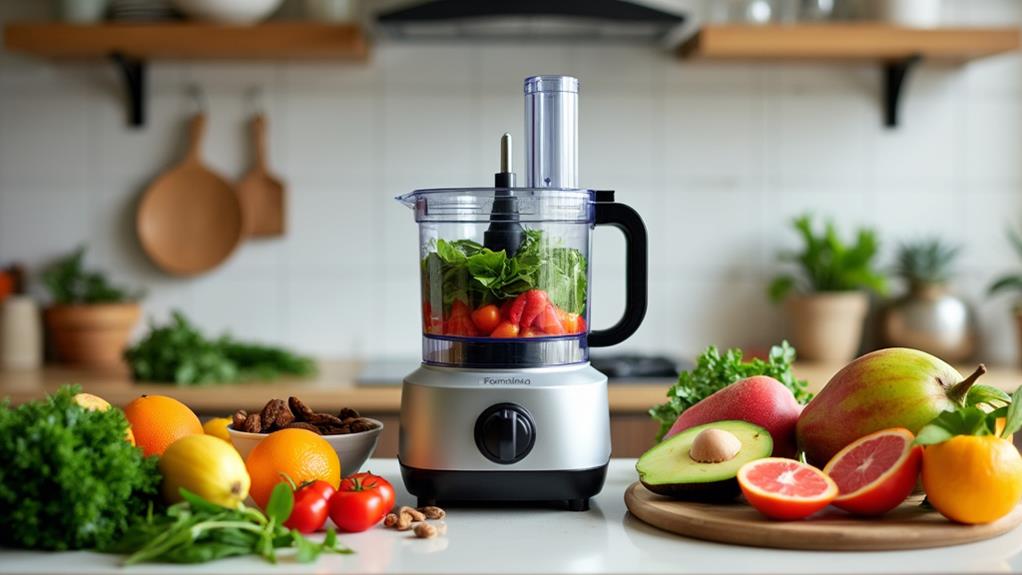
Creating smoothies with a food processor can be challenging and often unsatisfactory. Food processors are not designed for blending liquids as effectively as blenders, making it difficult to achieve a smooth, creamy texture. You may find chunks of fruit or ice in your drink, reducing its overall enjoyment.
One significant drawback is that food processors require more liquids to reach a somewhat smooth consistency, which is not ideal for thick, nutrient-dense smoothies. Additionally, the blades in food processors lack the vortex action needed to fully incorporate all ingredients, often resulting in an uneven texture with unblended chunks.
Food processors also tend to overflow when handling thick mixtures, leading to messy spills and inefficiency. While they excel at chopping and mixing, they fall short in creating the perfectly blended, smooth consistency desired in a quality smoothie. Using a blender is recommended to avoid these issues.
Bulky Size
Food processors often have a larger footprint compared to blenders, making them cumbersome to store in smaller kitchens or on crowded countertops. If you have limited space, their bulkiness can be a significant drawback. They frequently require a designated cabinet space, which can limit storage for other essential kitchen appliances or tools.
Here are some challenges you might encounter due to a food processor's size:
- Storage Issues: Finding a spot for a food processor and its multiple attachments can be challenging.
- Limited Countertop Space: Their larger size takes up valuable countertop real estate.
- Weight Concerns: Weighing between 10 to 20 pounds, they are not easy to move in and out of storage.
- Inefficiency for Small Tasks: Using a full-size food processor for minimal tasks can feel wasteful and inefficient.
The general bulkiness of a food processor can complicate kitchen organization and daily use. If you value a streamlined kitchen, the size and storage demands of this appliance might not be worth the hassle.
Noise Levels

Noise Levels
When operating a food processor, you will quickly notice the significant noise it generates. This kitchen appliance often produces higher noise levels than blenders, particularly when processing tough ingredients or running at higher speeds. The sound can range between 80 to 90 dB, comparable to a vacuum cleaner, making it quite disruptive in a quiet kitchen environment.
In shared living spaces, this noise can be especially bothersome. Most food processors lack sufficient sound insulation, as noise reduction is not a primary design focus. Consequently, the loud operation can easily carry through walls or open spaces, disturbing others nearby. If you live in a small apartment or house with thin walls, the noise from a food processor can be a significant issue.
Additionally, continuous use over extended periods can strain the motor, further increasing the noise. This added discomfort can make it challenging to enjoy the convenience that food processors offer. When selecting a food processor, it is crucial to consider these noise levels, especially if you frequently prepare meals while others are home. Balancing efficiency and peace in your kitchen may require searching for models that specifically address noise reduction.
Cost Considerations
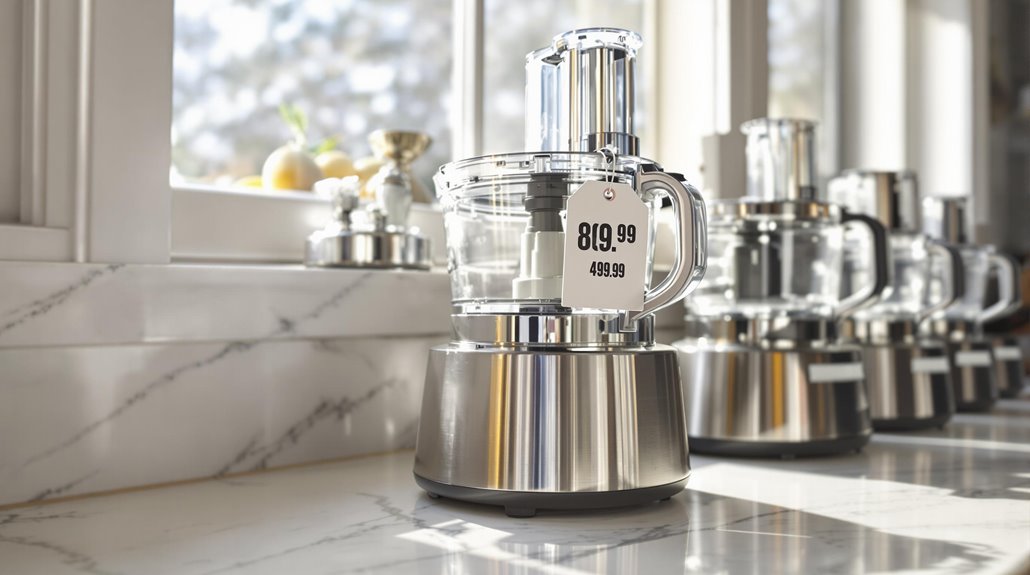
When considering the purchase of a food processor, it's important to note that initial costs can range from $100 to over $400 for quality models. Additionally, ongoing expenses such as maintenance and repairs, including replacing blades and seals, can add to the total cost over time. These financial factors should be carefully evaluated to determine if a food processor fits within your budget.
Initial Purchase Expense
Investing in a food processor can be a significant financial commitment, especially when compared to more affordable kitchen appliances like blenders. The initial purchase price of food processors typically ranges from $100 to over $400, depending on the model and features. For heavy-duty or commercial-grade units, the cost can exceed $1,000, making them a substantial investment for home chefs.
When considering the overall expense, it's essential to account for the multiple attachments and accessories that often come with food processors. These add-ons can increase the initial cost, and you might find that not all of them are necessary for your needs. For budget-conscious consumers, these extra features might seem like an unnecessary expense.
Here are the key points to consider:
- Initial Purchase Price: Food processors generally cost more than blenders.
- Total Expense: The total cost can be high due to additional attachments.
- Maintenance Costs: While not detailed here, they contribute to the overall expense.
- Budget-Conscious Consumers: Blenders might be a more economical alternative.
Maintenance and Repairs
Maintaining and repairing a food processor can be both time-consuming and costly due to its multiple components, which are prone to wear and tear. Regular maintenance, such as checking seals and blades for wear, is crucial but adds to the total cost of ownership. You may find yourself frequently inspecting and replacing parts to ensure your machine runs smoothly.
Repairs can be another financial burden. Replacing a motor or a set of blades may cost between $50 to $150, depending on the model and parts needed. Given the complexity of food processors compared to simpler appliances, professional repairs are often necessary, further increasing costs. Average repair service fees range from $75 to $100 per hour, making even minor fixes expensive.
Investing in a durable, high-quality food processor might save you on future maintenance and repair expenses due to superior build quality, but it does come with a higher upfront cost. Weigh these cost considerations to decide if the long-term durability and performance of a high-quality model justify the initial investment.
Complex Cleaning
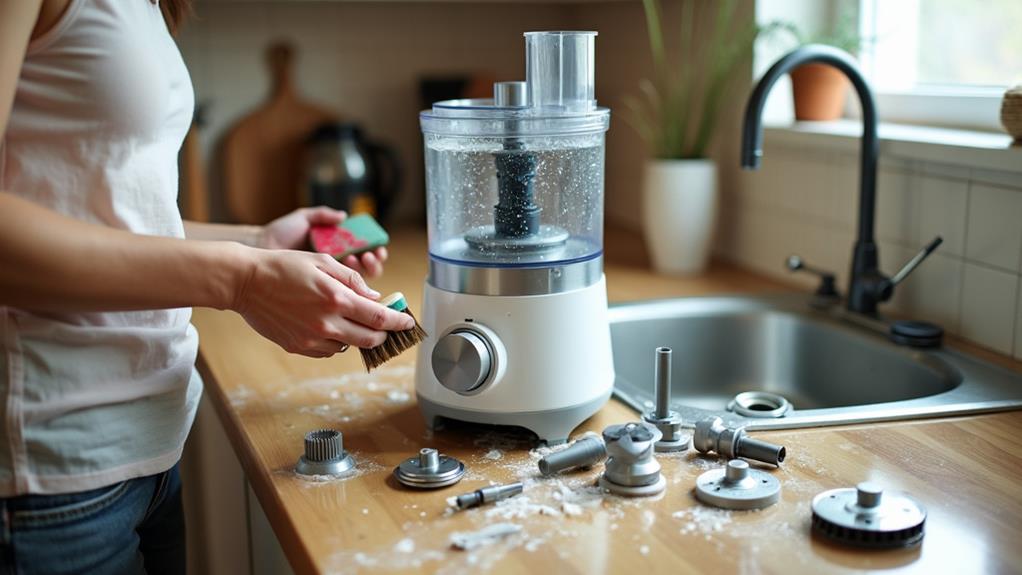
Cleaning a food processor can be a daunting task due to its multiple detachable parts, such as blades, bowls, and lids that require careful disassembly. The intricate design often traps food particles in small crevices, necessitating thorough cleaning to maintain hygiene.
Additionally, the sharp blades demand extra caution to avoid injuries during cleaning. Unlike blenders, which usually have fewer parts and can be easily rinsed or placed in a dishwasher, food processors often need to be hand-washed. This not only increases cleanup time but also adds to the overall effort required for upkeep.
Key points to consider:
- Complex Cleaning: Multiple detachable parts complicate the process.
- Thorough Cleaning: Food particles can get trapped in small crevices.
- Sharp Blades: Extra caution is needed to prevent injuries.
- Maintenance: Regular cleaning and inspection of seals and blades are crucial for optimal performance.
Potential Overprocessing
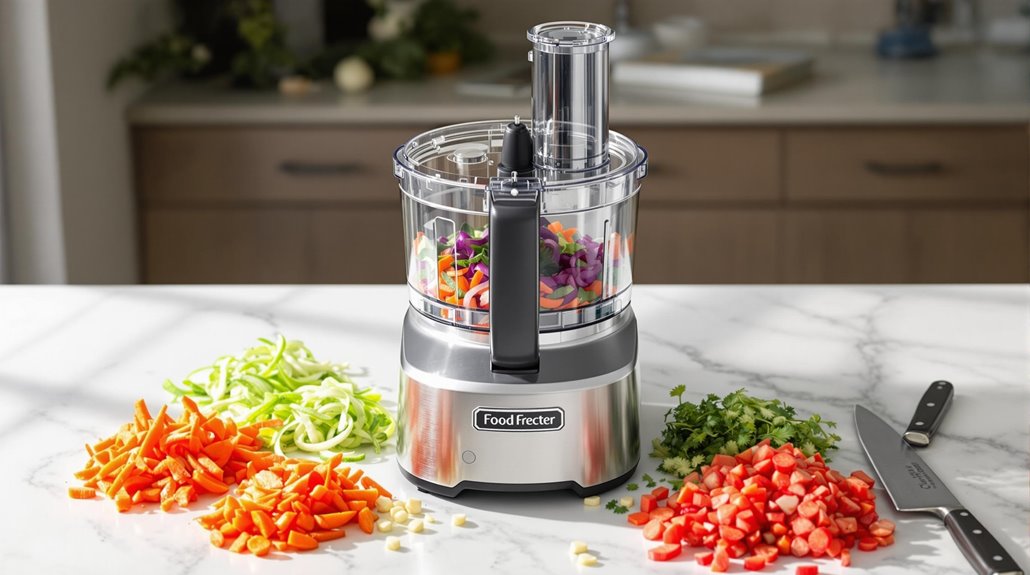
When using a food processor, overprocessing can result in a loss of texture, turning vegetables mushy or making dough overly dense. Continuous operation without using the pulse function often leads to an overly fine consistency, potentially ruining your dish. It's crucial to monitor the process closely to avoid having to start over.
Loss of Texture
Food processors are incredibly versatile kitchen tools, but they carry the risk of overprocessing ingredients, which can ruin the desired texture of your dish. Overprocessing ingredients like potatoes or bread dough can result in a gummy or paste-like texture, particularly detrimental for recipes requiring precise consistencies, such as purees.
To avoid this, monitor the food processor's performance carefully. The rapid blade rotation can quickly alter the texture of the ingredients, making it easy to overprocess them. Here are some common pitfalls to watch out for:
- Mushy Vegetables: Vegetables can become mushy if processed for too long.
- Uneven Textures: Unlike blenders, food processors may produce uneven textures, especially with softer ingredients.
- Gummy Dough: High-starch ingredients like potatoes can turn gummy.
- Compromised Quality: Overprocessing can compromise the quality and appeal of your final dish.
To maintain the desired texture, pulse the food processor in short bursts and regularly check the consistency. This approach allows you to better control the outcome and avoid turning your ingredients into an unappealing mush.
Overly Fine Consistency
One of the main drawbacks of using a food processor is its tendency to overprocess ingredients, resulting in an overly fine consistency. This can be problematic when you're aiming for dishes that require a chunky or textured finish, like salsas or dips. Instead of getting a delightfully chunky salsa, you might end up with an unintended puree.
Overprocessed ingredients can turn into a paste or puree, losing their intended texture and structure. This is particularly problematic for recipes like coleslaw or vegetable salads, where a crisp and distinct texture is essential. Overprocessing can also release excess moisture from the ingredients, adversely affecting the consistency and flavor of your final dish.
To avoid overprocessing, use the pulse function judiciously. This feature allows you to process ingredients in short bursts, giving you better control over the final texture. Continuous operation can quickly break down ingredients more than desired, so always monitor the consistency. Being mindful of these factors can help you achieve the desired texture and avoid the pitfalls of overprocessing.
Storage Requirements
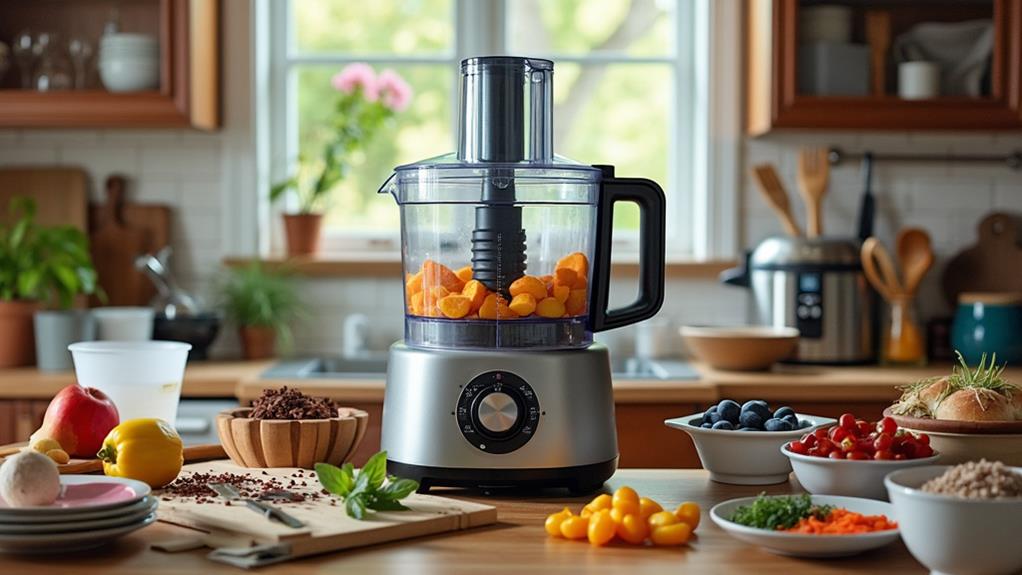
Full-size food processors can take up a significant amount of counter and cabinet space, making them a poor fit for small kitchens with limited storage. Their bulky design often requires dedicated storage areas that could otherwise be used for other kitchen necessities.
Consider the following challenges:
- Storage: Food processors come with multiple components and attachments that need to be stored separately to avoid damage or misplacement.
- Counter Space: Their large footprint can dominate your countertop, making it harder to keep your kitchen organized.
- Bulky Design: Finding a convenient storage spot in your cabinets can be tricky due to their size and complexity.
- Portability: Their weight and size can make them difficult to move, limiting their use if you need a portable cooking solution.
These factors make food processors less practical for those with limited kitchen space or the need for a portable appliance. Before investing, assess whether your kitchen can accommodate its storage and usage demands.
Limited Liquid Handling
Food processors have limitations when it comes to handling liquids. If you're thinking of blending soups or smoothies, you'll quickly notice that food processors aren't designed for large amounts of liquid, which can result in overflows and spills, creating a mess.
Food processors excel with thicker consistencies but struggle with purees or thin mixtures. Unlike blenders, they don't create a vortex, so they can't evenly incorporate and blend liquid ingredients, making it difficult to achieve a smooth, uniform texture.
Additionally, the non-leakproof feed tube is a drawback. When processing mixtures that require added liquids, there's a risk of seepage during operation, which can be inconvenient if ingredients need to be added gradually.
To achieve the best results, you often need to process solids first and then slowly incorporate liquids. This method is more time-consuming and less efficient than blending everything together at once. While food processors are excellent for many tasks, handling liquids isn't one of their strengths.
Maintenance Needs
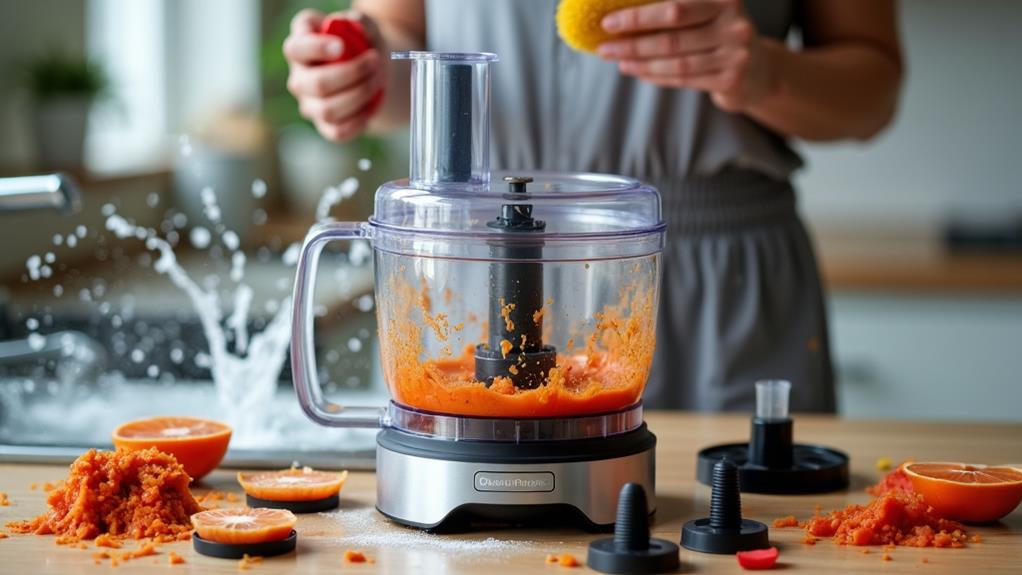
Maintaining a food processor can be more demanding than simpler appliances, primarily due to its intricate design and multiple components. Regular disassembly for thorough cleaning is time-consuming, and the complexity of the machine increases the likelihood of wear and tear over time.
Keeping the blades sharp is essential for optimal performance, and dull blades result in inefficient processing. Replacing dull blades adds to maintenance costs. Additionally, proper storage is crucial to prevent damage to various parts, which can occupy significant kitchen space and complicate organization.
To ensure safety and performance, routine maintenance such as checking seals and gaskets for wear is necessary. This requires regular attention, which can become burdensome over time.
Key maintenance challenges include:
- Time-consuming disassembly and cleaning
- Increased wear and tear due to multiple components
- Need to maintain blade sharpness
- Proper storage to prevent damage