Is There a Way to Grind Meat Without a Grinder?
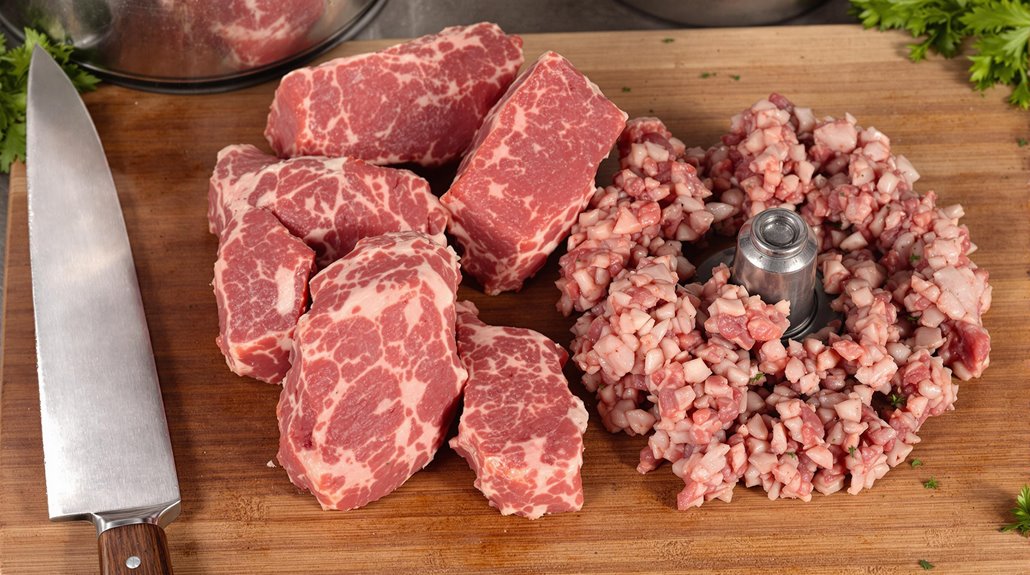
You can easily grind meat at home without a meat grinder using either a sharp knife or food processor. For the knife method, slice your meat at 45-degree angles and make perpendicular cuts, then chop rapidly. With a food processor, cut the meat into small cubes and pulse in short bursts. Partially freeze the meat beforehand for better control, and always follow proper food safety guidelines. There's much more to commanding the perfect grind than these basics.
Why Hand-Chopped Meat Beats Store-Bought Every Time
The difference between hand-chopped and store-bought ground meat is instantly noticeable in both taste and texture. When you grind meat at home through hand-chopping, you'll experience a more distinctive, meaty texture that's far superior to the uniform, paste-like consistency of machine-processed varieties. Unlike using a meat grinder, hand-chopping gives you complete control over the coarseness of your grind. You'll also enjoy peace of mind knowing your hand-chopped ground meat is safer to consume.
By grinding meat yourself, you'll minimize the risk of cross-contamination that's common with pre-ground store options. Whether you're working with beef, chicken, lamb, or turkey, this method provides you with the ability to create fresh ground meat whenever you need it, saving unnecessary trips to the grocery store while offering better flavor and texture. For optimal food safety, always keep the meat at below 40 degrees Fahrenheit during the preparation process.
Essential Tools for Grinding Meat at Home
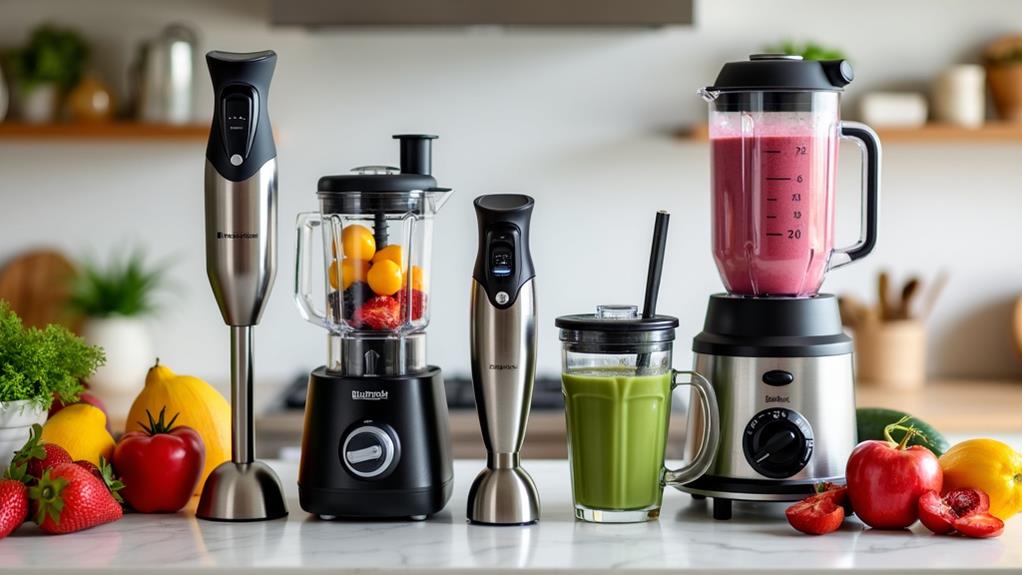
Successful meat grinding at home relies on just a few key tools you probably already own. To Grind Your Own Meat, you'll need either a sharp knife (preferably a chef's knife) or a food processor as your primary tool. While a knife gives you control over the texture through hand-chopping, a food processor offers speed and convenience.
You'll also want to keep your meat and tools cold. Pop your meat in the freezer until it's partially frozen, which makes it easier to cut cleanly. If you're using a food processor, chill the blade beforehand to prevent the meat from heating up during processing.
Don't forget cleaning supplies - thorough sanitization of your tools is essential when handling meat at home to prevent any food safety issues. When preparing the meat, cut it into uniform small cubes before processing to ensure even grinding and protect your equipment.
Step-by-Step Guide to Manual Meat Grinding
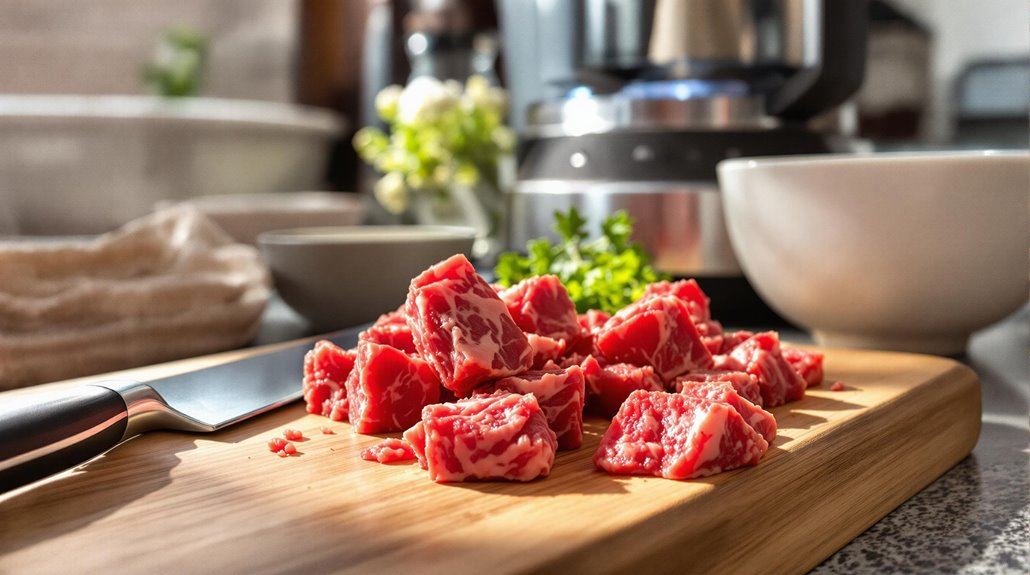
Manual meat grinding requires precise knife work to achieve the ideal texture for your ground meat. Without a Meat grinder, you'll need to follow specific cutting techniques to convert your meat into the perfect consistency.
- Start by slicing the meat at a 45-degree angle, cutting about 75% through, making sure your cuts are approximately 1/4-inch thick.
- Turn the meat over and repeat the 45-degree angle cuts in the opposite direction, creating a diamond pattern.
- Make perpendicular cuts at 90-degree angles on both sides, maintaining the same depth and spacing.
- Finally, gather the partially cut meat and chop it rapidly from side to side using the heel of your knife.
This grinding method creates a texture similar to traditionally ground meat, perfect for burgers, meatballs, or any recipe requiring ground meat.
Like the mortar and pestle technique used for centuries, this manual method ensures full flavor extraction and precise control over the final texture.
Using Your Food Processor as a Meat Grinder
When preparing ground meat at home, your food processor can serve as an efficient alternative to traditional meat grinders. To achieve the best results, you'll need to cut your meat into small, uniform cubes and partially freeze them before processing. This chilling step prevents the meat from overheating and becoming mushy during grinding.
Using your food processor to grind meat gives you complete control over the final product's texture and fat content. Pulse the meat in short bursts until you reach your desired consistency. You'll notice that freshly ground meat processed this way offers superior flavor and texture compared to store-bought options. The key is to work in small batches and avoid overprocessing, which can turn your meat into paste. With this method, you'll enjoy restaurant-quality ground meat right from your kitchen.
Choosing the Right Cuts of Meat for Grinding
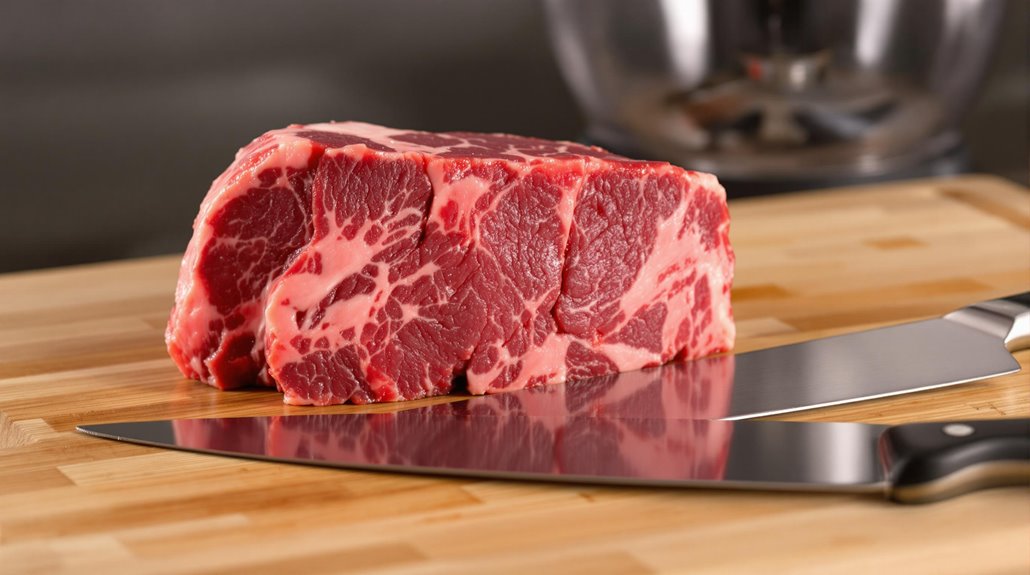
The art of selecting meat for grinding starts with understanding which cuts deliver the best results. You'll find that any type of meat can work, but certain cuts will give you superior flavor and texture when grinding without traditional equipment.
For the best results, consider these essential tips:
- Choose fatty cuts like beef chuck or pork shoulder, as they provide ideal texture and taste
- Mix different cuts, such as brisket and round, to control the fat content
- Partially freeze your chosen cut of meat for 30 minutes before processing to prevent slipping
- Look for fresh, high-quality cuts and handle them properly to guarantee food safety
Your choice of meat will vastly impact the final product's quality. Remember that hand-cutting creates a more distinctive texture compared to store-bought ground meat, giving your dishes a unique, artisanal touch.
The Perfect Meat-to-Fat Ratio
Getting the right meat-to-fat ratio is crucial for creating flavorful, juicy ground meat at home. You'll want to aim for at least 20% fat content in your final product, as lean meat can lead to tough, flavorless results when cooked. When selecting cuts for your ground beef or other meats, shoulder cuts naturally provide an ideal 80/20 blend.
If you're looking for an even richer flavor, consider using fattier cuts like brisket or short ribs, which can create a 75/25 ratio. When your lean ground meat needs more fat, you can easily add pork fatback or other fat trimmings to achieve the perfect balance. Remember, fat equals flavor, so don't be tempted to use extremely lean meat when grinding - it won't give you the juicy, tender results you're after.
Tips for Achieving Different Grind Textures
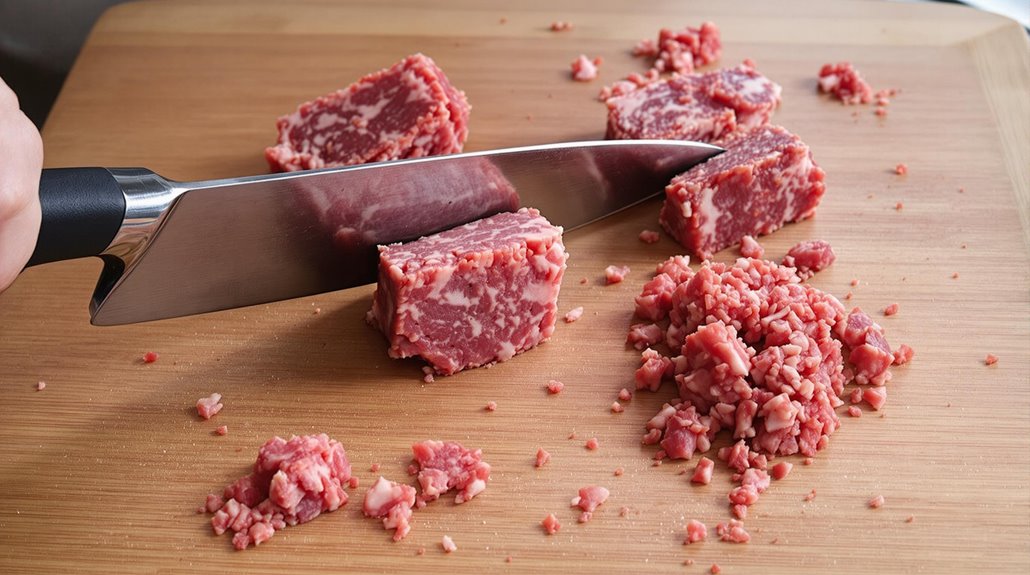
Different textures serve distinct culinary purposes when grinding meat at home. When grinding your own meat, you'll need is a sharp knife and patience to achieve the perfect consistency. The meat should look uniform throughout, whether you're aiming for a fine or coarse grind.
- For a coarse grind ideal for burgers, cut meat into 1-inch cubes and pulse briefly in a food processor.
- For medium texture perfect for meatballs, chop meat into smaller 1/2-inch pieces and process until it reaches your desired consistency.
- For fine grinds suited to sausages, freeze meat slightly and chop into 1/4-inch pieces before processing.
- For extra-fine texture like pâté, process longer and scrape down sides frequently to verify even grinding.
- Remember to maintain cold temperatures throughout the process for the best results.
Best Recipes Using Freshly Ground Meat
Once you've gained proficiency in grinding your own meat, countless recipe possibilities await. You'll discover that freshly ground meat enhances everyday dishes to new heights of flavor and texture.
Try making juicy homemade burgers with freshly ground beef chuck, or create flavorful meatballs using a blend of ground pork and beef. When you chop the meat yourself, you can craft lean Ground chicken patties for healthier alternatives. Asian-inspired dishes like larb or dan dan noodles become more genuine when you grind and season the meat to your preferences.
Your homemade food will taste better with custom-ground meat in dishes like shepherd's pie, stuffed peppers, or classic Bolognese sauce. The coarse or fine texture you make ground meat into can be perfectly matched to each recipe's requirements, ensuring ideal results every time.
Storage and Food Safety Guidelines
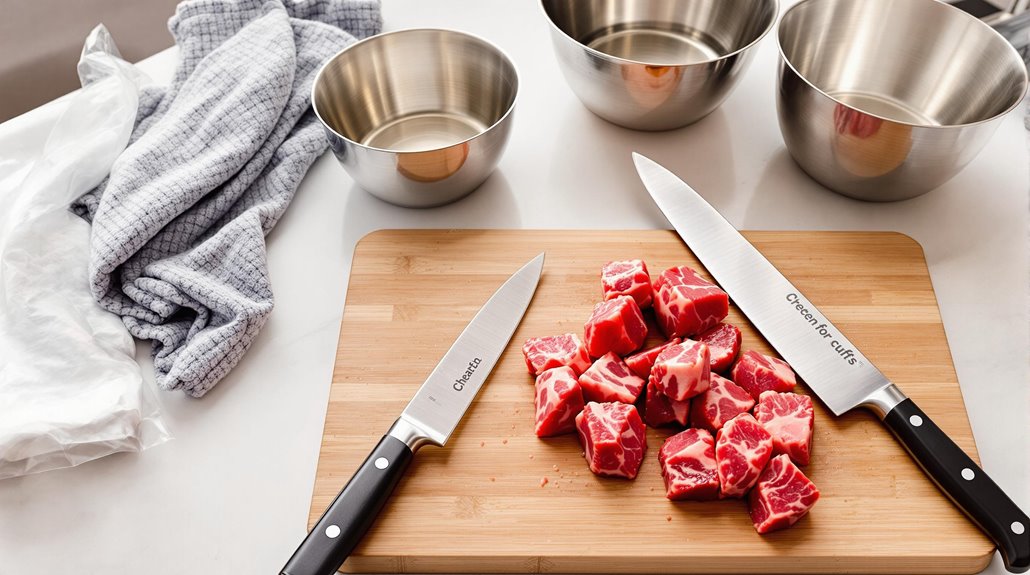
Proper storage and handling of ground meat is essential for both safety and quality. Whether you're grinding meat at home in New York or using store-bought ground beef, you'll need to follow trusty food safety guidelines to prevent foodborne illness.
Always properly refrigerate or freeze ground meat immediately after grinding or purchasing. Use fresh ground meat within 1-2 days, or freeze it for extended storage. When thawing frozen ground meat, place it in the refrigerator - never on the counter. Cook all ground meat thoroughly to 160°F (71°C) internal temperature.
Keep your work surfaces and equipment clean to avoid cross-contamination. This is especially important when grinding meat at home, as bacteria can quickly multiply if proper safety measures aren't followed. Remember, food safety isn't just about taste - it's about protecting your health.