Is It OK to Use a Food Processor as a Blender?
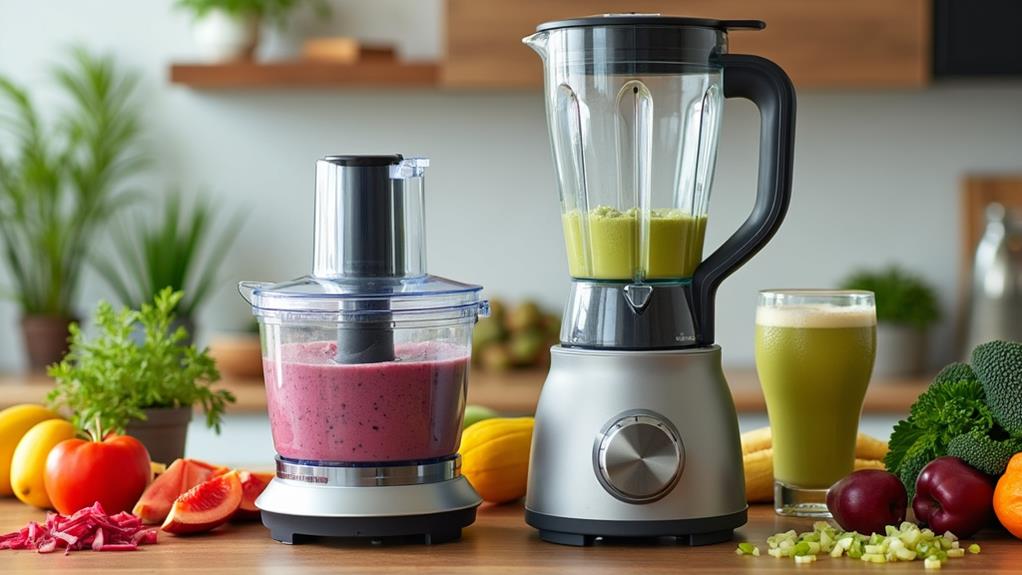
You might wonder if it's okay to use a food processor as a blender, especially when you're trying to save space or avoid buying another appliance. While both gadgets can handle various kitchen tasks, they each have specific strengths. A food processor excels at chopping, slicing, and mixing solid ingredients, while a blender is designed for liquids and producing smoother textures. So, what happens when you swap their roles? Can you achieve a perfect smoothie or creamy soup using a food processor? Let's explore this further to determine if one can effectively substitute for the other.
Understanding Food Processors
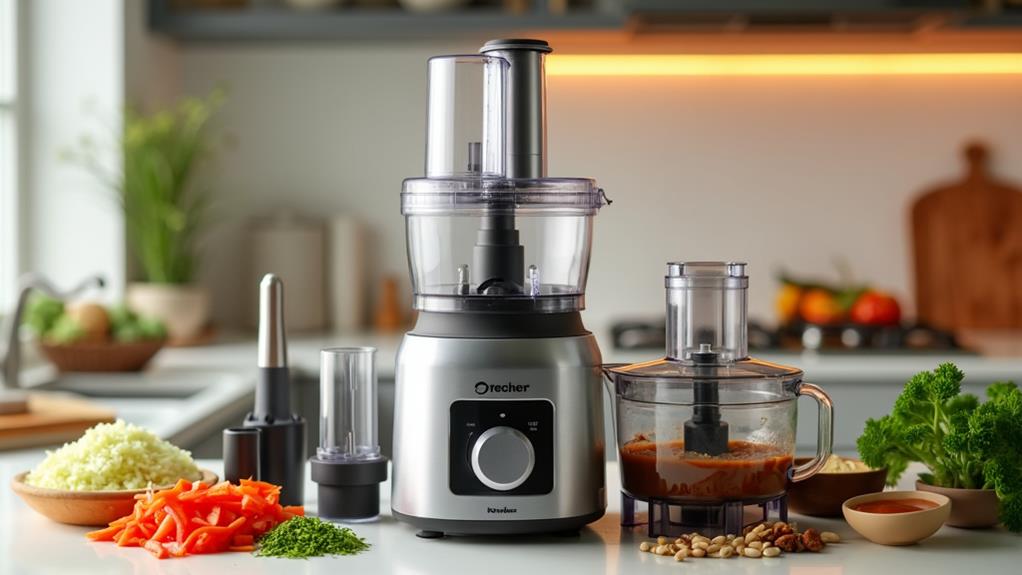
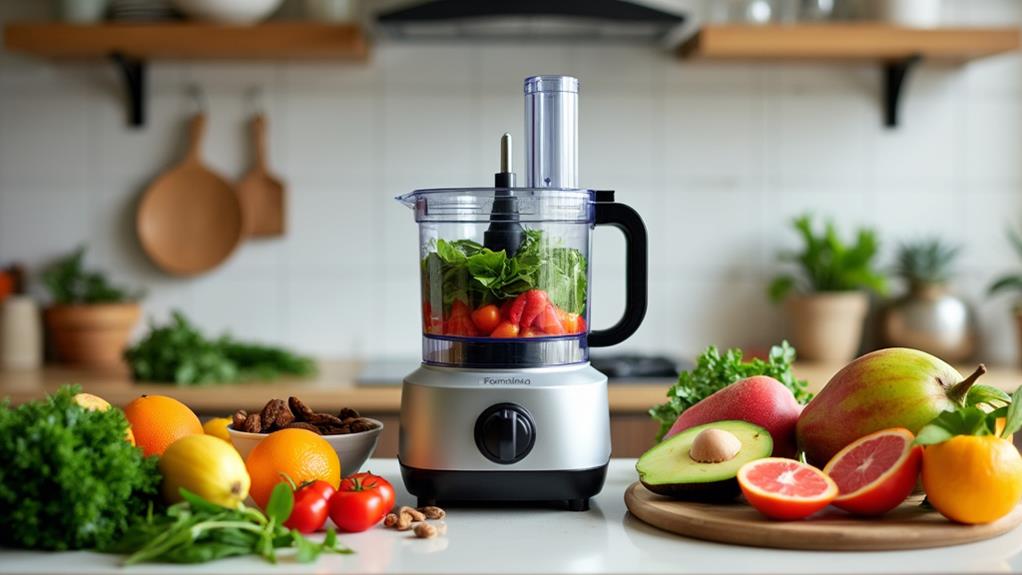
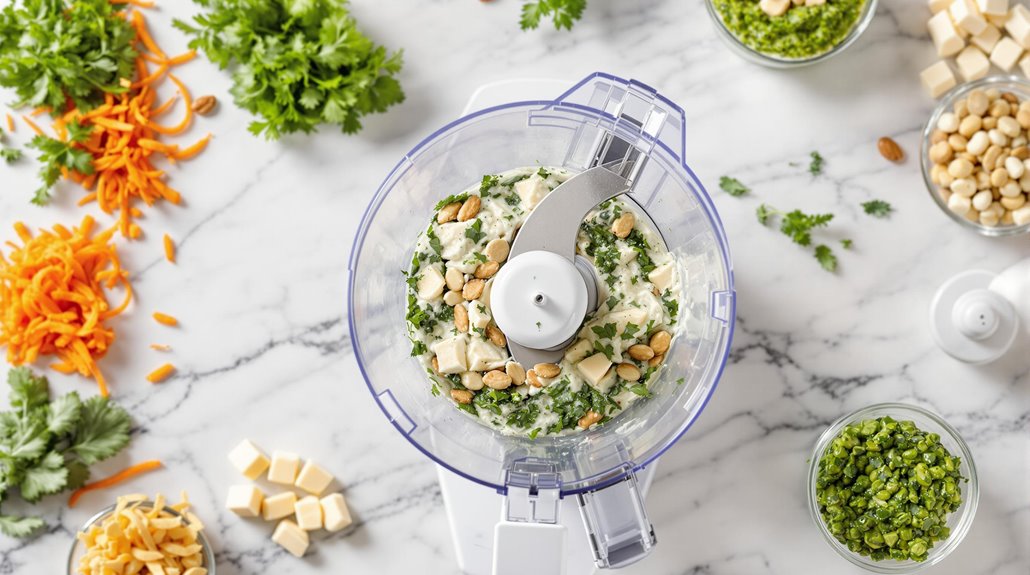
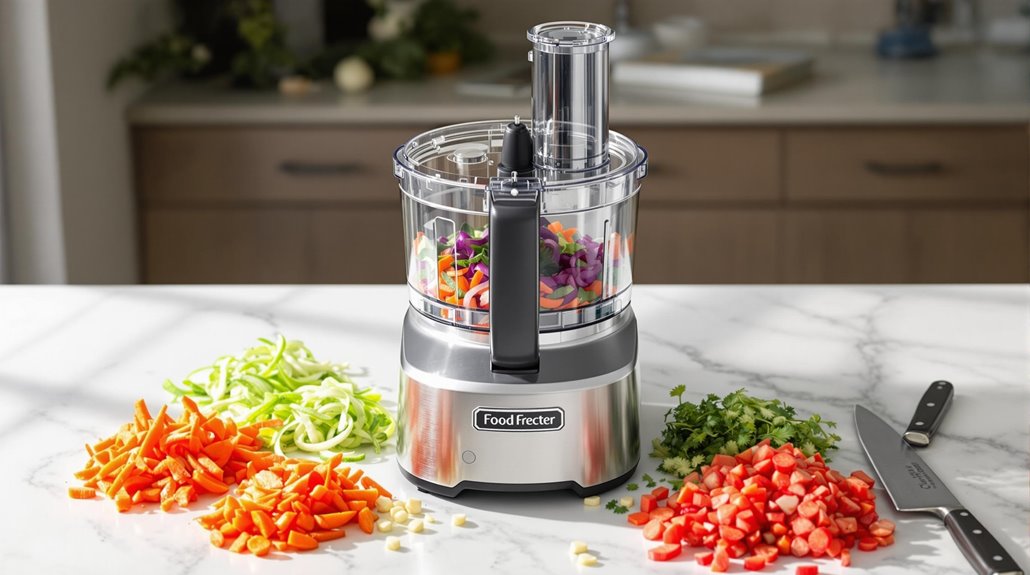
A food processor is a versatile kitchen appliance designed to handle solid ingredients efficiently. It excels at tasks such as chopping, slicing, and grating, making it an essential tool in your culinary arsenal. Unlike blenders, which are optimized for blending liquids, food processors feature removable blades and interchangeable discs, allowing for a seamless switch between various food preparation functions.
The sharp, robust blades of a food processor ensure even chopping and pureeing, enhancing its efficiency, especially for bulk meal preparation. The wide bowl provides ample space for ingredients, and the feed tube allows for additional items to be added without interrupting the process, further streamlining cooking tasks.
It is important to note that while a food processor can handle small amounts of liquids, it is not designed for blending smoothies or soups. It lacks the capability to create the vortex necessary for thorough mixing. Therefore, consider your food processor as an efficient, flexible tool for solid ingredients, capable of performing numerous tasks but not specifically intended for liquid blending.
Understanding Blenders
For liquid-based recipes, a blender is an essential kitchen appliance. It's specifically designed to mix, puree, and emulsify foods, making it perfect for recipes that require a smooth texture. Think of your favorite smoothies, soups, sauces, and nut milks—these liquid-based dishes are best made with a blender. Its powerful motor and fixed blades create a vortex that pulls ingredients down for even blending.
Compared to a food processor, a blender excels in tasks involving liquids. The tall jar design enhances its efficiency, ensuring uniform blending. The blades, though less sharp than those of a food processor, are angled to optimize ice crushing and blending, yielding perfectly smooth results.
Here's a quick comparison to help you understand:
| Feature | Blender |
|---|---|
| Primary Use | Liquid-based recipes |
| Best For | Smoothies, soups, sauces, nut milks |
| Blade Design | Angled for ice crushing and blending |
| Texture Achieved | Smooth and uniform |
| Solid Ingredients | Less suitable without added liquid |
Functional Differences
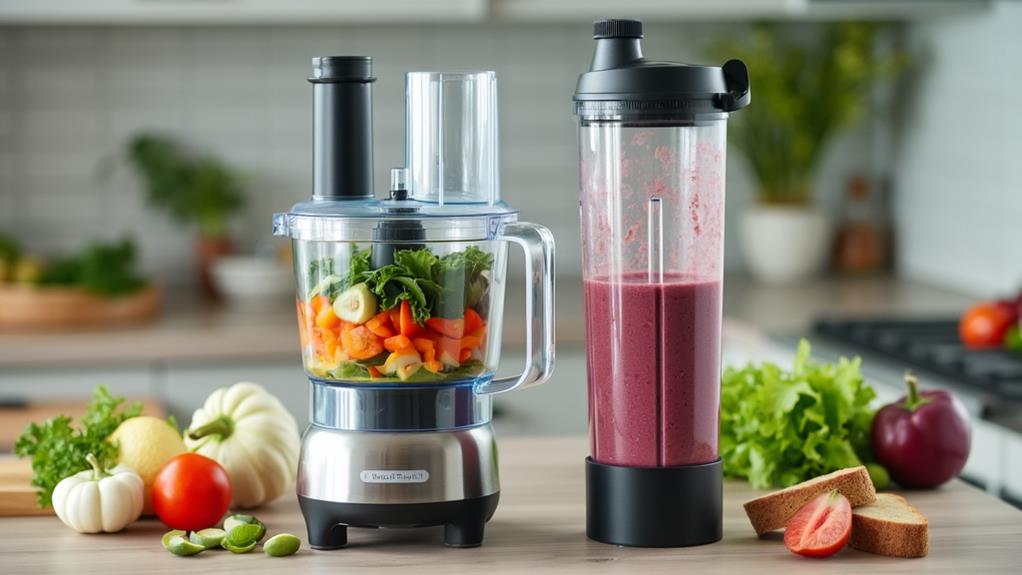
While blenders excel in liquid-based recipes, it's crucial to understand the distinct functionalities of food processors and blenders. Food processors are designed for chopping, slicing, and dicing solid ingredients, thanks to their versatile blade design. They are ideal for tasks such as dicing vegetables and shredding cheese. In contrast, blenders have a single, fixed blade optimized for creating a vortex to liquefy and puree ingredients, making them perfect for smooth and creamy mixtures.
Food processors handle solid ingredients well and create chunky textures effectively. However, blenders are better for achieving smooth consistencies in recipes like smoothies and creamy soups. The blade design difference means food processors struggle with liquid dynamics that blenders manage easily, often resulting in uneven textures when used for blending.
While food processors can manage some blending tasks, they are generally not recommended for recipes requiring a smooth finish. Understanding these functionalities helps ensure you choose the right tool for your culinary needs.
Ideal Uses for Each
Choosing the right kitchen tool can significantly enhance your cooking experience. Understanding the ideal uses for food processors and blenders allows you to achieve optimal results in your recipes.
Food Processors: Ideal for solid ingredients and tasks such as chopping, slicing, shredding, and preparing dough. Equipped with multiple blades and attachments, they handle larger chunks of food effortlessly. For example, a food processor is perfect for making chunky salsa or prepping vegetables for a fresh salad.
Blenders: Best suited for recipes with high liquid content, blenders create smooth mixtures, making them ideal for smoothies, soups, and sauces. The tall jar design forms a vortex that effectively incorporates liquid ingredients, ensuring a silky texture. Use a blender to whip up a creamy smoothie to kickstart your day or create a velvety soup for a cozy dinner.
Key Highlights:
- Effortlessly chop vegetables for a fresh salad.
- Quickly prepare dough for homemade bread.
- Blend a creamy smoothie to start your morning.
- Create a velvety soup for a comforting meal.
Can You Blend in a Food Processor?
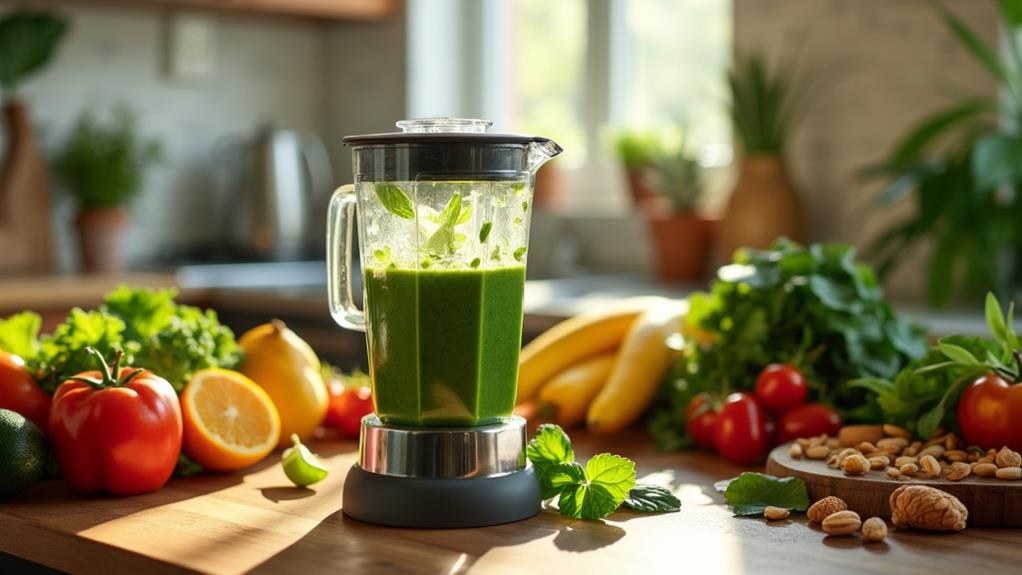
Although food processors are primarily designed for solid and semi-solid tasks, you can use them to blend ingredients. In the food processor vs. blender debate, it's important to understand their distinct functions. Food processors have sharp blades ideal for chopping and pureeing but may struggle to achieve the smooth texture that high-speed blenders provide, especially for smoothies or sauces.
When using a food processor for blending, adding sufficient liquid is crucial to facilitate the process. Food processors are optimized for solid ingredients and operate differently than blenders. Consequently, the results may be chunkier compared to the creamy consistency achieved with blenders.
Steps for Smoothies in a Food Processor
Making a smoothie in a food processor is simple if you follow these steps:
- Add Leafy Greens First: Start by placing leafy greens into the work bowl. This ensures they blend smoothly with the other ingredients.
- Prep Your Fruits: Cut large fruits into halves or quarters before adding them to the bowl. This helps achieve better consistency and makes it easier for the blade to puree everything effectively.
- Add Your Liquid Base: Pour in your liquid base, such as water, juice, or yogurt, to facilitate blending and reach your desired consistency. Avoid overfilling the bowl to ensure maximum blending efficiency.
- Blend: Blend the ingredients on high until smooth. Pause occasionally to scrape down the sides of the bowl with a spatula to ensure everything is well mixed and the final texture is smooth.
Benefits you can enjoy:
- Creamy, perfectly blended smoothies akin to those made with a high-end blender
- No leftover chunks due to the efficient multipurpose blade
- Customizable textures based on your choice of liquid base
- Satisfaction from crafting a delicious smoothie yourself
Expert Recommendations
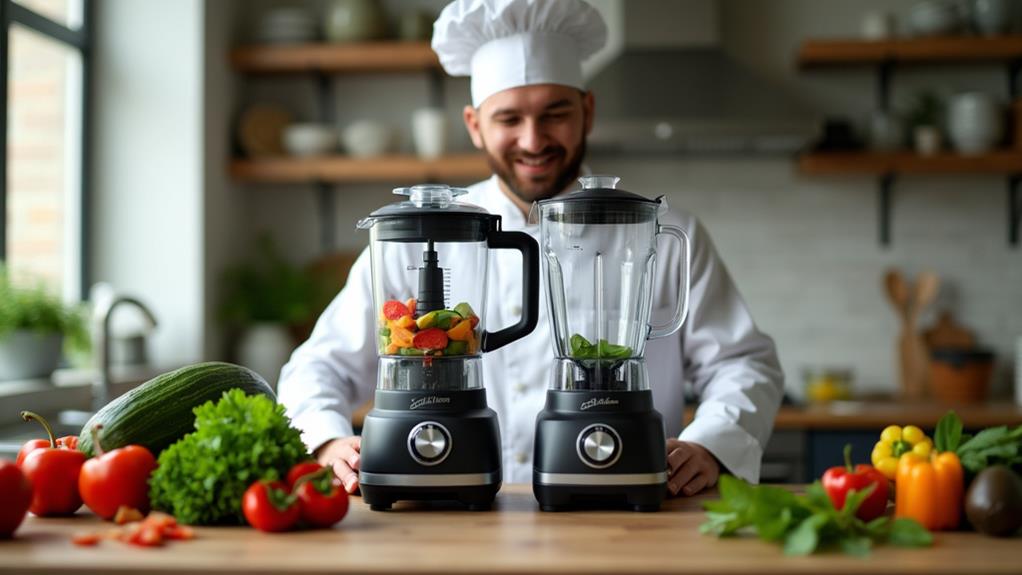
Experts recommend using a blender over a food processor for tasks requiring smooth textures. Blenders are equipped with more powerful motors and are specifically designed for liquids, making them ideal for smoothies and soups. If you have to use a food processor, ensure you add sufficient liquid to blend the ingredients properly and avoid a chunky outcome.
Task Suitability Comparison
When evaluating the suitability of food processors compared to blenders, it's crucial to consider the specific tasks at hand. Food processors are excellent for handling solid ingredients such as chopping and slicing, thanks to their sharp, versatile blades. Conversely, blenders are designed to create a vortex, making them perfect for liquid-heavy recipes that require a smooth consistency, like smoothies and soups.
Choosing the right tool can make all the difference:
- Frustration-Free Cooking: Use tools designed for specific tasks to avoid overflow and leaks.
- Perfect Smoothies: Blenders ensure your drinks are silky and lump-free.
- Effortless Meal Prep: Food processors chop and slice quickly, saving you time and effort.
- Optimal Results: Use the appropriate appliance to achieve the best outcome for your recipes.
Blenders are tailored for recipes requiring smooth, even mixtures, whereas food processors are better suited for handling solid ingredients. Using a food processor for blending might not yield the smooth consistency you desire due to differences in blade design and function. For the best results, use blenders for liquid-heavy recipes and processors for chopping and slicing tasks.
Blending Efficiency Factors
Using a food processor instead of a blender for liquid-based recipes can be challenging due to differences in blade design and function. Food processors are primarily built to chop and slice, which can result in uneven textures when you're aiming for a smooth consistency in recipes like smoothies or soups. Blenders, on the other hand, are specifically designed to create a vortex that ensures thorough blending and emulsifying of ingredients.
One key factor affecting blending efficiency is overfilling the bowl of your food processor. Unlike blenders, which can handle larger volumes of liquid, food processors can easily spill or leave you with inadequately mixed ingredients if overfilled. This not only creates a mess but also hampers the blending process, leading to grainier results.
Additionally, food processors lack the blade design needed to achieve the same smooth consistency as blenders. Without the ability to create a thorough vortex, they struggle with emulsifying ingredients properly. While food processors can handle some blending tasks, they do not provide the same level of refinement. For silky smoothies and perfectly pureed soups, a high-speed blender is your best option.