Is Blending Oranges the Same as Juicing?
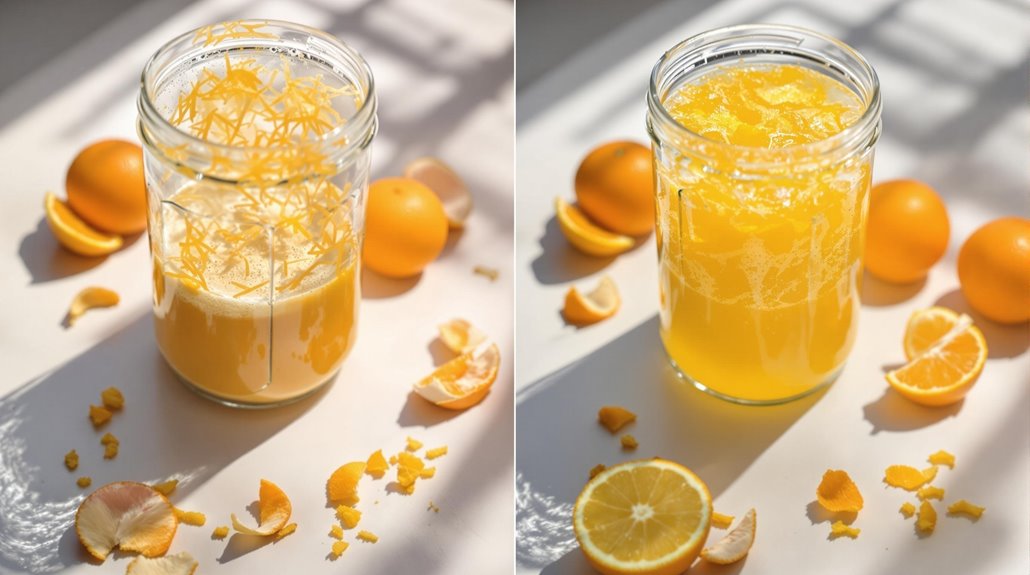
No, blending oranges isn't the same as juicing them. When you blend oranges, you'll retain the entire fruit, including beneficial fiber and pulp, which contains up to seven times more antioxidants than juice alone. Blending also helps maintain steady blood sugar levels and keeps you feeling fuller longer, while juicing can cause rapid sugar spikes. Understanding these key differences can help you make the best choice for your health goals.
Understanding the Key Differences Between Blending and Juicing
Several fundamental differences set blending and juicing apart in how they process oranges and other fruits. When you're juicing, you're extracting only the liquid while leaving behind the fiber-rich pulp and membranes.
In contrast, blending incorporates the entire fruit or vegetable, creating a thicker drink that retains all the nutritional components.
The distinction becomes even more significant when you consider the nutritional impact. Your blended juice will contain up to seven times more beneficial compounds, like naringin, compared to juiced alternatives. The pulp and membranes in blended drinks are particularly rich in flavonoids and other health-promoting substances.
Additionally, while juicing can cause rapid blood sugar fluctuations, blending gives you a more balanced energy release thanks to the preserved fiber content. Plant cell walls are effectively broken down during blending, which helps release more antioxidants into your drink.
The Science Behind Nutrient Retention
When examining the scientific evidence, the nutrient retention differences between blending and juicing become clear. Research shows that blending oranges preserves up to seven times more naringin, a powerful antioxidant, compared to traditional juicing methods.
Blending vs. juicing tremendously impacts how many beneficial compounds remain in your drink. When you blend the whole fruit or vegetable, you're keeping the segment membranes intact, which contain higher concentrations of flavonoids. These membranes, along with the pulp, are pivotal sources of cancer-fighting and anti-inflammatory compounds.
The processing method you choose directly affects your juice's nutritional value, with blended juice maintaining more of the original fruit's beneficial properties. By keeping all components of the fruit together through blending, you'll get a more complete nutritional profile in your final beverage. Adding raw cacao powder to orange smoothies can enhance the antioxidant content while maintaining stable blood sugar levels.
Blood Sugar Impact and Energy Levels
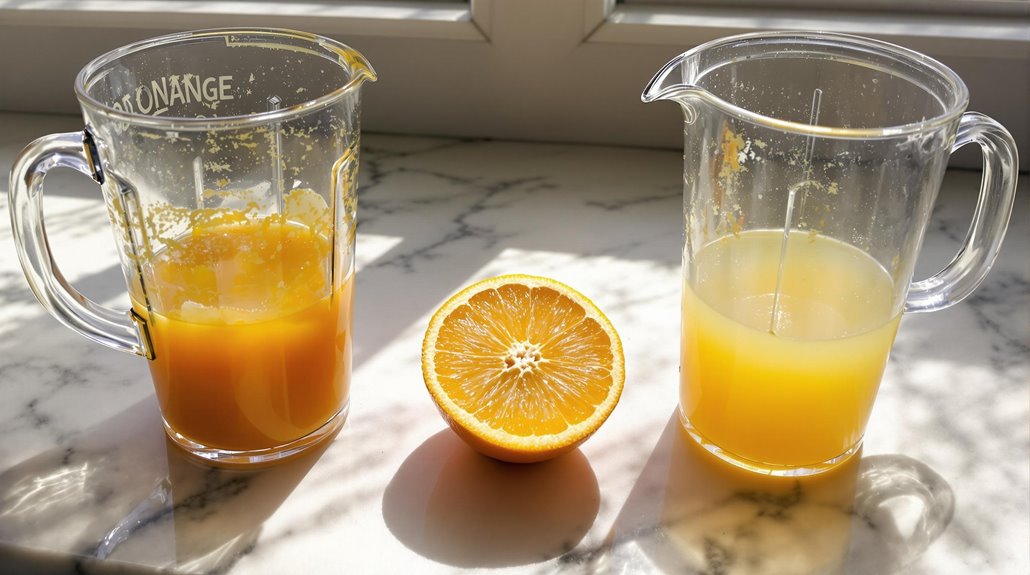
The relationship between blood sugar and your chosen processing method can significantly impact your daily energy levels. When you juice made from oranges, you'll experience a rapid spike in blood sugar, as the natural sugars enter your bloodstream quickly without fiber to slow their absorption. This can lead to energy crashes and mood fluctuations later in the day.
Unlike juicing, blending fruits and vegetables keeps the fiber intact. When you blend oranges, the fiber helps regulate sugar absorption, providing steady energy throughout the day and helping decrease the risk of blood sugar spikes. You'll also feel fuller for longer, as the fiber promotes satiety. If you're looking to maintain consistent energy levels and better manage your blood sugar, choosing blended oranges over juice is the smarter option. This is why many people opt for frozen fruit smoothies, which provide an ideal thick consistency while preserving nutrients without additives.
How Pulp and Fiber Affect Your Health
Every part of an orange's pulp and fiber plays an essential role in maximizing its health benefits. When you use a blender instead of a juicer, you're keeping the cell walls intact, which contain up to seven times more naringin, a powerful antioxidant. Think of it like eating the whole vegetable versus just drinking its juice - you're getting the complete package.
The pulp and fiber in blended oranges offer these distinct advantages:
- Acts as a natural shield for your digestive system, promoting better gut health
- Creates a satisfying fullness that helps control appetite and portion sizes
- Delivers concentrated phytonutrients found in segment membranes that fight inflammation
Making the Most of Your Orange: Processing Methods
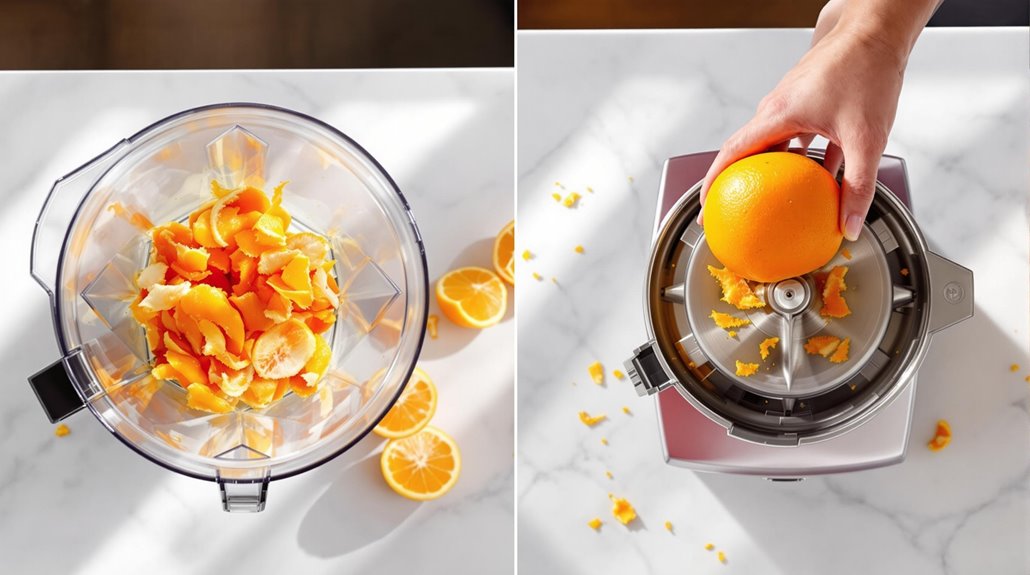
Processing methods for oranges can dramatically affect the nutritional value you'll get from your fruit. When it comes to juicing and blending, each technique offers distinct results. Juicing separates the juice from the pulp, creating a smoother drink but leaving behind precious nutrients.
Blending, on the other hand, breaks down the entire fruit, preserving more beneficial compounds like naringin.
While commercial processes focus on juice extraction and often manipulate pulp content, home preparation methods can maximize nutritional benefits. Like other vegetable juices, orange processing has been extensively studied in nutritional science, revealing that blending retains more of the fruit's natural components.
If you're looking to get the most nutrients from your oranges, blending provides a thicker, pulpier drink with higher levels of flavonoids and fiber than traditional juicing methods.
Taste, Texture, and Storage Considerations
Beyond nutritional differences, you'll notice distinct variations in how blended and juiced oranges feel and taste. The end result of juicing creates a smooth, thin liquid that's easier to drink quickly, which can lead to a rapid spike in blood sugar. Blending produces a thicker, more substantial beverage that'll keep you feeling fuller longer.
- Juiced oranges have a clean, crisp taste that flows effortlessly across your tongue
- Blended oranges maintain a pulpy, smoothie-like consistency with tiny bits of fiber you can feel
- Both drinks will separate over time, with blended versions showing more distinct layering
When it comes to storage, blended oranges generate less waste since you're using the whole fruit. Both beverages taste best when consumed immediately but can last 24-48 hours when refrigerated in airtight containers.
Health Benefits and Nutritional Breakdown
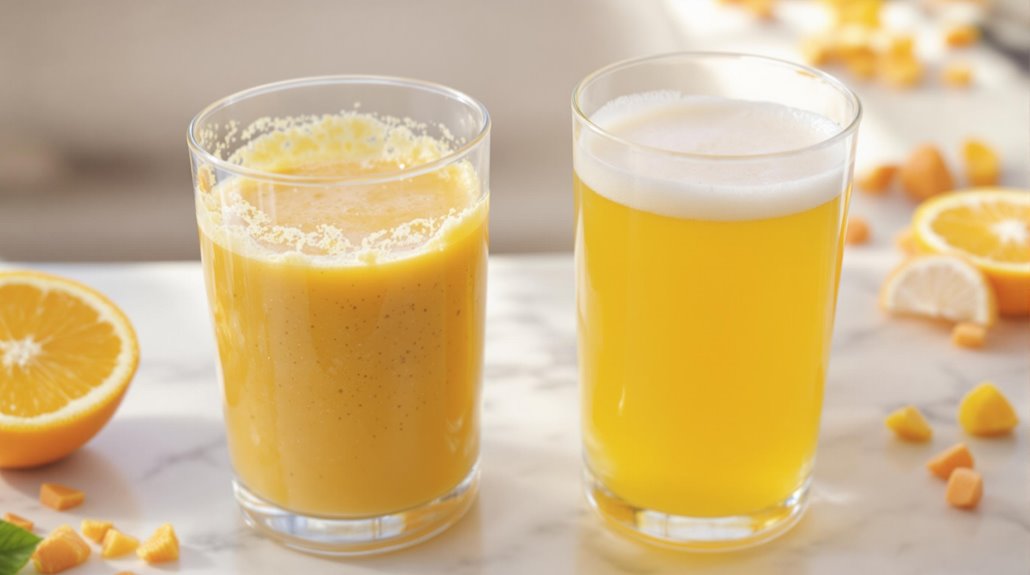
While both methods provide essential vitamins and minerals, blending oranges delivers substantially more nutritional benefits than juicing. When you blend oranges, you'll retain pivotal fiber, antioxidants, and micronutrients that are typically lost in the juicing process.
Most prominently, blended orange juice contains seven times more naringin, a powerful cancer-fighting compound, compared to its juiced counterpart.
You'll get maximum health benefits from the fruit's segment membranes in blended orange juice, which are rich in beneficial flavonoids. The higher pulp content directly correlates with increased antioxidant levels.
If you're looking to maximize your fruits and vegetables a day intake, consider blending your oranges instead of juicing them. This approach guarantees you're getting the most thorough nutritional value from every orange you consume.
Which Method Best Suits Your Lifestyle
Choosing between blending and juicing oranges ultimately depends on your daily routine and health objectives. If you're rushing to work, you might prefer juicing for a quick refreshment, though essential nutrients are left behind.
However, if you're looking for a filling breakfast replacement, blending's thicker consistency will better satisfy your hunger.
The bottom line: Consider these lifestyle scenarios when making your choice:
- You're a busy professional who needs a quick energy surge between meetings - juicing might be your go-to option
- You're health-conscious and want maximum nutritional benefits since this entry was posted about fiber retention - blending is ideal
- You're managing blood sugar levels and need sustained energy throughout the day - blending's fiber content will help prevent sugar spikes