Is a Food Chopper the Same as a Blender?
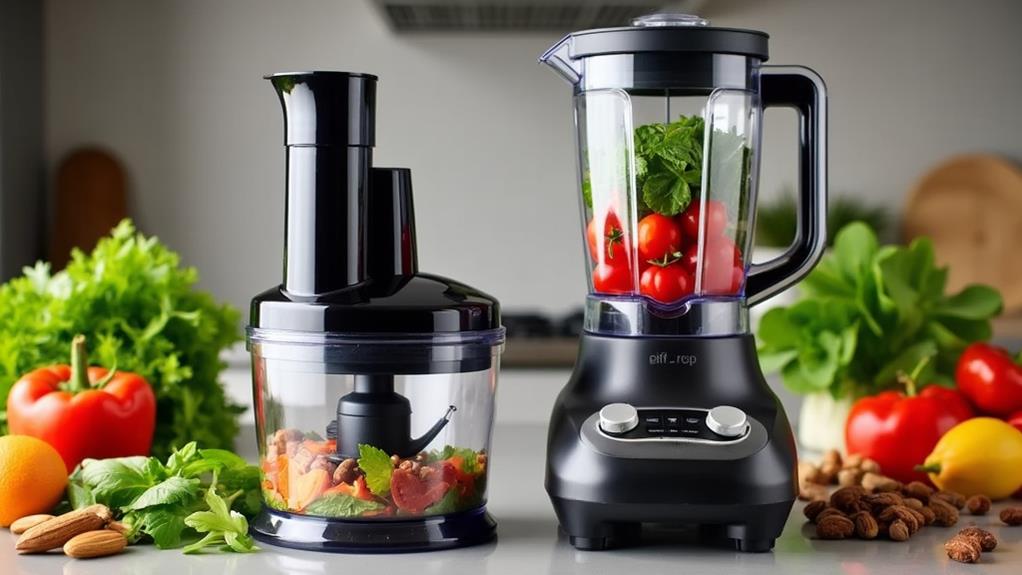
When deciding between a food chopper and a blender, consider their specific uses. Although both can handle various kitchen tasks, they are not interchangeable. A food chopper excels at precise cutting and dicing of solid ingredients, providing uniform pieces. In contrast, a blender is designed for mixing and pureeing, often requiring some liquid. What makes these tools distinctly suited to their tasks? Let's explore the key differences that could influence your choice.
Functions and Capabilities
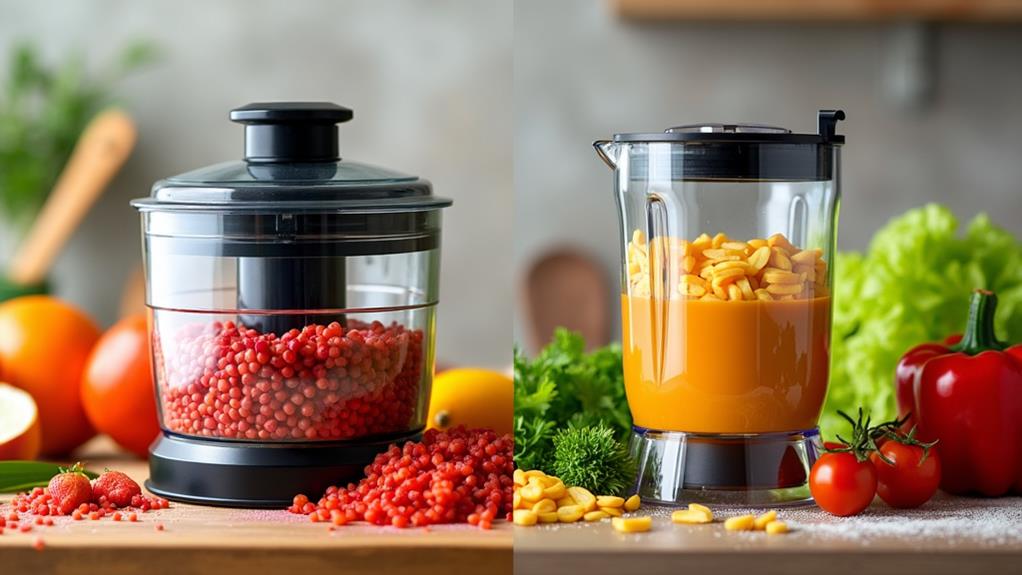
When deciding between a food chopper and a blender, it's essential to understand their distinct functions and capabilities. A food chopper, typically a non-motorized tool, is designed for precise dicing, slicing, and cutting of ingredients. In contrast, a blender is an electric appliance that excels at mixing and pureeing food, using rapidly spinning blades to liquefy ingredients.
A food chopper offers control over the size and shape of cuts, making it ideal for tasks requiring precision. This tool is perfect for achieving consistent cuts, whether you're slicing vegetables or dicing fruits. However, it cannot emulsify or liquefy ingredients, limiting its versatility.
Blenders, with their motorized bases, are designed to create smooth mixtures. They are perfect for making smoothies, sauces, and soups. Unlike food choppers, blenders require liquid for optimal performance and can easily combine liquids and soft ingredients. Their primary function is to puree and liquefy, which food choppers cannot achieve.
Blade Design
Understanding blade design is crucial when comparing a food chopper to a blender. Typically, a food chopper features sharp, fixed blades designed specifically for cutting and dicing solid ingredients. In contrast, a blender has a powerful, often angled blade assembly that creates a vortex, perfect for liquefying and emulsifying ingredients.
Here's a breakdown of their key differences:
- Blade Configuration: A food chopper usually has a single blade design optimized for specific cutting tasks. Blenders often incorporate multiple blade configurations to handle a range of textures and consistencies.
- Blade Size: Food chopper blades are generally larger and designed for precision cuts. Blender blades are smaller and rotate at high speeds to crush ice and blend liquids effectively.
- Versatility: Food choppers lack the blade versatility found in blenders, which can have attachments or settings for various blending and chopping tasks.
- Functionality: Blender blade designs enhance liquid circulation for smoother blends. Food choppers focus on achieving uniform cuts without the need for liquid.
This comparison highlights the distinct functionalities and design purposes of food choppers and blenders, ensuring you choose the right tool for your culinary needs.
Container Structure
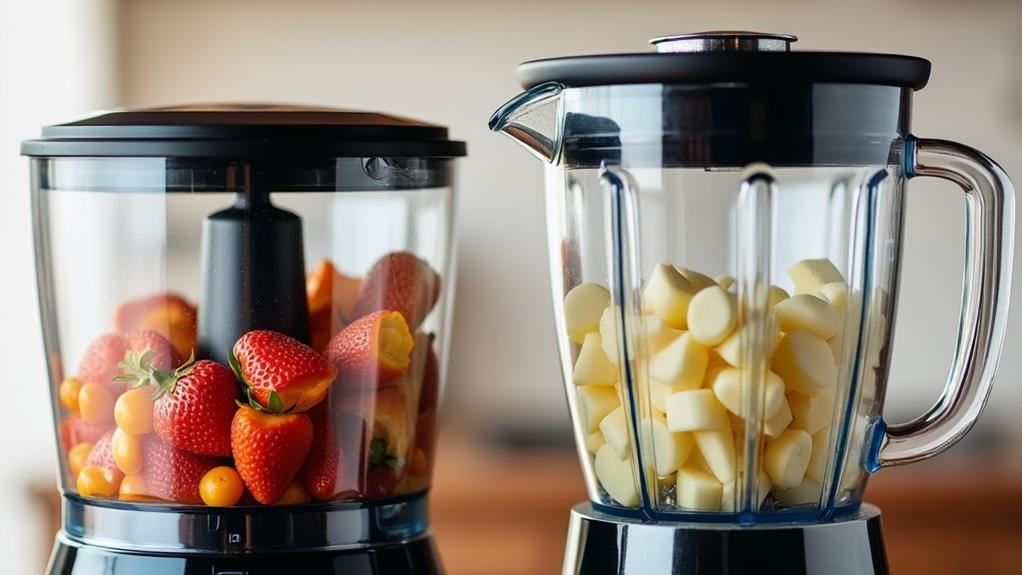
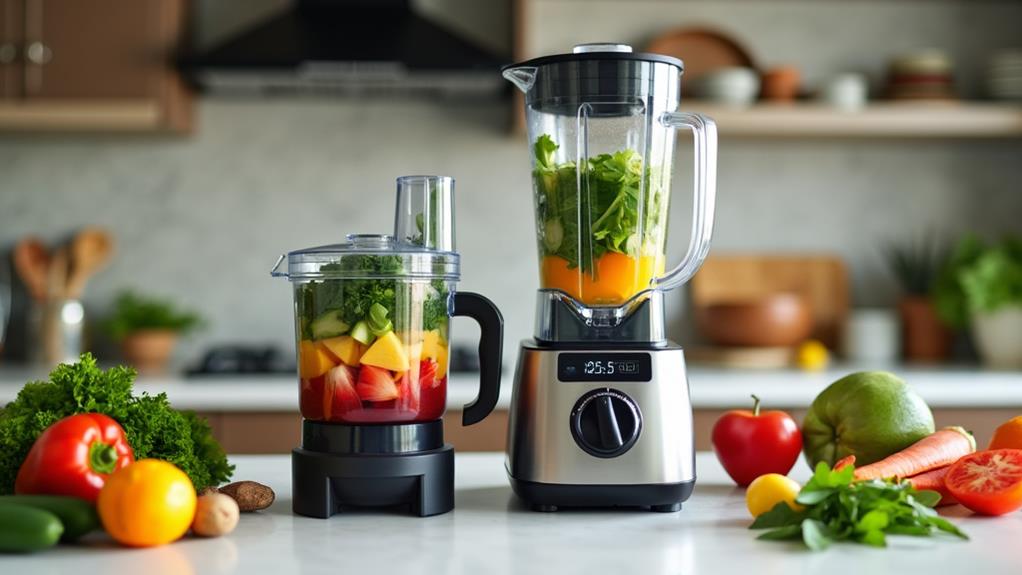
The blade design of food choppers and blenders defines their distinct container structures. A food chopper typically features a compact, wide, and shallow bowl where chopped solid ingredients collect beneath the blades. This design optimizes chopping tasks and provides easy access to the ingredients, offering precise control over the size and shape of cuts.
In contrast, a blender employs a tall, pitcher-like container designed to create a vortex for efficient liquid mixing. This structure ensures even circulation for thorough blending and usually includes a sealed lid to prevent splatter during operation, essential for handling fluids.
Regarding capacity, food choppers generally accommodate less than 6 cups, making them ideal for smaller tasks. Blenders, however, range from 2 to 14 cups or more, offering the flexibility to handle larger quantities. Thus, a food chopper's structure is suited for solid ingredients, while a blender's design is better for liquid-based tasks, emphasizing their specialized functions.
Common Uses
Food choppers and blenders serve distinct purposes in the kitchen. Food choppers excel at precise tasks, such as dicing vegetables for salads, while blenders are ideal for creating smooth mixtures like soups and smoothies. Understanding these differences can greatly improve your meal prep efficiency and recipe versatility.
Chopping Vs. Blending
Ever wondered why your kitchen needs both a food chopper and a blender? These tools serve distinct purposes that enhance your culinary efficiency. A food chopper excels at chopping, dicing, and slicing solid ingredients, making it ideal for preparing vegetables for salads or stir-fries. In contrast, a blender is designed for liquefying and pureeing both solid and liquid ingredients, creating smooth mixtures for smoothies, soups, and sauces.
Here's a quick comparison to help you understand their common uses:
- Food Chopper: Best for chopping, dicing, and slicing solid ingredients with precision.
- Blender: Ideal for blending, liquefying, and pureeing ingredients, especially for smooth textures.
- Food Chopper: More compact and easier to store, perfect for kitchens with limited space.
- Blender: Designed for thorough emulsifying and mixing, often requiring more counter space.
While both appliances are essential, they are not interchangeable. A food chopper cannot liquefy like a blender, and a blender struggles with tasks needing precise chopping or slicing. Understanding their differences ensures you use each tool effectively.
Meal Prep Efficiency
Efficiency in meal prep relies on using the appropriate tools for specific tasks. A food chopper and a blender each have their unique advantages, and understanding their use can save you time and effort.
A food chopper is indispensable for chopping solid foods like vegetables and fruits, offering precision and ensuring uniform cut sizes. This uniformity is essential for salads and garnishes, making your meal prep more streamlined and efficient.
Conversely, a blender is ideal for emulsifying and mixing ingredients into smooth mixtures, such as smoothies, soups, or sauces. Designed to handle liquids and create homogeneous textures, the blender excels where a food chopper cannot. Its ability to mix and emulsify ingredients into creamy results makes it crucial for specific meal prep tasks.
Recipe Versatility
Understanding the versatility of a food chopper and a blender can greatly enhance your culinary skills. Knowing which tool to use can significantly impact your meal outcomes.
A food chopper excels in chopping, dicing, and slicing solid ingredients with precision, making it perfect for prepping vegetables for salads or garnishes. If you need consistent shapes and sizes, a food chopper is your go-to tool. It's best suited for recipes that require a chunkier texture.
In contrast, a blender is designed for liquefying and pureeing ingredients, making it ideal for smoothies, soups, and sauces. Blenders are also excellent for mixing and emulsifying, creating smooth and consistent results. If your recipe requires a liquid base, a blender is what you need.
Here's a quick guide to help you:
- Food Chopper: Best for chopping, dicing, and slicing solid ingredients.
- Blender: Best for liquefying and pureeing for a smooth texture.
- Food Chopper: Ideal for dry ingredients and chunkier textures.
- Blender: Excellent for mixing and emulsifying in recipes with liquid bases.
Choosing the Right Appliance
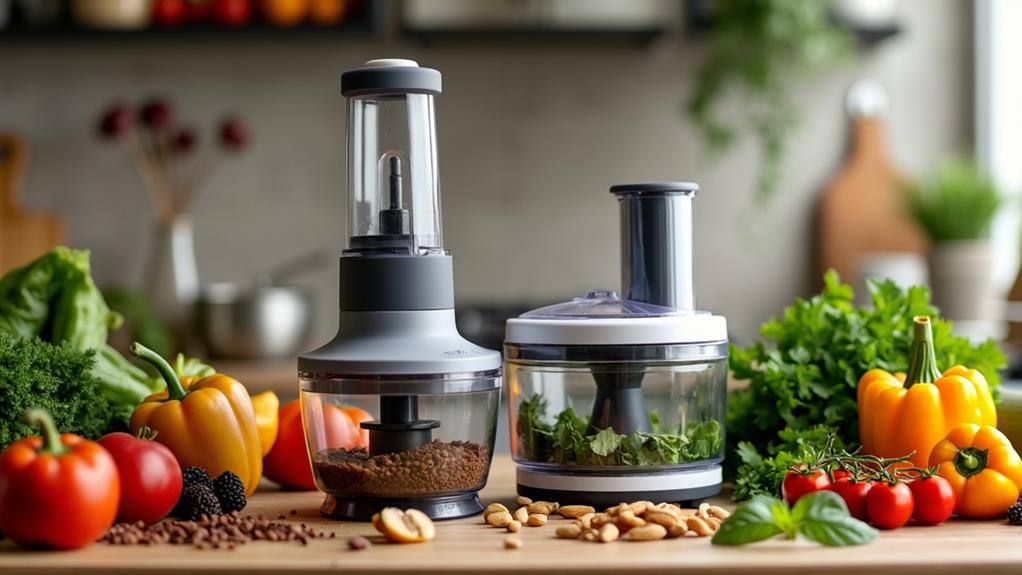
Choosing the right appliance requires understanding their specific functions and efficiency. A food chopper excels at making precise, manual cuts, ideal for dicing vegetables. In contrast, a blender's rapid spinning blades are perfect for creating smooth mixtures like soups and smoothies. Knowing their best uses ensures you select the right tool for your culinary needs.
Function and Efficiency
When deciding between a food chopper and a blender, it's important to evaluate their functions and efficiency based on your culinary needs. A food chopper is a manual tool designed for precise cutting and dicing of solid ingredients. It operates by pushing or pulling a handle through sharp blades, allowing you to control the cut size and shape. Conversely, a blender is an electric appliance primarily used for liquefying or pureeing foods with rapidly spinning blades to create smooth mixtures or liquids.
Here are some key points to consider:
- Tasks: Food choppers are ideal for slicing and dicing, while blenders excel at making smoothies, sauces, and soups.
- Efficiency: Blenders can handle multiple types of ingredients simultaneously, making them versatile for liquid-based recipes.
- Operation: Food choppers require manual effort and are better suited for precise cutting tasks, whereas blenders, being electric, simplify the process of liquefying and pureeing.
- Culinary Needs: If you need precise cuts for solid ingredients, a food chopper is your best choice. For liquid preparations, a blender is more efficient.
Ultimately, your choice should align with the specific culinary tasks you frequently perform.
Best Uses Explained
Choosing between a food chopper and a blender depends on understanding their unique strengths in the kitchen. A food chopper is ideal for precise cutting tasks like dicing and slicing, making it perfect for small prep jobs. It allows you to manually control the size and shape of your cuts, ensuring consistent food preparation. If your cooking involves chopping vegetables or fruits into specific shapes, a food chopper is your best bet.
In contrast, a blender is an electric appliance designed for liquefying and pureeing ingredients. It excels at creating smooth mixtures, making it indispensable for smoothies, soups, and recipes requiring emulsification. Blenders are highly versatile, capable of tasks like crushing ice and making sauces, which food choppers cannot handle. This versatility makes blenders valuable for a wide range of cooking needs.
Ultimately, knowing the distinct functions of these appliances helps you choose the right tool. If your main focus is chopping and achieving specific shapes, opt for a food chopper. But if you need an appliance for liquefying, pureeing, and emulsifying, a blender will serve you best. Choose based on your specific cooking needs to ensure efficiency and effectiveness in your kitchen.
Key Differences
Understanding the key differences between a food chopper and a blender can help you decide which tool best suits your culinary needs. A food chopper is a non-motorized tool designed for dicing, slicing, and chopping, while a blender is an electric appliance intended for liquefying and pureeing ingredients. Let's break down the key differences between these two kitchen tools.
- Functionality: A food chopper operates manually, allowing for precise control over cut sizes and shapes. In contrast, a blender relies on high-speed blades to create smooth mixtures, making it unsuitable for precise cutting tasks.
- Tasks: Food choppers are typically single-task tools that specialize in specific cut types. Blenders, however, handle a wider range of recipes, from smoothies to soups.
- Capabilities: Food choppers can't puree or emulsify like blenders. Blenders excel at creating creamy textures and smooth liquids that food choppers simply can't achieve.
- Construction: A food chopper consists of sharp blades and a mixing bowl. Meanwhile, a blender features a pitcher-like container with a powerful blade assembly at the base.