How to Select a Blender Based on Capacity?

Choosing the right blender involves more than just considering its brand or power; understanding the appropriate capacity for your needs is crucial for making the best choice. Whether you're preparing single-serve smoothies, family-sized batches of soup, or large quantities of sauces, selecting a blender with the right capacity can significantly impact your kitchen efficiency and satisfaction.
Let's explore the various blender capacities available and provide guidance on how to determine the best size for your culinary endeavors. By the end of this guide, you'll have a clear understanding of which blender capacity suits your lifestyle and cooking needs, ensuring you make a well-informed decision.
Key Takeaways
- Assess Recipe and Batch Sizes: Determine whether you typically make single-serve portions or larger batches to decide between a personal blender and a family-size blender.
- Consider Household Size and Usage: Factor in the number of people in your household and how often the blender will be used to choose between different capacities.
- Evaluate Storage Space: If your kitchen has limited storage, opt for a compact blender that fits easily in your available space.
- Balance Budget and Needs: Find a blender that offers a good balance between cost and functionality, ensuring it meets your essential blending requirements.
- Power and Performance: Select a blender with adequate power to handle your ingredients and provide the desired blending consistency.
By considering these factors, you can choose a blender that aligns with your capacity needs and overall kitchen requirements.
Assess Your Blending Needs
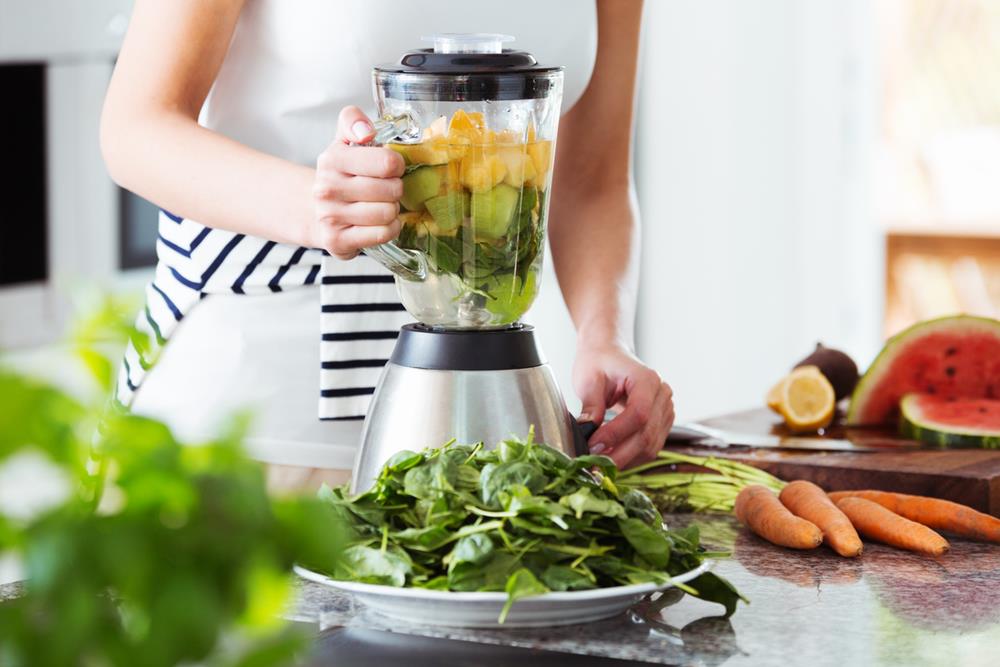
To determine the ideal blender capacity, consider the quantity and type of ingredients you typically blend. Reflect on your usual recipes and batch sizes. Do you often make small smoothies or larger quantities of soups and sauces? Understanding your blending requirements will guide you in choosing the appropriate blender capacity.
If you frequently prepare single servings, personal blenders are likely the best fit. These are designed for smaller quantities, ensuring efficient blending without overfilling.
Conversely, if you regularly cook for multiple people, opt for a blender with a larger capacity to accommodate bigger batches.
Assessing your typical batch size is crucial. An overfilled blender can lead to inefficient blending and potential spills. Choose a blender that aligns with the volume you usually blend, ensuring it's neither too small nor excessively large for your needs.
Matching blender capacity to your requirements guarantees a smoother, more efficient blending experience every time.
Single-Serve Vs. Family-Size
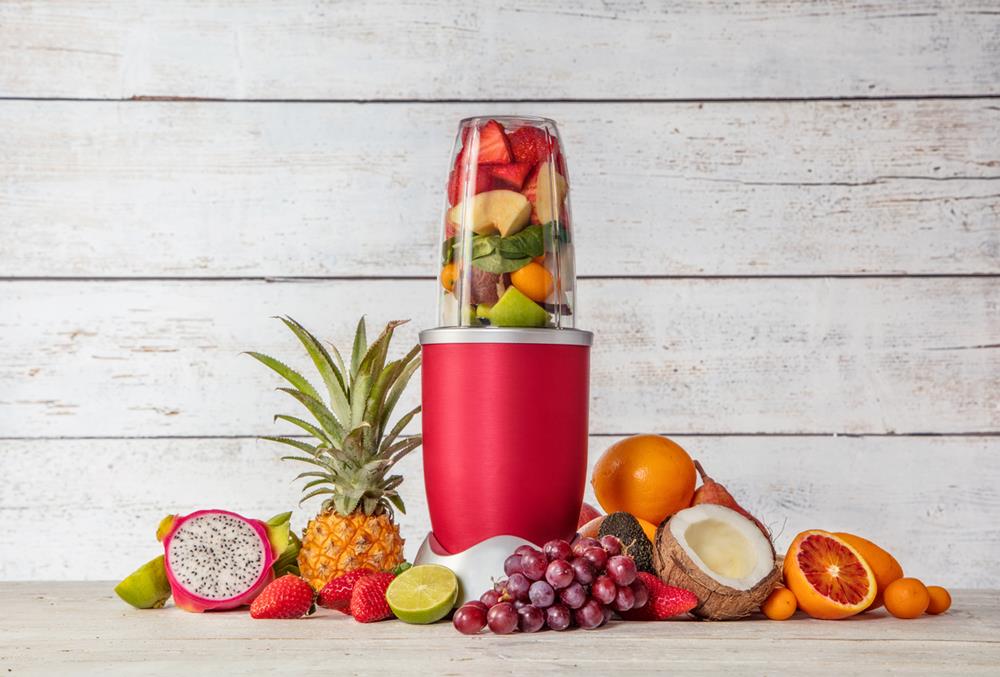
Choosing between a single-serve and a family-size blender significantly impacts your portion control and meal preparation. Single-serve blenders excel in precise portion control, making it easier to adhere to a diet by offering individual servings for smoothies or shakes. These blenders typically hold around 8 oz., helping you manage calorie intake and avoid overconsumption.
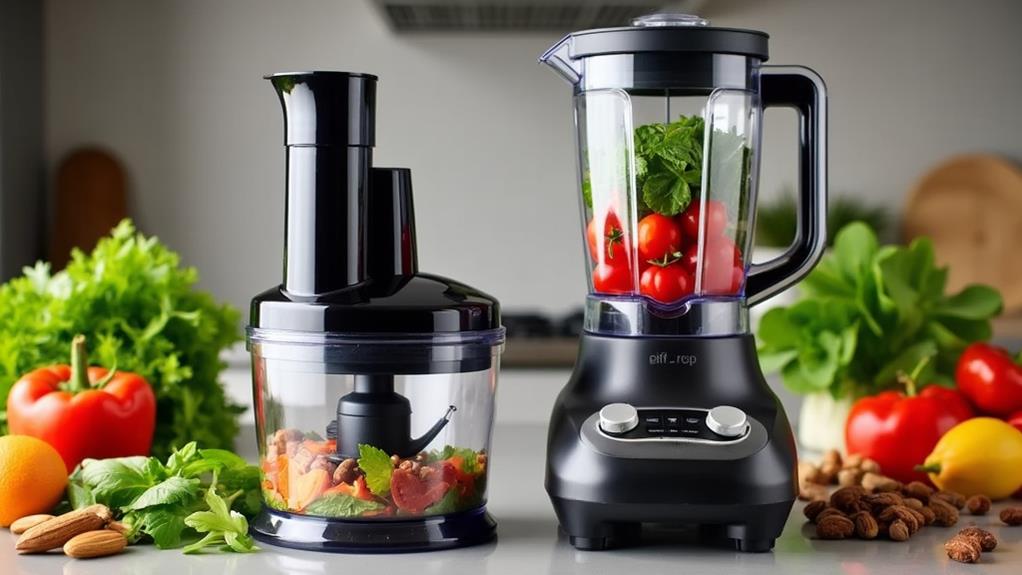
In contrast, family-size blenders are designed for larger quantities, ideal for blending soups, sauces, or drinks for several people. These can range from 20 to 80 oz. in capacity, offering the flexibility to prepare meals for the entire family or entertain guests.
Single-serve blenders support efficient calorie management, making them an excellent option for those focused on maintaining a balanced diet. Family-size blenders, on the other hand, are versatile kitchen tools beneficial for batch cooking and meal prep. They allow you to blend larger quantities at once, saving time and effort, especially when cooking for a crowd.
Your choice of blender should align with your lifestyle and portion control needs. Both types offer unique benefits, so select the one that best fits your daily habits and meal preparation goals.
Storage Space Considerations
Evaluating your kitchen storage space is crucial when deciding between a compact single-serve blender and a larger family-size model. Single-serve blenders, with their smaller size and capacity, are perfect for small kitchens or limited storage space. They usually come with blender jars that hold around 8-16 oz, making them easy to tuck away in a cabinet or even leave on the counter without taking up much room.
On the other hand, family-size blenders have larger capacity jars, ranging from 20-80 oz. These are ideal if you need to blend larger batches or if you're preparing meals for a family. However, their larger size means they require more storage space. You'd need to ensure you have enough room in your cabinets or on your countertop to accommodate these bulkier appliances.
Here's a quick comparison to help you decide:
| Blender Type | Capacity Range | Storage Space Needed |
|---|---|---|
| Single-Serve | 8-16 oz | Minimal |
| Family-Size (Small) | 20-40 oz | Moderate |
| Family-Size (Large) | 40-80 oz | Significant |
Consider how often you blend and the typical number of servings you make. This will guide you in choosing the right size of blender that fits both your needs and your kitchen's storage space.
Usage Frequency Impact
Understanding how often you'll use your blender can greatly influence whether a single-serve or family-size model is the better fit for your needs.
If you blend infrequently and usually make small portions, single-serve blenders are ideal. They typically have a blending capacity of around 8-24 ounces, perfect for on-the-go smoothies or individual recipes. Their compact design makes them easy to store, making them an excellent choice for individuals or small households with limited space.
Conversely, if you blend regularly or need to prepare larger quantities, family-size blenders are more suitable. These models offer capacities ranging from 40-80 ounces, making them perfect for multiple servings or larger batches of drinks, soups, or sauces. Family-size blenders cater to households with multiple members or those who frequently prepare larger quantities.
Material of the Jar
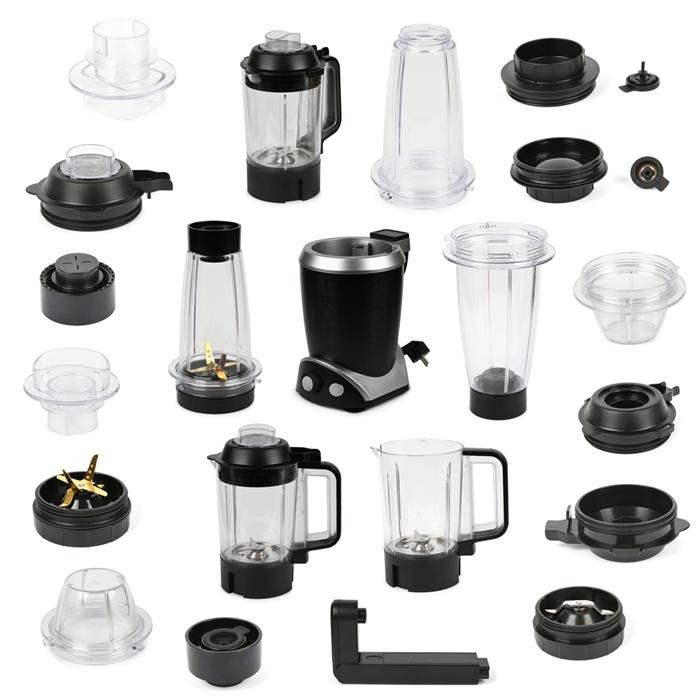
When selecting a blender, the material of the jar significantly impacts its durability and safety. Blender jars are typically made from glass, plastic, or polycarbonate, each with its own advantages and disadvantages.
Glass jars are highly durable and resistant to breakage, offering a BPA-free and chemical-free option that ensures your ingredients remain safe for consumption. However, they're generally heavier than their plastic counterparts.
Plastic jars are lighter and usually more affordable. They can, however, be prone to scratching, staining, and absorbing odors over time. If you choose a plastic jar, ensure it's BPA-free to avoid potential health risks.
Polycarbonate jars strike a balance between glass and plastic. They're robust, less likely to crack or get damaged, and still lighter than glass. Additionally, polycarbonate is BPA-free, making it a safer choice for your blending needs.
Ultimately, selecting the right jar material enhances the safety of your ingredients and the longevity of your blender, ensuring consistent performance and peace of mind. Carefully weigh your options to make the best decision for your needs.
Versatility of Use

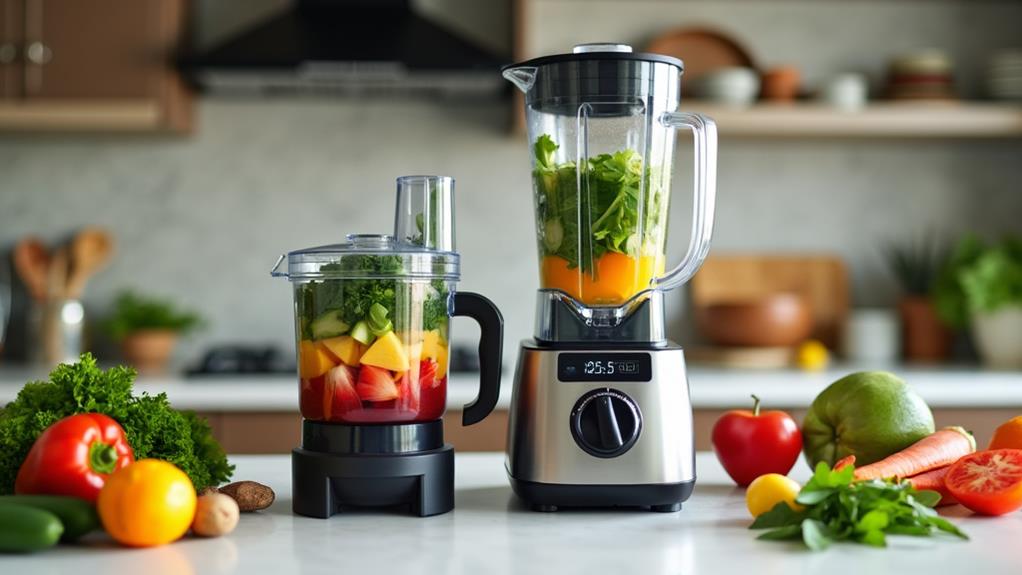
Considering the versatility of use, a blender's capacity is crucial for accommodating various blending needs, from single-serve smoothies to large family meals. When choosing a blender, its capacity directly impacts how efficiently you can blend different quantities. For instance, personal blenders with an 8 oz capacity are ideal for quick, on-the-go smoothies.
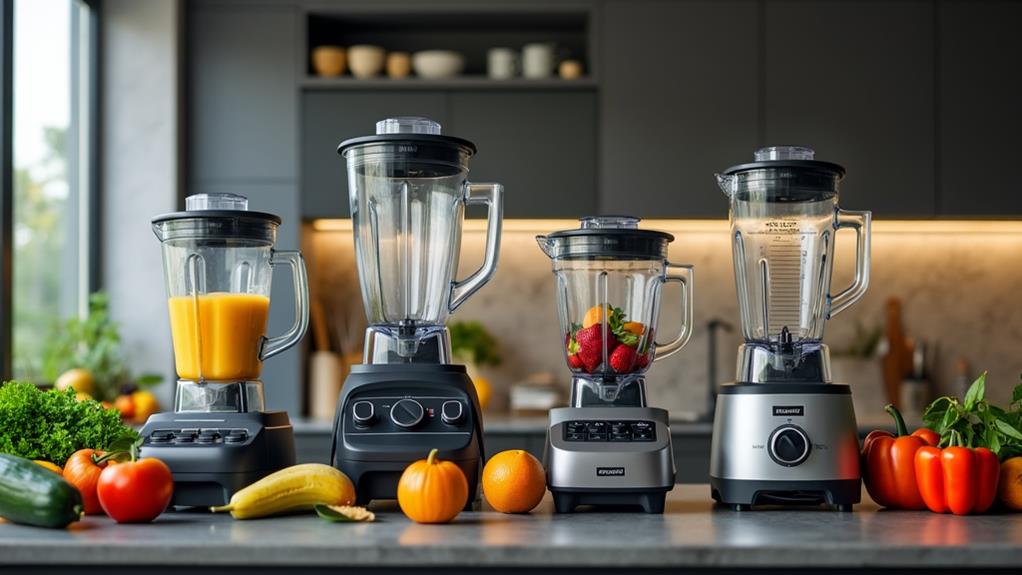
If your blending needs extend beyond single servings, standard blenders with capacities ranging from 20-65 oz offer a versatile solution. These sizes are perfect for making medium-sized portions, whether it's a hearty soup for dinner or a batch of salsa for a party. Medium-sized blenders strike a balance between versatility and practicality, ensuring you don't overfill the jar, which can lead to inefficient blending.
For larger households or gatherings, a blender with a capacity of up to 80 oz is ideal. These large blenders cater to big batches, making them perfect for family meals or entertaining guests.
Understanding the different blender sizes and capacities helps you select the right one, ensuring efficient blending for any occasion. This knowledge guarantees you can manage any blending task with ease and precision.
Power and Performance
When selecting a blender, consider the jar size, as it directly impacts blending volume and overall performance. Blender capacity is crucial for consistent results, especially when preparing smoothies, soups, or sauces for a larger group. A robust motor is essential for high-capacity blenders, as it ensures the appliance can process dense ingredients without faltering. This means your blender should have enough power to crush ice, blend fibrous veggies, and puree fruits smoothly.
Budget Considerations

Balancing your budget with your blending needs is vital when choosing a high-capacity blender. Larger capacity blenders usually come with higher price tags, so it's essential to evaluate your budget carefully. Start by identifying your blending requirements.
If you often prepare large batches of smoothies, soups, or other recipes, investing in a blender with a larger capacity may be worthwhile. However, be aware of the trade-off between capacity and cost. The most expensive models might have features you don't need.
Focus on finding a blender that fits your budget and meets your essential blending needs. Compare prices of various blenders with different capacities to ensure you get the best value. Remember, a higher price doesn't always mean better performance or suitability for your needs.
Look for sales, discounts, or promotions to reduce costs and help you acquire a high-capacity blender without overspending. Balancing these factors will help you make a smart investment, aligning your budget and blending needs effectively.
Conclusion
Selecting a blender with the right capacity is essential for optimizing your kitchen tasks and ensuring you get the most out of your appliance. By understanding your specific needs—whether it's for single-serve smoothies, family meals, or large gatherings—you can choose a blender that fits seamlessly into your cooking routine.
Small-capacity blenders are ideal for quick, personal use, while larger models cater to family-sized portions and bulk preparations. By taking into account your lifestyle, cooking habits, and storage space, you can confidently select a blender that will enhance your culinary experience and meet your requirements perfectly. Happy blending!