DIY Bug Repellent Spray: Blend Garlic & Water for a Non-Toxic Solution

Create a natural bug repellent by blending four garlic cloves with mineral oil, letting it steep for 24 hours, then mixing with dish soap and water. You'll need to strain the oil and dilute two tablespoons of your concentrate with a pint of water in a spray bottle. This non-toxic solution effectively deters common garden pests like mites and whiteflies. Proper mixing, application, and storage techniques will maximize your spray's pest-fighting power.
The Power of Garlic as a Natural Pest Deterrent
Gardeners have long recognized garlic as a potent ally in the fight against unwanted pests. You'll find this common kitchen ingredient contains powerful sulfur compounds that naturally repel a wide range of insects, from pesky aphids to persistent mosquitoes. When you crush garlic in a food processor or blender, these compounds are released, creating an effective base for your organic DIY garlic spray.
Your high-speed blender can efficiently process the garlic just as it would when making homemade plant-based milk or other natural solutions. Creating your own garlic pesticide spray isn't just cost-effective - it's also an environmentally friendly alternative to chemical pesticides. The pungent aroma that makes garlic so effective against mites, whiteflies, and ticks means you won't have to worry about toxic residues on your plants.
By exploiting garlic's natural repellent properties, you're choosing a safe, proven method to protect your garden while maintaining a healthy ecosystem.
Essential Ingredients for Your Homemade Spray
When you're ready to make your own garlic-based bug repellent, you'll need just a few simple ingredients from your kitchen and garden supplies. Start by gathering four garlic cloves, which you'll need to mince finely. You'll also need one tablespoon of mineral oil, one teaspoon of dish soap, and a pint of water.
For proper mixing and application, you'll want to have a clean spray bottle on hand. Once you've combined the minced garlic with mineral oil, let it sit for 24 hours. After straining out the garlic pieces, mix the infused oil with the dish soap and water.
Remember to dilute your concentrate before use - two tablespoons of your garlic mixture to one pint of water creates the perfect strength for garden application. Using a high-speed blender will ensure all ingredients are thoroughly mixed for maximum effectiveness.
Step-by-Step Mixing Instructions
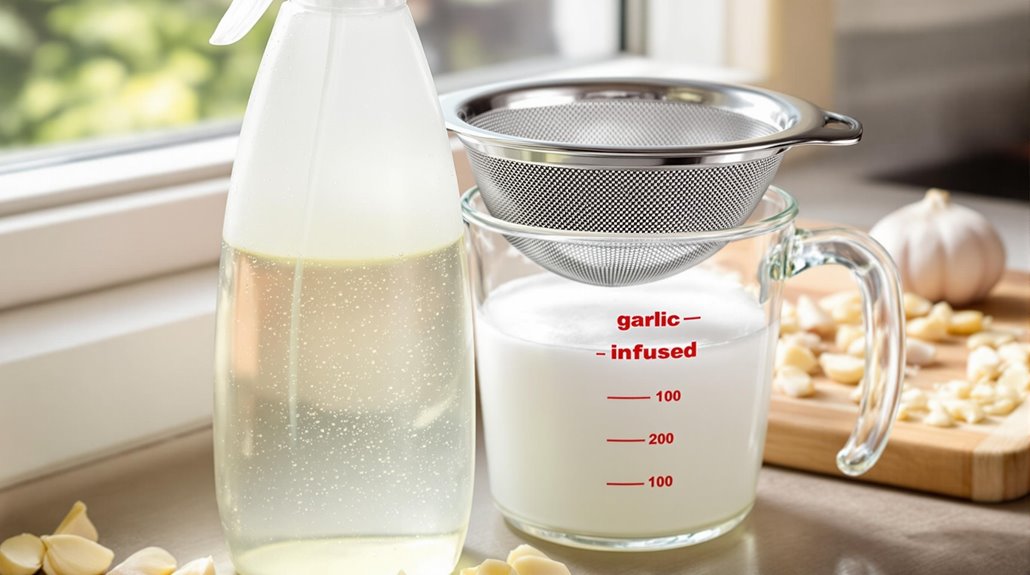
Now that you have your ingredients ready, let's break down the mixing process into simple steps.
Start by crushing four garlic cloves and combining them with a tablespoon of mineral oil. Let this garlic mixture steep for 24 hours. Once steeped, strain the oil and mix it with a teaspoon of dish soap and a pint of water to create your concentrate.
Before you use garlic spray on your plants, dilute two tablespoons of the concentrate with a pint of water in a spray bottle. It's essential to test the spray works by applying it to a small, hidden leaf area first. Wait 1-2 days to check for any adverse reactions.
When you're ready to apply, be sure to spray both the top and bottom of leaves, and spray there as well on stems where you spot insect activity. For thorough mixing of your solution, consider using an immersion blender to ensure all ingredients are properly emulsified.
Proper Application Techniques and Timing
Getting the most out of your DIY garlic spray depends heavily on proper application timing and technique. Before treating your entire garden, spray on a small, hidden part of the plant and let sit for a day or two to test your spray for any adverse reactions.
Apply the solution during evening hours when pest activity peaks and temperatures are cooler. Guarantee you're thoroughly coating both sides of the leaves and stems, paying special attention to the undersides where pests often hide. Don't spray during the hottest parts of the day, as this will cause the solution to evaporate too quickly and reduce its effectiveness.
To maintain protection, you'll need to reapply the spray every 7-10 days. If there's been heavy rainfall, don't wait - reapply immediately to ascertain continued pest control.
Plant Safety and Testing Guidelines

Although garlic spray is generally safe for plants, proper testing is crucial to prevent potential damage to your garden. Before applying the mixture to your entire plant, test it on a single leaf and wait 24 hours to observe any adverse reactions. This post may contain affiliate links to help you find the right supplies for your DIY solution.
You'll need to dilute your garlic spray according to the strength of your garlic, as potency can vary considerably. While it's toxic to bugs that hide underneath leaves, the spray can also affect beneficial insects. Apply the solution carefully, reaching both sides of the leaves and stems, but avoid overuse. Remember to wait several days before harvesting your treated plants to ensure the strong garlic scent dissipates. These contain affiliate links to recommended sprayers for precise application.
Storage Tips and Shelf Life
Proper storage of your garlic spray guarantees its effectiveness long after preparation. Once your spray is made, you'll need to contemplate different storage options based on how quickly you plan to use it. The strong smell of concentrated mixture will last longer when stored properly.
For maximum shelf life, ponder these storage methods:
- Keep concentrated mixture in an airtight container in your refrigerator for up to 1 week
- Store diluted spray in a large pot or container for 2-3 days at room temperature
- Freeze concentrated mixture for up to 3 months
While garlic is toxic to many pests and prevents fungus from harming plants, its effectiveness diminishes over time. For best results, use refrigerated diluted spray within 5 days, and always thaw frozen concentrate completely before diluting with water.
Common Garden Pests This Spray Targets
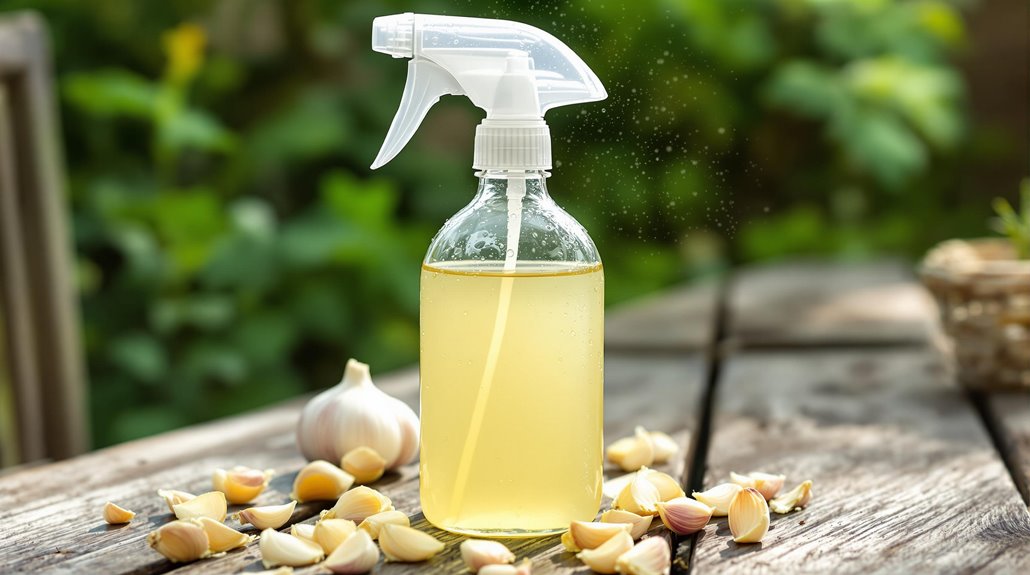
When garden pests invade your plants, this garlic-based spray offers powerful natural protection against many common invaders. You'll find it especially effective against destructive insects like aphids, spider mites, and whiteflies that can quickly damage your garden.
The garlic spray targets slugs, thrips, and Japanese beetles while leaving beneficial insects unharmed. Unlike harsh chemical pesticides, this garden spray provides a safe, eco-friendly solution using just four ingredients: garlic and common household items. The spray will also kill fungal problems like powdery mildew that often develops on leaves and stems.
Its potent scent naturally deters caterpillars and other chewing insects from munching on your plants' foliage. For organic gardeners, this affordable DIY solution effectively controls multiple pest problems without compromising your natural growing practices.
Related posts