Can You Use a Smoothie Maker as a Food Processor?
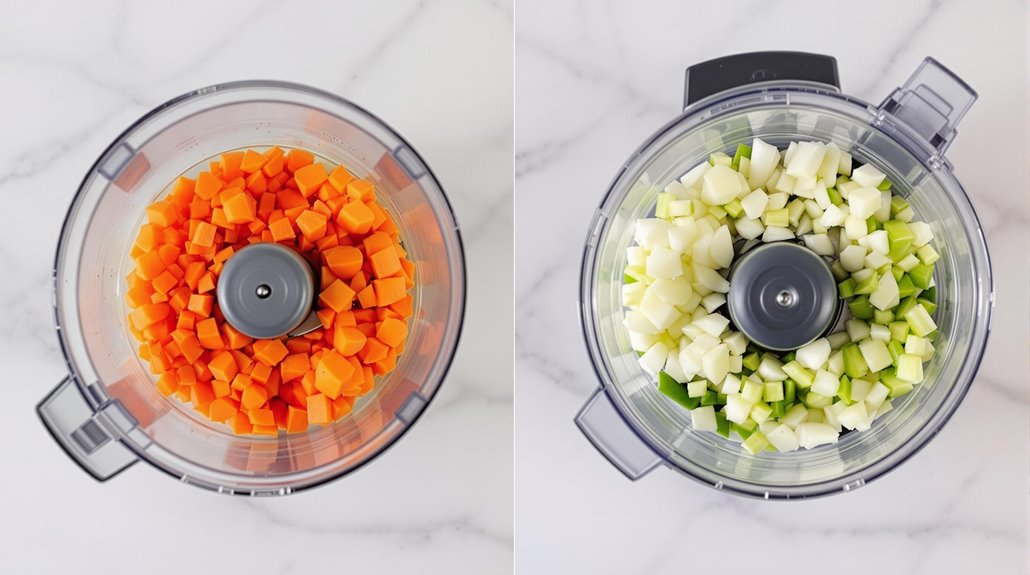
While you can use your smoothie maker for basic food processing tasks like pureeing soft ingredients or making sauces, it won't fully replace a food processor. Your smoothie maker's narrow container and blade design work best for creating smooth beverages, but they'll struggle with chopping, slicing, or kneading dough. Using it for heavy food processing could damage the motor or blades. Understanding the key differences between these appliances will help you make the right choice for your kitchen needs.
Understanding the Key Differences Between Smoothie Makers and Food Processors
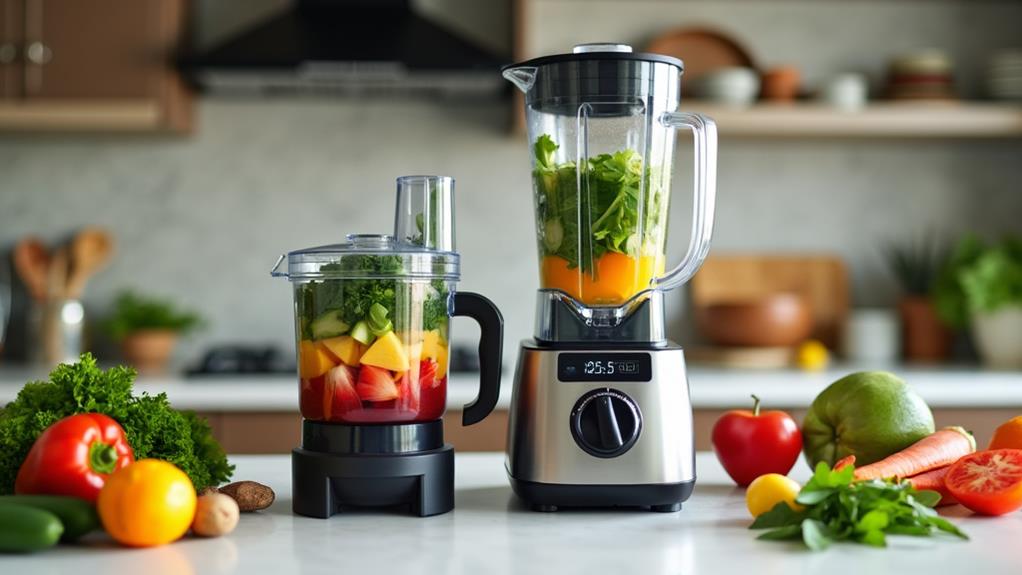
When you're considering using a smoothie maker as a food processor, it's crucial to understand how these two appliances fundamentally differ in their design and functionality. While both devices can process food, they're built for distinct purposes.
Your smoothie maker specializes in blending liquids and soft ingredients into drinkable consistencies, with narrow containers and specialized blades that create a vortex action. In contrast, a food processor excels at chopping, slicing, shredding, and mixing denser ingredients in its wider bowl.
You'll find that food processors pack more powerful motors and come with various blade attachments for specific tasks. The blender-style design of smoothie makers isn't equipped to handle heavy-duty food processing jobs, and attempting these tasks could strain the motor and produce uneven results.
Most smoothie makers operate at 200 to 500 watts, making them significantly less powerful than typical food processors.
Common Tasks and Capabilities of Each Appliance
Although both appliances can process food ingredients, they excel at distinctly different tasks. A smoothie maker's sharp blades and high-speed motor work best for liquifying frozen ingredients and creating smooth beverages. You'll find it's ideal for blending fruits, vegetables, and ice into drinkable consistency.
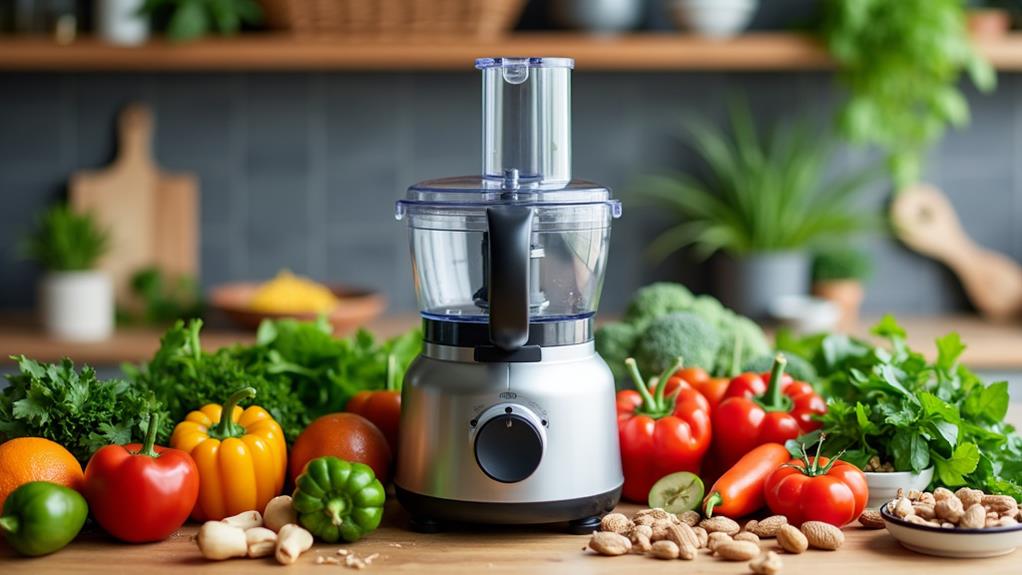
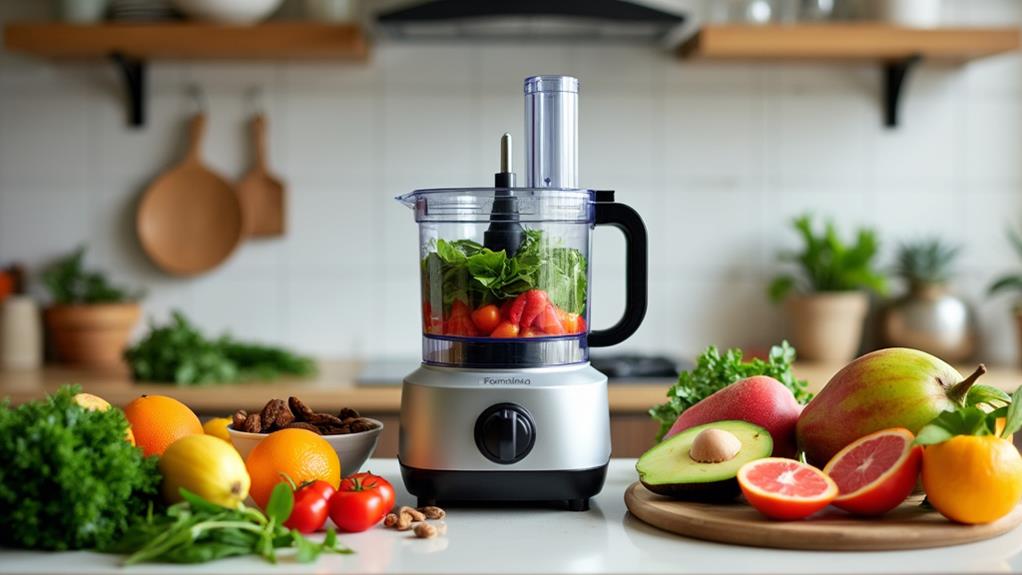
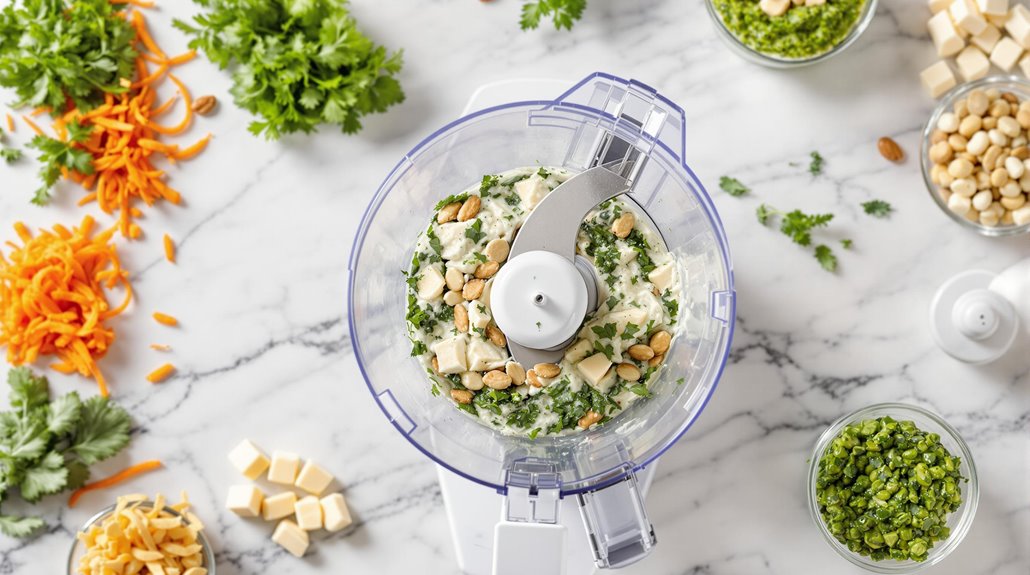
Food processors, with their wider work bowl and interchangeable blades, handle a broader range of kitchen tasks. You can use them for chopping, slicing, shredding, and kneading dough. Processors also come with various attachments for specific jobs like grating cheese or making julienne cuts. The food gets evenly processed thanks to the bowl's design and blade configuration.
While both kitchen appliances offer ease of use, their specialized designs make them better suited for their intended purposes rather than as substitutes for each other. Smoothie makers create a powerful blending vortex that helps achieve the silky-smooth consistency needed for drinks and purees.
When a Smoothie Maker Can Double as a Food Processor
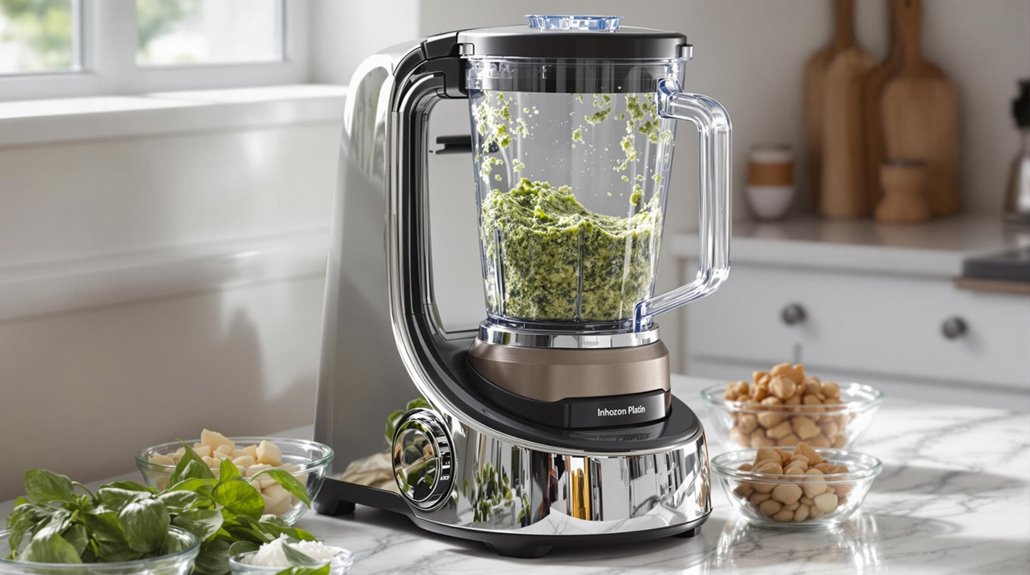
Surprisingly, modern smoothie makers can tackle some basic food processing tasks if you choose the right model. A high-powered blender with multiple speeds can handle chopping, mincing, and pureeing tough ingredients and fibrous ingredients effectively.
When shopping for a blender that can double as a food processor, look for models with specialized attachments like processing bowls or slicing and grating discs. However, you'll need to understand your blender's limitations. Even a powerful blender may struggle with tasks that dedicated food processors excel at, such as kneading dough or grating hard cheeses.
If you're considering using your immersion blender or standard blender for food processing, remember that success depends on both your appliance's capabilities and your recipe's requirements. For best results, stick to basic processing tasks that don't require precise slicing or specialized blade attachments. A blender with stainless steel blades will provide the most durability and versatility for both smoothie-making and food processing tasks.
Limitations and Potential Risks of Using a Smoothie Maker for Food Processing
Using a smoothie maker as a food processor comes with significant limitations and potential risks that you should consider. The design differences between blenders and food processors make them suited for distinct tasks. While smoothie makers excel at liquid-based blending, they're not built for heavy-duty food processing.
Here are the key limitations you'll face:
- The motor and blades aren't designed for chopping or slicing solid foods, which can lead to damage
- The narrow jar shape prevents effective processing of dry ingredients and kneading of dough
- The high-speed blades can heat up ingredients, altering their texture and consistency
- Overloading the blender with tough ingredients risks jamming or overheating
For your safety and appliance longevity, it's best to use dedicated tools for specific food processing tasks.
Making the Right Choice for Your Kitchen Needs
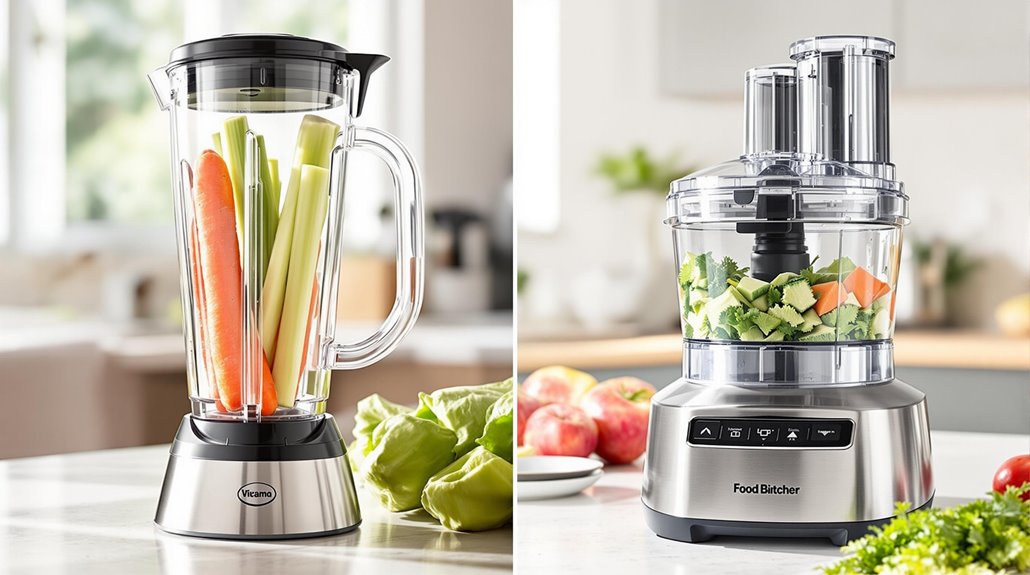
When deciding between a smoothie maker and food processor, consider your primary cooking needs and kitchen habits. If you mainly need smooth purees and drinks, a personal blender might be your best choice. However, if you regularly chop vegetables, knead dough, or prepare large batches of food, you'll need a food processor.
For those with limited kitchen space, a mini food processor could be ideal for small batches while still offering more versatility than a smoothie maker. Consider how easy to use each appliance is - blenders typically have simpler controls, while food processors offer more attachments and functions. The best blender for you mightn't be the most expensive one, but rather the one that matches your cooking style. Remember that having both isn't redundant if you frequently use features specific to each appliance.