Can You Make Mayonnaise in a Blender?
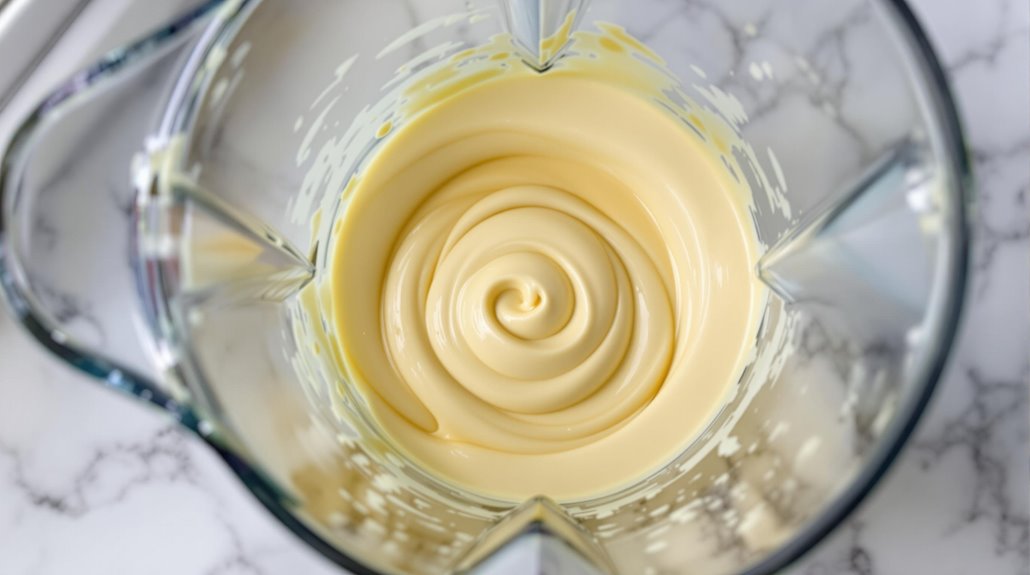
You can make smooth, creamy mayonnaise in a blender thanks to its high-speed blades that create the perfect emulsion between oil and egg yolks. Start with room-temperature ingredients and slowly drizzle oil into your running blender while the blades break it into microscopic droplets. You'll need to maintain the right balance and avoid over-blending for success. Ace these key elements, and you'll be whipping up fresh homemade mayo in minutes.
Understanding the Science of Blender Mayonnaise
Ever wondered how a blender can convert simple ingredients into creamy mayonnaise? It's all about the science of emulsification, where your blender's high-speed blades create the perfect conditions for combining oil and egg yolks.
When you make homemade mayonnaise, your blender acts like a powerful immersion tool, generating strong shear forces that break down oil into microscopic droplets. These droplets get coated by the natural emulsifiers in the egg yolks, creating a stable mixture.
Whether you're using a standard blender or food processor, you'll need to add oil slowly to maintain the right balance. If your blender is larger, consider doubling your recipe for ideal results. Just remember not to over-blend, as this can break down your carefully crafted emulsion and ruin your mayonnaise's texture.
Using fresh quality ingredients like premium oils and fresh eggs will significantly impact your mayonnaise's final flavor and consistency.
Essential Ingredients and Equipment
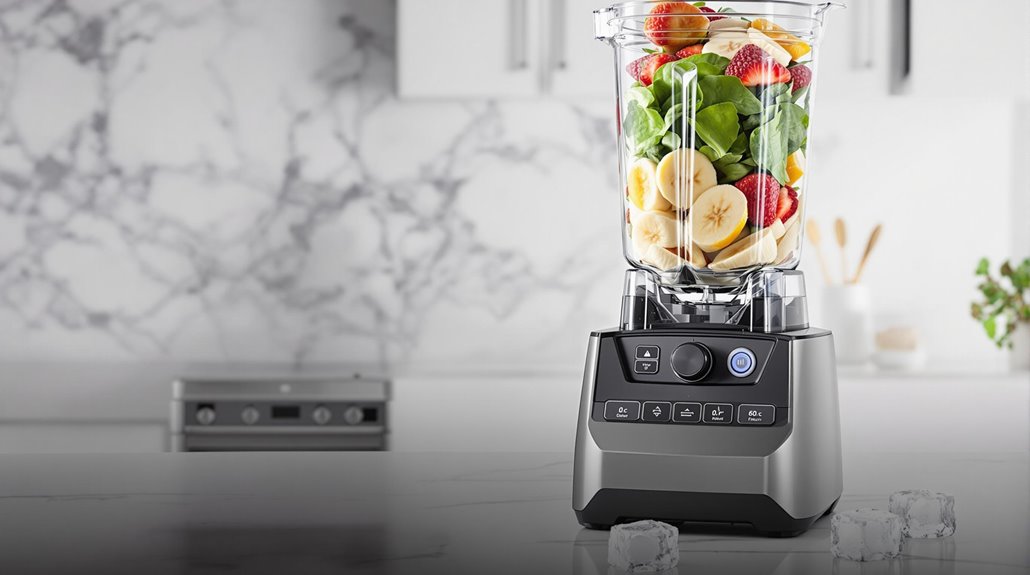
Before diving into blender mayonnaise, you'll need the right tools and ingredients for success. While an immersion blender can work, a large-capacity food processor or blender with a feed tube is essential for proper emulsification. You'll want to double or triple your recipe to make certain there's enough volume for the blades to work effectively.
The key ingredients start with egg yolk as your emulsifier. Remember that mayonnaise is easily broken if you add oil too fast, so your blender setup must allow you to slowly add oil in a thin stream. The feed tube is pivotal here, as it helps you slowly pour the oil at a controlled rate. Don't over-process the mixture – blend just until the emulsion forms to avoid breaking your mayonnaise. Making homemade mayonnaise allows you to control the quality of ingredients while creating a healthier alternative to store-bought versions.
Step-by-Step Blender Method
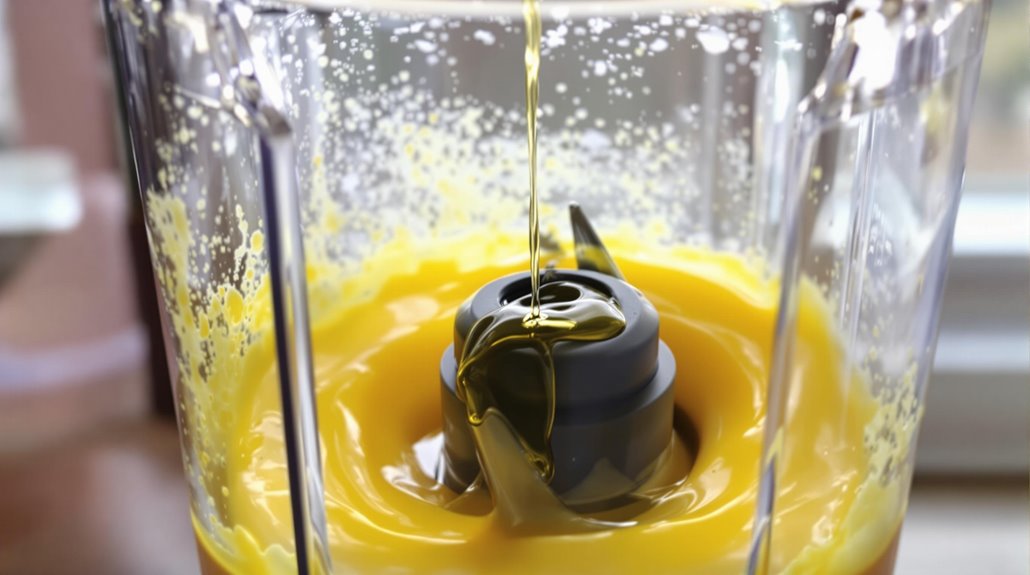
To make mayonnaise in a blender, you'll start by placing two room-temperature egg yolks, a tablespoon of vinegar or lemon juice, and a pinch of salt in your blender's container.
Run your blender on low speed while slowly dripping the oil in a thin, steady stream. If you're using a large-capacity blender, you might need to double these amounts to guarantee proper emulsification. Keep a close eye on the process, as it requires more hands-on control than using an immersion blender.
Stop blending immediately once your mayonnaise reaches the desired consistency. Be careful not to over-blend, as this can cause the mixture to break. Your finished mayonnaise should be thick and creamy. This blender method works reliably when you maintain a steady oil flow and watch the emulsion carefully. The compressive shearing forces created by the blender's blades help break down and combine the ingredients into a smooth, stable emulsion.
Common Mistakes and Troubleshooting Tips
Making mayonnaise in a blender can go wrong in several common ways, but most issues are easily fixable. If you're using a regular blender and your mayonnaise isn't coming together, you might need to double the recipe since larger blenders require more ingredients for best results.
Watch your blending time carefully - over-blending is a common mistake that'll break your emulsion, leaving you with a thin, greasy mixture. When this happens, try starting fresh with a little less oil. Remember to add oil in a thin stream of oil; it's easy to make the mistake of pouring too much, too fast.
While mayonnaise is generally easy to make in a blender, you'll get more consistent results if you use an immersion blender instead.
Storage and Serving Suggestions
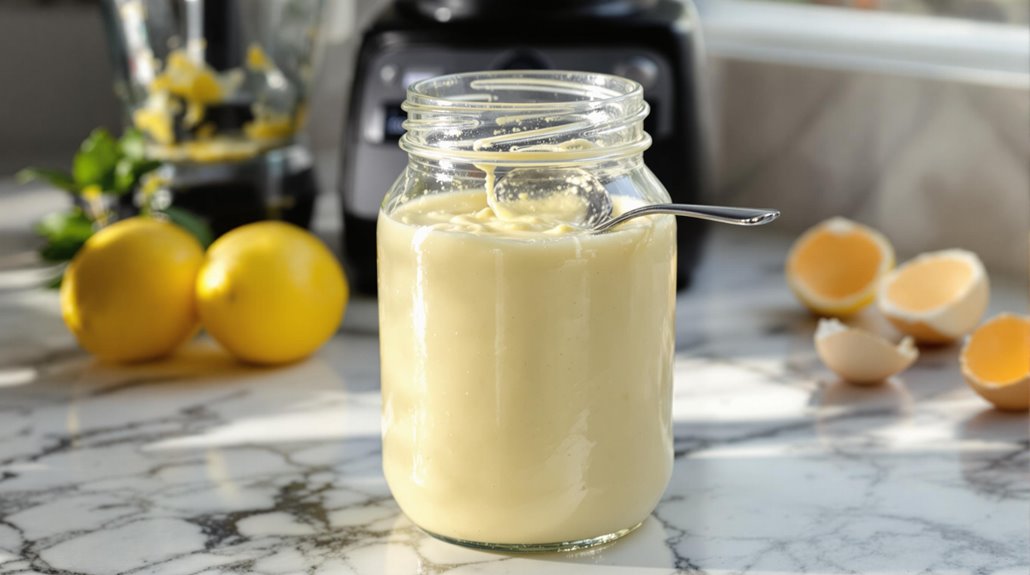
Once you've perfected your blender mayonnaise, proper storage becomes essential for food safety and taste. Store your homemade mayonnaise recipe in a clean, airtight container in the refrigerator, where it'll keep fresh for up to one week. Since the raw egg mixture may separate, remember to stir well before each use.
You can freeze your foolproof mayonnaise for up to three months, though the texture might change slightly when thawed. Your homemade creation serves as a versatile base for countless recipes that use mayo, from classic chicken salad to tangy dips made with Dijon mustard. Alter your neutral-flavored oil mayonnaise into delicious dressings, or spread it on sandwiches.
For food safety, consider using pasteurized eggs, especially when serving vulnerable populations. Get creative with your mayonnaise recipes in dishes like potato salad, coleslaw, and deviled eggs.