Can You Blend Oats Into Flour?
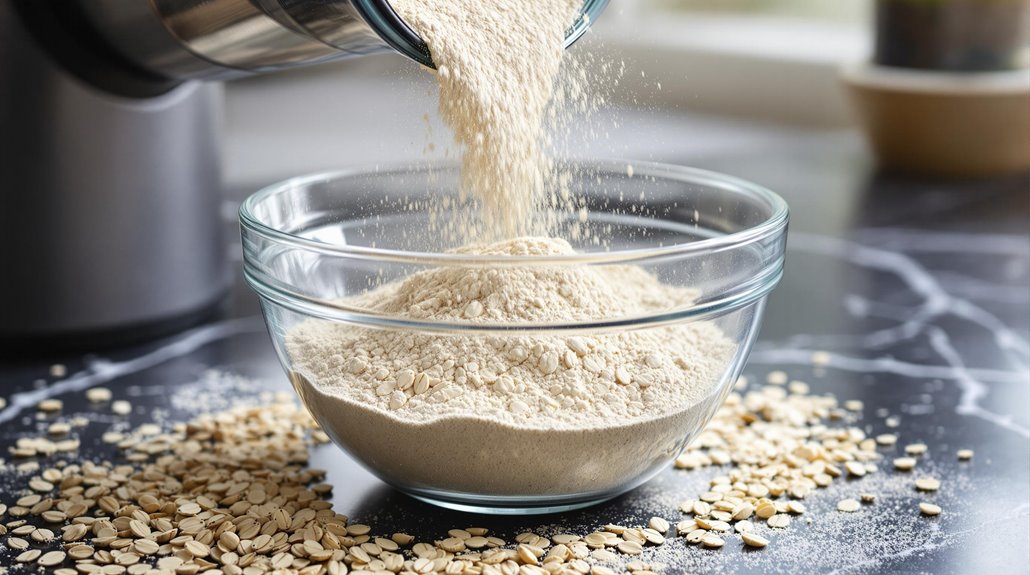
Yes, you can easily blend oats into flour using a food processor or high-speed blender. Simply process rolled, quick-cooking, or steel-cut oats on high speed for 1-2 minutes until you achieve a fine, powdery consistency. One cup of rolled oats typically yields about 3/4 cup of oat flour. Store your homemade oat flour in an airtight container for up to three months. There's much more to uncover about making and using this versatile, gluten-free flour alternative.
Understanding Oat Flour Basics
Ever wondered how to convert ordinary oats into a versatile baking ingredient? You can easily modify rolled oats into homemade oat flour using your food processor or blender. Simply process the oats until they reach a fine, flour-like consistency. Keep in mind that one cup of rolled oats yields about 3/4 cup of oat flour.
As a pantry staple, oat flour offers a naturally gluten-free alternative to all-purpose flour. However, if you have celiac disease, make sure to use certified gluten-free oats to avoid cross-contamination. You'll love the subtle nutty flavor it adds to your baked goods, making it perfect for muffins, cookies, and scones.
Store your homemade oat flour in an airtight container for up to three months, saving money compared to store-bought versions. For optimal results, use high-powered blenders with variable speed settings to achieve the perfect flour consistency.
Types of Oats for Blending
When making oat flour at home, you'll find several types of oats suitable for blending. Each variety offers different characteristics with respect to texture and yield when processed in your blender or food processor.
- Rolled oats: These traditional oats convert easily, yielding 1 cup of flour per cup of oats.
- Quick-cooking oats: Similar to rolled oats in yield, they blend efficiently due to their pre-processed nature.
- Steel-cut oats: These produce double the flour (2 cups per 1 cup of oats) but require longer blending time.
- Certified gluten-free oats: Essential for those avoiding gluten, they can be found in any of the above varieties.
The type you choose will impact your final results, so consider your recipe's needs when selecting. Remember that all varieties can be successfully changed into flour with the right processing time. Using a glass blender jar provides excellent results when grinding oats since it resists scratching and handles tough ingredients effectively.
Essential Equipment and Tools
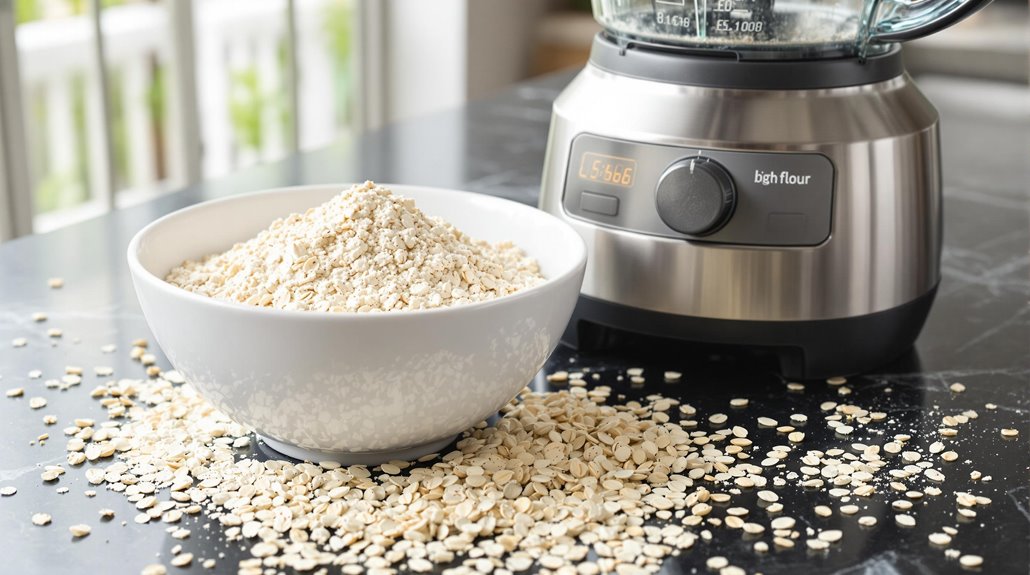
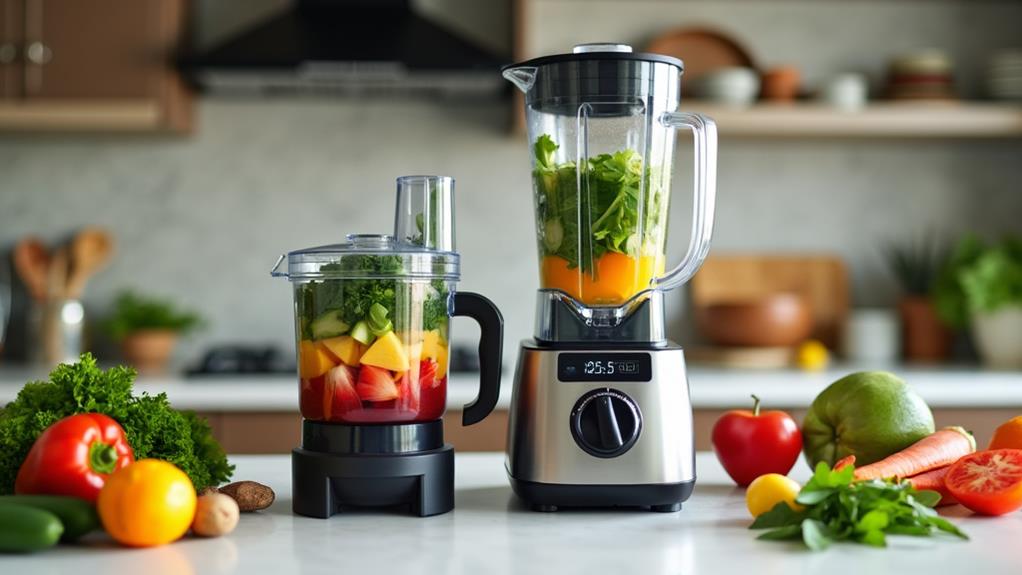
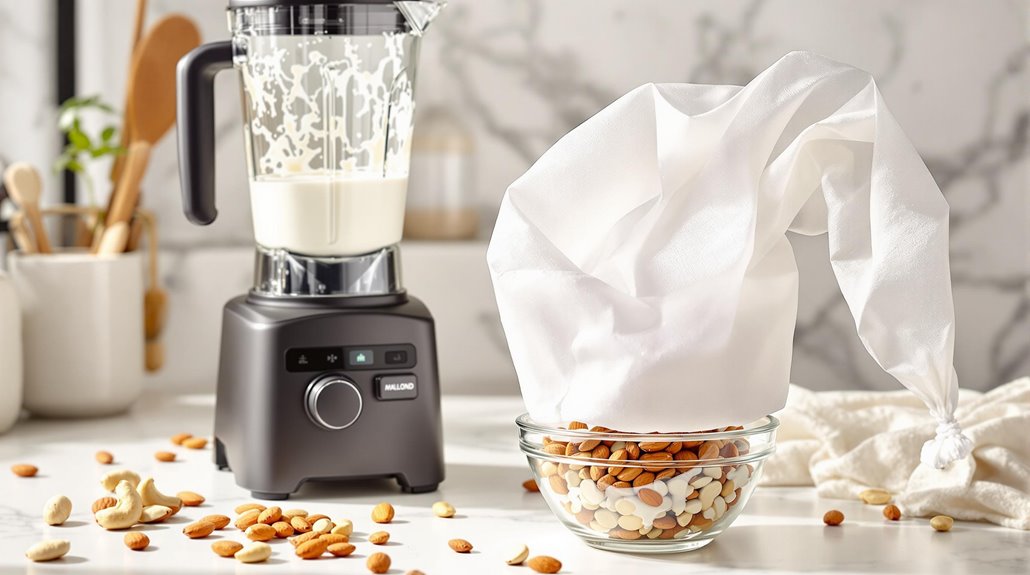
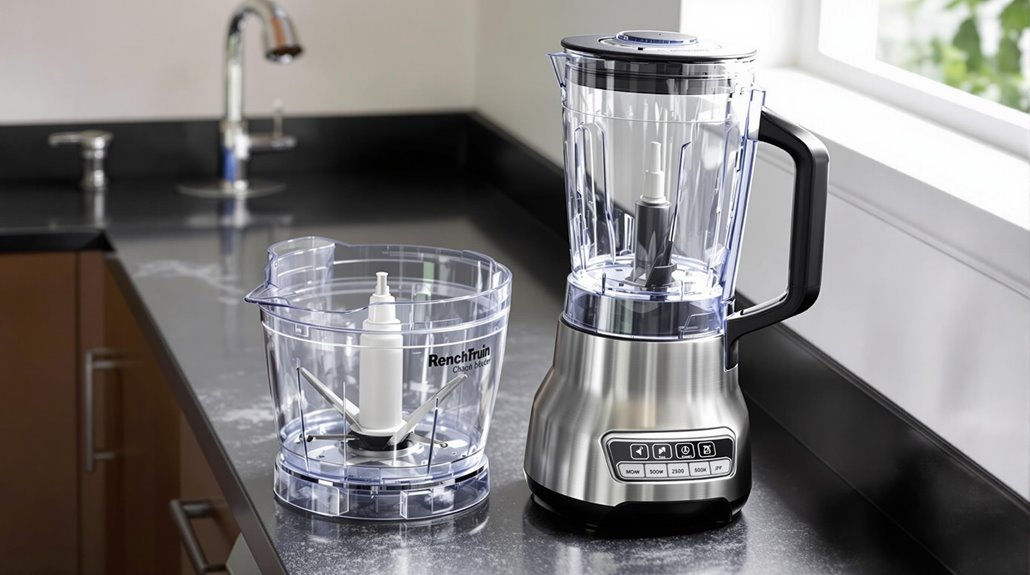
To convert oats into flour successfully, you'll need specific equipment that can handle the grinding process effectively. A food processor or high-speed blender equipped with sturdy sharp blades is essential for achieving the desired texture. Your blender or food processor should be powerful enough to convert whole oats into fine flour within 30 seconds to 2 minutes of blending time. Commercial culinary blenders are particularly effective for this task due to their powerful high-horsepower motors. After processing, you'll want to sift the ground oats through a fine-mesh strainer to catch any larger pieces that didn't blend completely.
This extra step safeguards your oat flour to have a consistent, smooth texture. Once you've achieved the right consistency, transfer your freshly made cups of oat flour into airtight storage containers. This will protect your homemade flour from moisture and help maintain its freshness for future use.
Step-by-Step Blending Process
Making oat flour at home follows a straightforward process that you'll excel at in minutes. Using your food processor or blender, you can convert cups rolled oats into fresh, homemade oat flour from scratch. Keep in mind that one cup of oats will yield about 3/4 cup flour when processed.
- Pour your desired amount of oats into your blender or food processor, leaving enough space for the oats to move freely
- Secure the lid and start blending at high speed
- Blend until the oats reach a fine, powdery consistency (about 1-2 minutes)
- Stop occasionally to scrape down the sides if needed
That's all it takes to make much oat flour as you need! Your homemade version will be just as good as store-bought, at a fraction of the cost.
Storage and Shelf Life
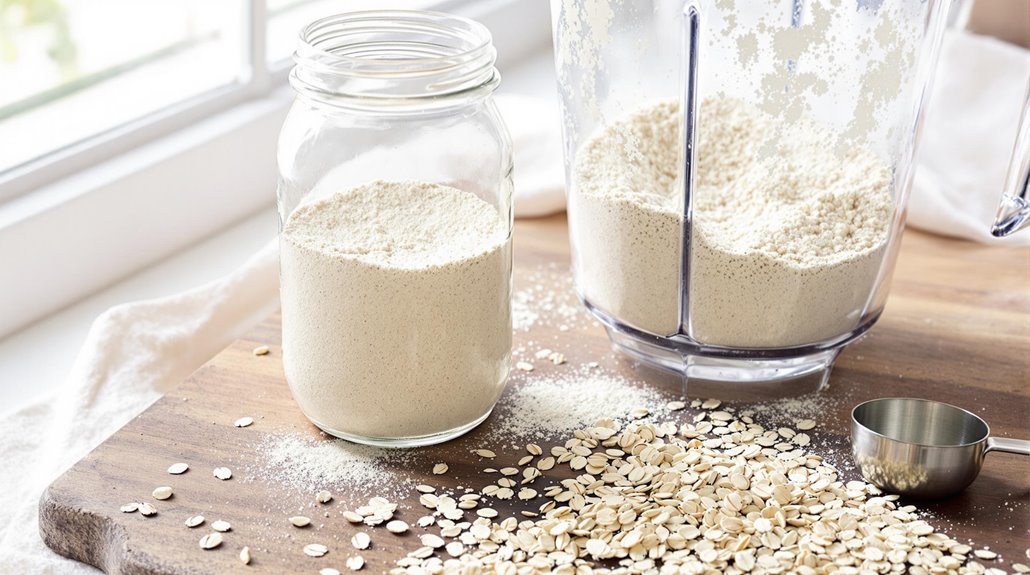
Proper storage determines how long your homemade oat flour will stay fresh and usable. When you make oat flour, it's crucial to store it in an airtight container to maintain its fine texture and prevent moisture from affecting its quality. You'll find that oat flour has a shorter shelf life than regular flour due to its higher oil content.
Your homemade oat flour will stay fresh for up to 3 months when stored at room temperature in a cool, dry place. To extend its use time, you can store it in the freezer. This is particularly important if you make large batches or use certified gluten-free oats for your flour. Remember to always check for any signs of spoilage before using, and measure each cup carefully when you're ready to bake with your stored oat flour.
Measuring and Substitution Guide
Understanding measurement ratios is key when working with your stored oat flour. When you make oat flour by blending oats, you'll need to account for the volume changes. One cup of rolled oats yields about 3/4 cup of gluten-free oat flour, while one cup of steel-cut oats produces two cups of oat flour.
To successfully substitute oat flour in recipes, guarantee you:
- Weigh your oat flour instead of using volume measurements
- Increase the amount of oat flour by 42% when replacing all-purpose flour
- Consider that different types of oats yields varying amounts of flour
- Remember that one cup of rolled oats won't equal one cup of oat flour
Since oat flour is lighter than all-purpose flour, measuring by weight certifies your recipes turn out perfectly every time.
Best Recipes Using Oat Flour

Once you've become adept at making oat flour, you'll find its versatility in countless delicious recipes. Your baked goods will benefit from the nutty flavor and tender texture that oat flour provides, especially when making gluten-free food.
Transform your old-fashioned oats into delectable treats like banana bread, which serves as a popular dairy-free and certified gluten-free quick bread option. You'll love making oat flour chocolate chip cookies for a healthier twist on the classic favorite.
For breakfast, try fluffy gluten-free waffles topped with fresh fruit and maple syrup. Don't forget about muffins - they're simple to prepare and customizable with your favorite add-ins like blueberries, nuts, or chocolate chips. Whether you're following a gluten-free diet or simply exploring new ingredients, these recipes showcase oat flour's exceptional versatility.
Tips for Perfect Results
To achieve consistent, high-quality oat flour at home, following a few essential tips can make a significant difference in your results. When using rolled oats, you'll want to guarantee they're processed into a fine powder that resembles all-purpose flour for the best outcome in your gluten-free recipes.
- Use your high-powered blender or food processor in batches, filling only halfway to prevent motor strain
- Process each batch for 30-45 seconds until you've achieved a fine, powder-like consistency
- Always sift your oat flour to catch any larger pieces that need reprocessing
- Store your freshly made flour in an airtight container to maintain freshness
Remember that one cup of rolled oats will yield slightly less flour, so plan accordingly for your recipes. With proper storage, your homemade oat flour will stay fresh for up to three months.