Can You Blend Egg Whites for Meringue?
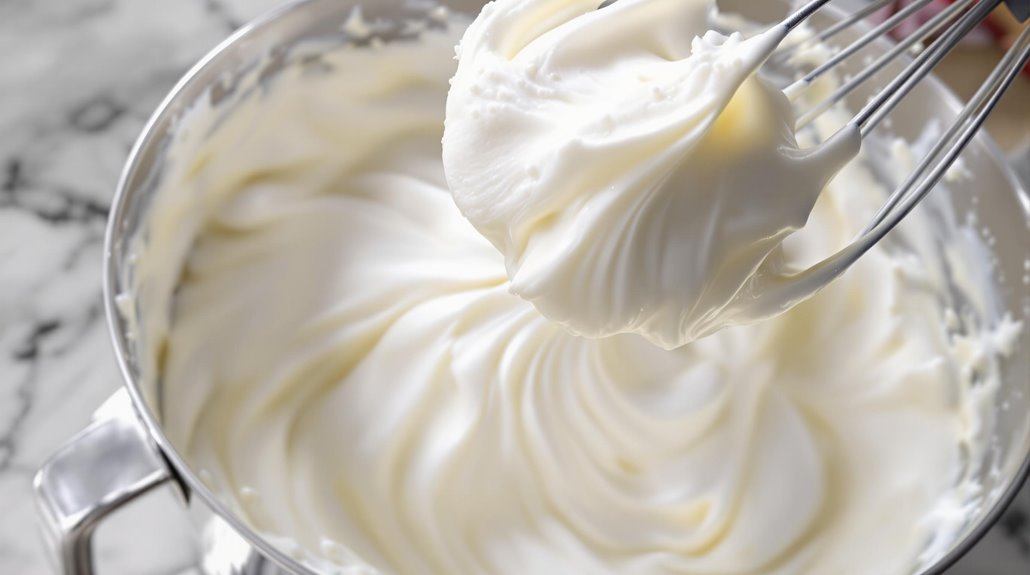
You shouldn't blend egg whites for meringue in a blender, as this will damage their delicate protein structure and prevent proper peak formation. Instead, use a stand mixer with a whisk attachment or hand mixer with beaters to achieve the perfect consistency. Working in a clean, grease-free bowl, whip room temperature egg whites at high speed until stiff, glossy peaks form. Understanding the science behind meringue will help you command this classic technique.
Understanding Egg White Structure and Science
Breaking down the science behind egg whites helps explain why proper whipping technique is essential for meringue. When you whip egg whites, you're working with a simple yet remarkable combination of water and proteins, primarily albumin. These proteins undergo a fascinating transformation called denaturing, where they disentangle from their natural state and reform into a complex network.
As you continue whipping, this protein network traps countless air bubbles, creating a light, airy foam that expands in volume. Adding stabilizers like sugar or cream of tartar helps maintain this delicate structure. However, you'll need to be careful not to overblend, as this can cause the proteins to revert back on themselves.
Understanding this molecular dance is key to achieving the perfect meringue consistency every time. Similar to using blender speed options, controlling your mixing speed is crucial for preventing the egg whites from breaking down prematurely.
Essential Tools and Equipment for Blending
Now that you understand the science of egg whites, let's focus on the right tools that will help you create the perfect meringue.
You'll need either a stand mixer with a whisk attachment or a hand mixer with beaters as your primary tool. Choose a wide, deep mixing bowl made of stainless steel or glass - avoid plastic as it can affect the taste. Before you start, guarantee your bowl and all utensils are completely grease-free.
While both mixer types work well, stand mixers excel at providing consistent results and hands-free operation for achieving the perfect meringue texture.
To help stabilize your egg whites, keep cream of tartar or lemon juice handy. These ingredients will help you achieve those perfect stiff peaks you're looking for. When you're ready to blend, add your sugar gradually while whipping. A tablespoon at a time is ideal for creating that smooth, glossy finish that makes a perfect meringue.
Step-by-Step Blending Technique
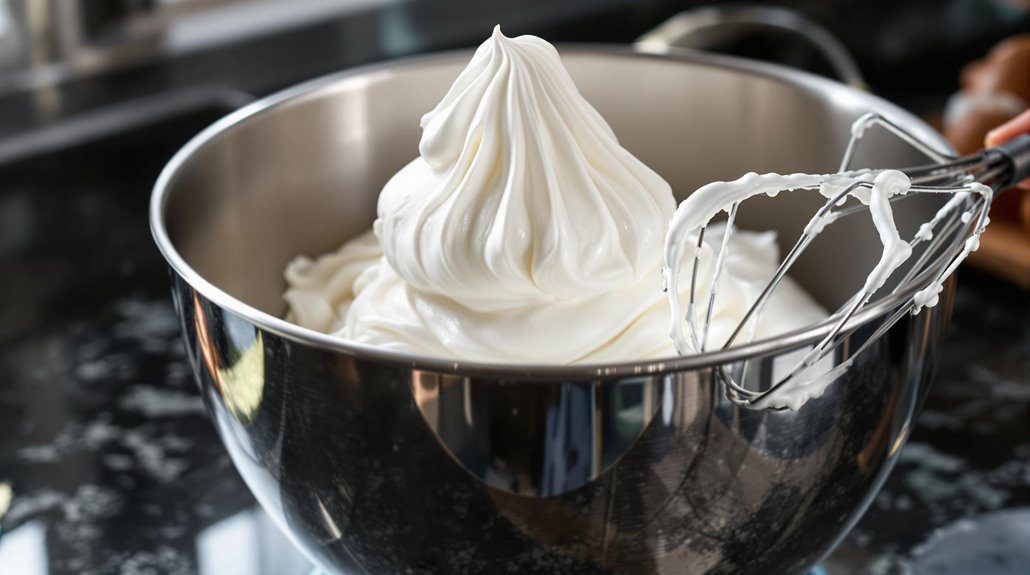
When creating the perfect meringue, following a precise blending technique will make all the difference in your results. Start with room temperature egg whites in a clean, grease-free bowl. Using your whisk attachment, begin beating egg whites at high speed to incorporate air. You'll notice the mixture becoming foamy before developing soft peaks. Adjustable speed settings on your hand mixer allow for precise control as you progress through each stage of whisking.
Once you've reached the soft peak stage, it's time to gradually add your granulated sugar, about a tablespoon at a time. Continue whipping egg whites until they form stiff, glossy peaks. Watch carefully as you approach the final stages - you don't want to overbeat the mixture. When whites form stiff peaks that hold their shape and look smooth and shiny, you've achieved the perfect consistency for your meringue.
Common Mistakes to Avoid When Blending
Making a perfect meringue requires understanding what not to do just as much as knowing the proper technique. The biggest mistake you'll want to avoid is using a blender instead of a whisk attachment or hand mixer. While it might seem like a time-saving shortcut, blending your egg whites will incorporate too much air, resulting in dry, coarse meringue cookies that collapse easily.
Even if you've prepared everything perfectly - using room temperature eggs in a clean mixing bowl with a pinch of salt - blending will still ruin your results. The high-speed action denatures proteins in the egg whites, preventing them from forming proper stiff peaks. You'll also struggle to properly incorporate egg whites and sugar, leading to a grainy texture. For best results, stick to whisking by hand or using a stand mixer (copper bowl optional).
Types of Meringue You Can Create by Blending
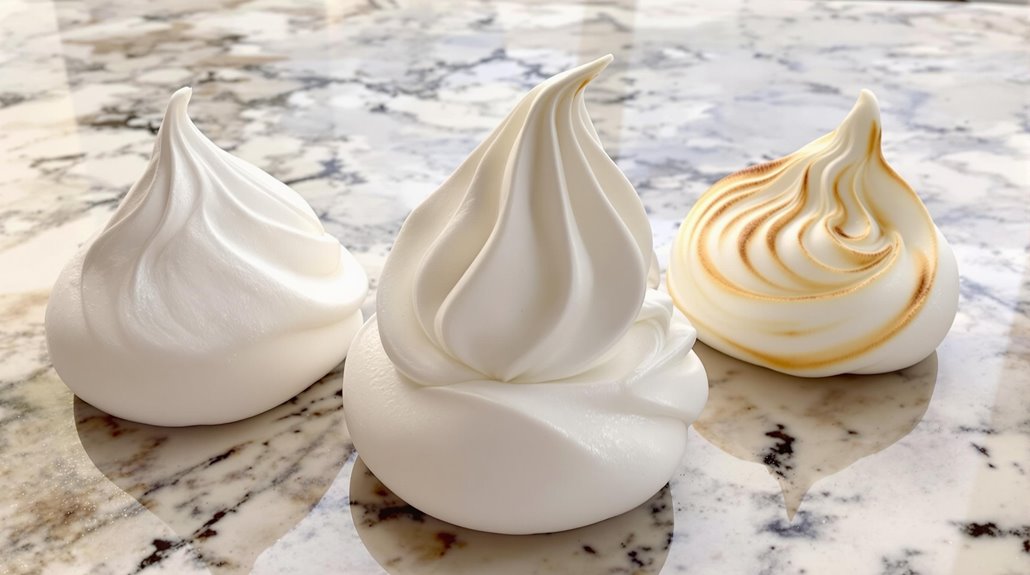
Despite the previous warnings against using a blender, you can still create different types of meringue using proper whisking techniques. Whether you're using a whisk attachment or choosing to whisk by hand, you'll find several classic meringue recipes to try.
French meringue is the simplest - just whip egg whites at room temperature at medium speed until foamy, then gradually add granulated sugar until stiff peaks form. For a more stable option, try Italian meringue by drizzling hot sugar syrup into whipped egg whites. Swiss meringue offers a silky texture by gently heating egg whites and sugar together before whipping. All these varieties can become light and airy when properly whisked.
You can even convert your meringue into crispy cookies or pavlovas by baking at a low temperature.