Can I Put Frozen Fruit in a Food Processor?
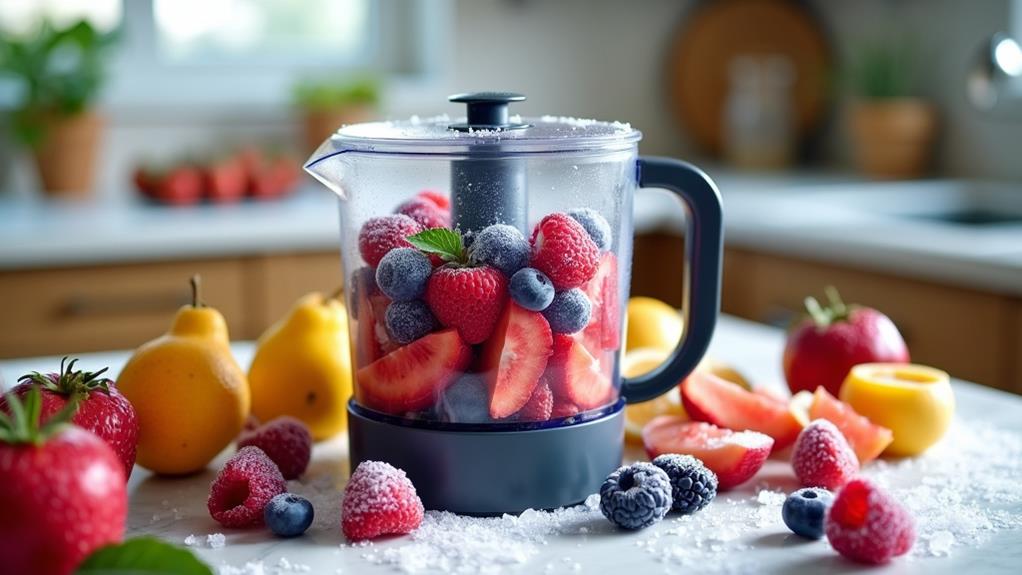
You're probably wondering if it's safe to put frozen fruit in a food processor. While you technically can, there are precautions you should take to avoid damaging your appliance. Slightly thawing the fruit can reduce strain on the blades and motor, resulting in a smoother texture. Avoid overloading the processor, as this can lead to leaks and uneven results. For the best approach to keep your equipment in optimal condition while making your favorite frozen treats, let's examine some key tips and tricks for effective processing.
Food Processor Overview
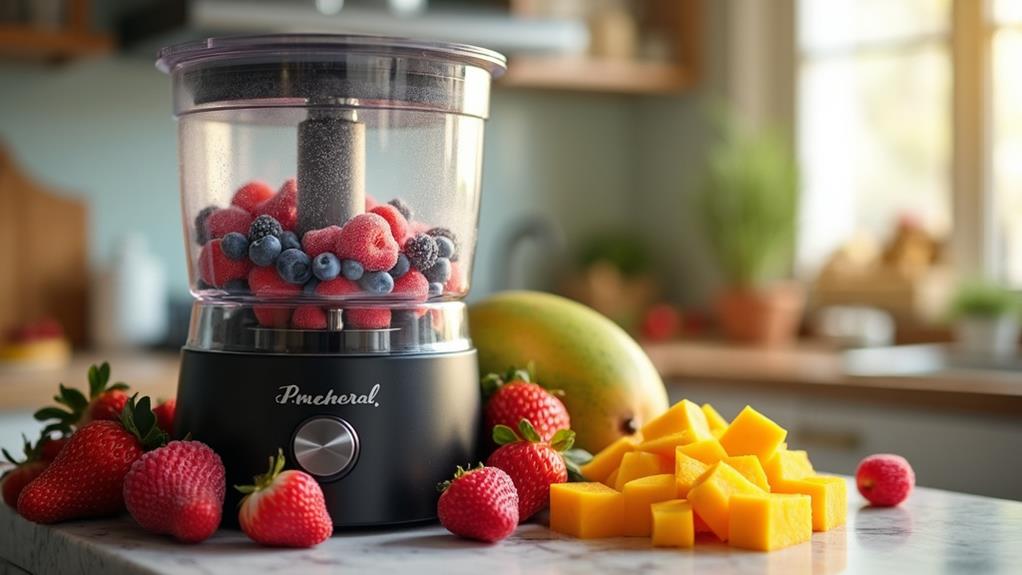
A food processor can be a transformative addition to your kitchen, known for its versatility in chopping, grating, and making dough. One of its standout features is the ability to create frozen desserts by processing frozen fruit and yogurt, offering quick, nutritious treats with minimal effort.
When using your food processor with frozen fruit, it's important to take precautions. Frozen fruit can be tough on the blades and motor, so slightly thawing the fruit before processing is advisable. This small step can extend the life of your appliance. Additionally, food processors have a limited capacity for liquids. Overfilling can lead to leaks, so be mindful of the amount you're adding.
For even chopping, you may need to stop the processor occasionally to scrape down the sides of the bowl, ensuring all ingredients are evenly processed. While food processors excel with solid foods, they do have limitations. Understanding these can help you make the most of this versatile kitchen tool and enjoy its benefits for years to come.
Blender Comparison
When deciding between a food processor and a blender, understanding their distinct functions is essential for making the right choice for your culinary needs. Blenders are designed to handle larger volumes of liquids, making them ideal for smoothies, soups, and sauces requiring a smooth consistency. They excel at blending frozen fruits, especially when sufficient liquid is added to ensure smooth blade movement and achieve a creamy texture.
Food processors, in contrast, are better suited for chopping and mixing solid foods. They're perfect for tasks like making dough, chopping vegetables, or processing frozen fruits without added liquid. If your goal is to blend frozen fruits into a liquid-based recipe, a blender is generally more effective. However, be cautious when blending hot liquids, as blenders can pose a risk of steam explosions. Food processors are less prone to this issue, making them safer for certain hot ingredients.
Ultimately, choosing between a food processor and a blender depends on your intended use. For tasks involving significant liquid content, a blender is your go-to appliance.
Best Uses for Food Processor
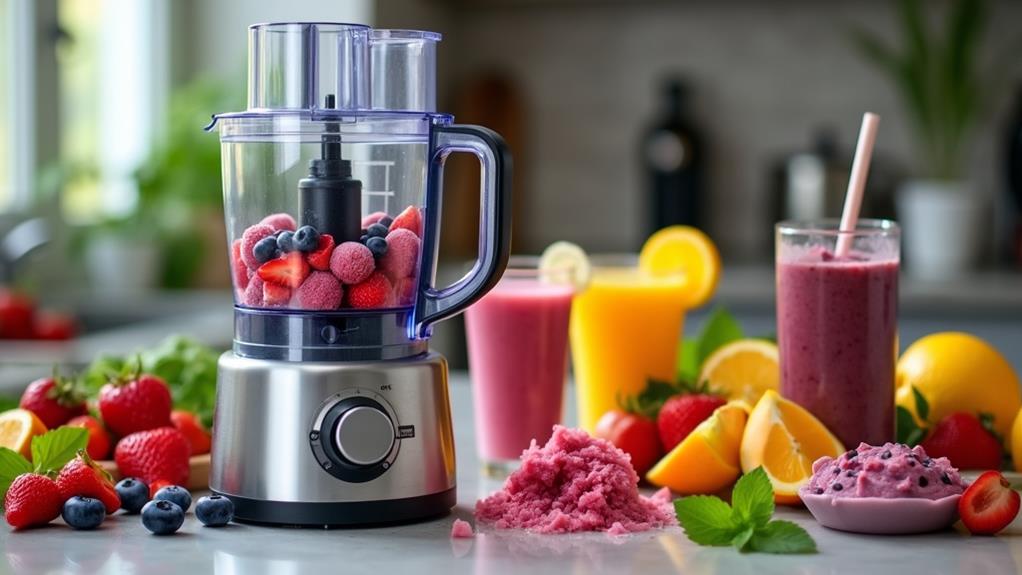
A food processor is a versatile kitchen tool perfect for more than just blending. It excels at efficiently chopping vegetables and making frozen desserts. You can quickly prep ingredients for meals or create a healthy treat using frozen fruit and yogurt. To protect the blades, let the fruit sit for about 10 minutes before processing.
Chopping Vegetables Efficiently
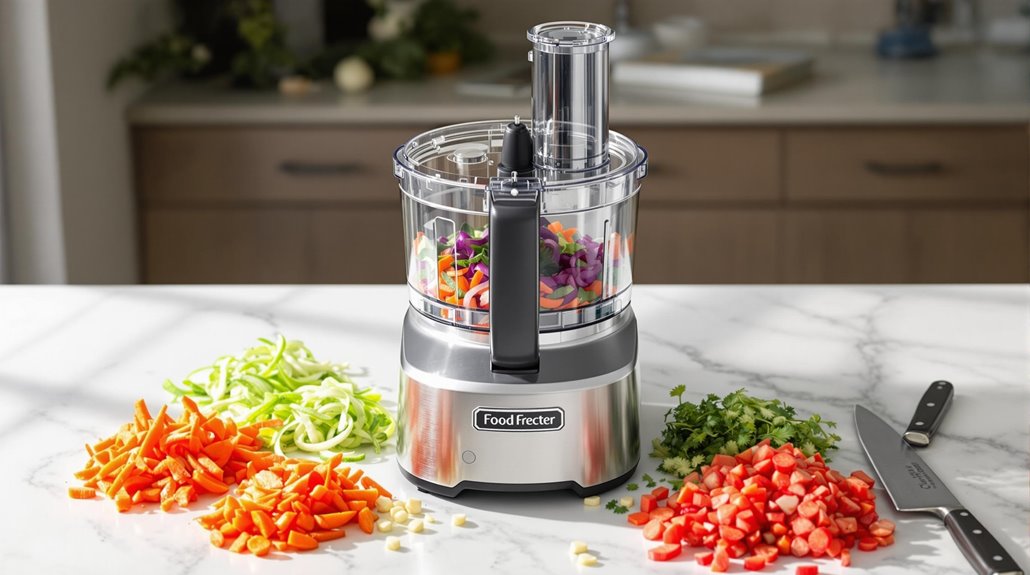
Efficiently chopping vegetables can significantly improve your meal prep, and a food processor excels in this task. While commonly used for blending frozen fruit into smoothies, its true versatility is evident when chopping vegetables. Whether dealing with soft tomatoes or hard carrots, a food processor ensures even cuts and saves valuable time.
With interchangeable blades, you can slice, shred, or chop vegetables to suit your recipe's requirements. This flexibility makes the food processor an essential kitchen tool, especially for processing large batches, where it drastically reduces prep time compared to manual methods.
A bit of manual intervention may be required. Occasionally, scraping the sides of the bowl ensures everything is chopped evenly and nothing remains stuck. This small step can significantly improve the quality of your chopped vegetables.
Integrating a food processor into your kitchen routine can revolutionize your cooking experience, making meal preparation more efficient and enjoyable. Whether you're handling a large quantity of carrots or just a few tomatoes, this tool's capabilities make it indispensable.
Making Frozen Desserts
While a food processor is excellent for chopping vegetables, it's also ideal for making delightful frozen desserts. By blending frozen fruit with liquids like juice or yogurt, you can create treats such as sorbets and frozen yogurts. For the best results, let your frozen fruit sit for about 10 minutes before processing. This step reduces machine wear and ensures a smoother consistency.
A basic sorbet recipe is straightforward: blend 3 cups of frozen fruit with 1 cup of juice until smooth. For a healthier ice cream alternative, use frozen bananas, which provide a creamy texture without added fats.
To avoid overloading your food processor, process frozen desserts in smaller batches. This prevents strain on the machine and improves mixing efficiency.
Quick Reference Guide:
| Recipe Type | Ingredients | Preparation Time | Key Tips |
|---|---|---|---|
| Sorbet | 3 cups frozen fruit, 1 cup juice | 10-15 minutes | Let fruit sit before processing |
| Frozen Yogurt | 2 cups frozen fruit, 1 cup yogurt | 10-15 minutes | Use smaller batches for blending |
| Banana Ice Cream | 2 frozen bananas | 10-15 minutes | Ensure bananas are ripe |
| Mixed Berry | 2 cups mixed frozen berries, 1 cup yogurt | 10-15 minutes | Add a splash of juice if needed |
Enjoy your homemade frozen desserts!
Processing Frozen Fruit
When processing frozen fruit, allow it to sit for about 10 minutes to thaw slightly, reducing strain on the blades. Avoid overfilling the food processor to ensure thorough processing and prevent leaks. Regularly inspect the bowl and blades for cracks or wear to maintain the appliance's longevity and performance.
Thawing Before Processing
Thawing frozen fruit for 10-15 minutes before processing can significantly improve texture and ease. Allowing the fruit to thaw slightly ensures a smoother, creamier final product, which is essential for desserts like sorbets and ice creams where consistency is crucial.
A brief thaw prevents the formation of a solid block that can be difficult for the blades to handle, making the process quicker and reducing strain on the food processor's motor. Hard, icy pieces can cause the blades to struggle, potentially leading to motor strain or damage over time.
Thawed fruit processes more evenly, resulting in a desirable, creamy consistency. Many recipes recommend this step for professional-quality results at home. While brands like Cuisinart confirm that processing frozen fruit is generally safe, they advise against refreezing it to maintain motor longevity. Thus, a slight thaw can ensure a smooth and efficient processing experience.
Blade Wear Concerns
Processing frozen fruit in a food processor can accelerate blade wear due to its hardness. Repeatedly using a food processor for frozen fruit places extra strain on the blades, causing them to dull more quickly than when processing fresh fruit. High-quality blenders are often better suited for this task if you frequently blend frozen items.
To mitigate blade wear, consider these tips:
- Thaw Time: Let frozen fruit thaw for about 10 minutes before processing to reduce blade strain.
- Moderation: Domestic food processors are fine for occasional use, but continuous daily processing can lead to faster wear and tear.
- Quality Equipment: Investing in a high-quality blender designed for frozen foods can ensure better performance and longevity.
Ignoring these precautions can lead to more than just blade wear; the motor housing or bowl may deteriorate over time due to the added stress. If you process frozen fruit regularly, taking these steps will help prolong the life of your appliance. By being mindful of how you use your food processor, you can keep it running efficiently and avoid unnecessary damage.
Safety and Longevity
To ensure both safety and longevity when processing frozen fruit, follow these best practices. First, let the frozen fruit sit at room temperature for about 10 minutes before processing. This slight thawing reduces strain on the blades, helping to maintain their sharpness over time.
Avoid overfilling the work bowl, as this can lead to leaks and uneven blending, which can stress the motor and shorten the food processor's lifespan. Process in smaller batches to achieve smooth, consistent results and keep your appliance in prime condition.
Regular maintenance is crucial. Check the bowl and housing for any cracks or damage regularly. Addressing these issues early can prevent further wear and extend the longevity of your food processor. For frequent use of frozen fruit, consider investing in a high-quality blender. Such blenders are often better suited to handle hard frozen items, reducing wear on your food processor's blades and motor.
Equipment Care and Maintenance
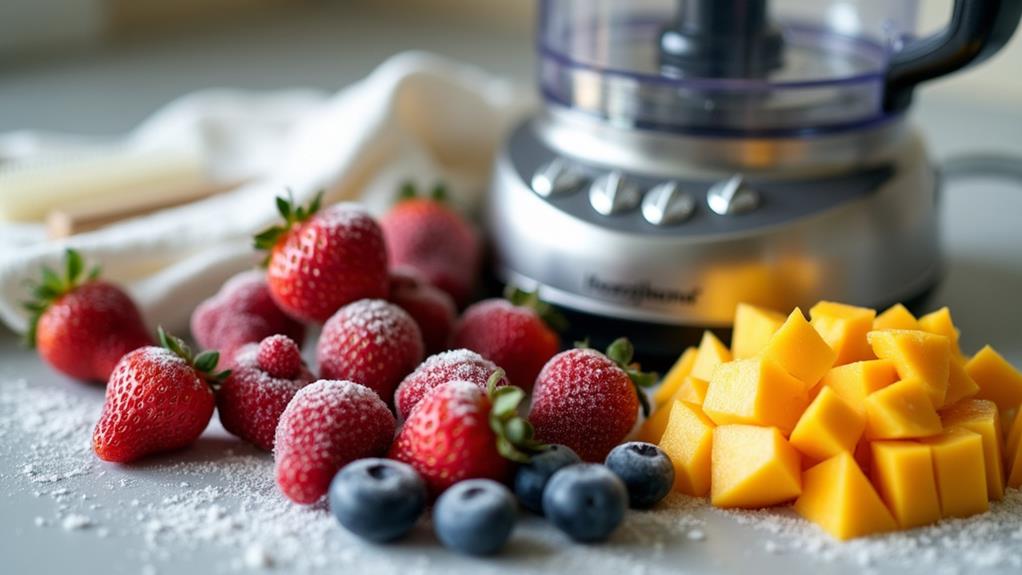
Caring for your food processor, especially when processing frozen fruit, is crucial for its longevity and safe operation. Regularly inspect the bowl and housing for cracks to prevent leaks and unsafe conditions. Frozen fruit can be hard on blades, so if they become dull or damaged, replace them promptly to ensure optimal performance.
Proper cleaning and storage after each use significantly extend the lifespan of your food processor. Avoid overloading the processor, particularly with frozen fruit, as it can strain the motor and reduce performance. Allowing frozen fruit to thaw slightly before processing can also reduce wear on the blades.
To keep your equipment in top condition, follow these tips:
- Inspect for Cracks: Regularly check the bowl and housing to prevent leaks.
- Replace Blades: Replace dull or damaged blades to maintain efficiency.
- Avoid Overloading: Do not exceed the processor's capacity, especially with frozen items.
Making Smoothies
Creating smoothies in a food processor is a straightforward process that can yield delicious results with a bit of preparation. Start by allowing your frozen fruit to sit for about 10 minutes. This step reduces wear on the blades and ensures smoother blending.
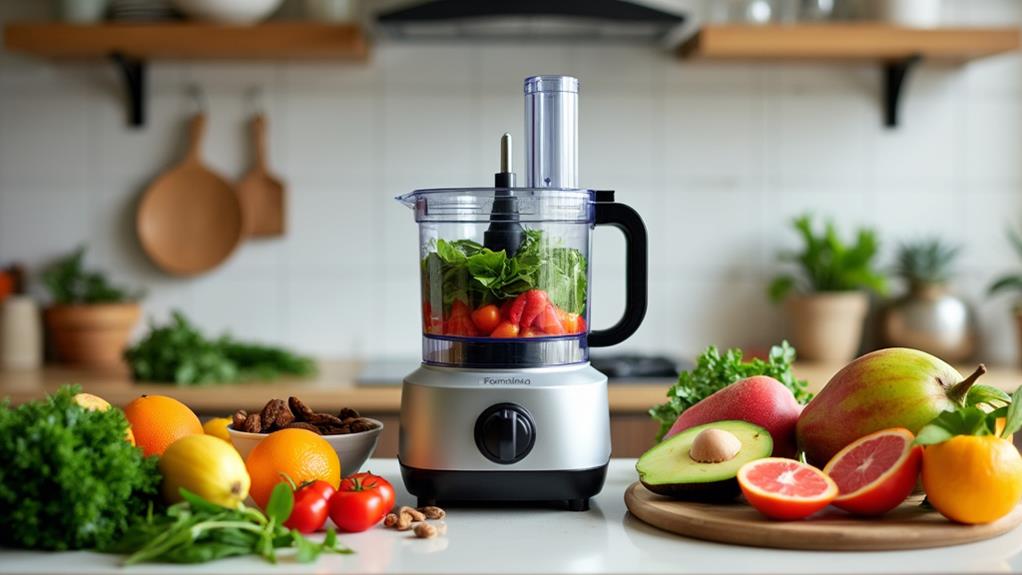
When you're ready, add leafy greens to the food processor first for effective blending. Next, add the slightly softened frozen fruit. To facilitate the blending process, pour in a liquid base such as water, milk, or yogurt. Avoid overfilling the work bowl to ensure even mixing and a smooth texture.
Using the multipurpose blade, blend the ingredients. You may need to scrape down the sides of the bowl occasionally to achieve a uniform mixture. While food processors might not produce the ultra-smooth texture of blenders, they still make tasty smoothies with a slight texture variation.
Here's a quick guide:
| Step | Action |
|---|---|
| 1 | Let frozen fruit sit for 10 minutes |
| 2 | Add leafy greens to the food processor |
| 3 | Add softened frozen fruit |
| 4 | Pour in the liquid base |
Frozen Fruit Desserts
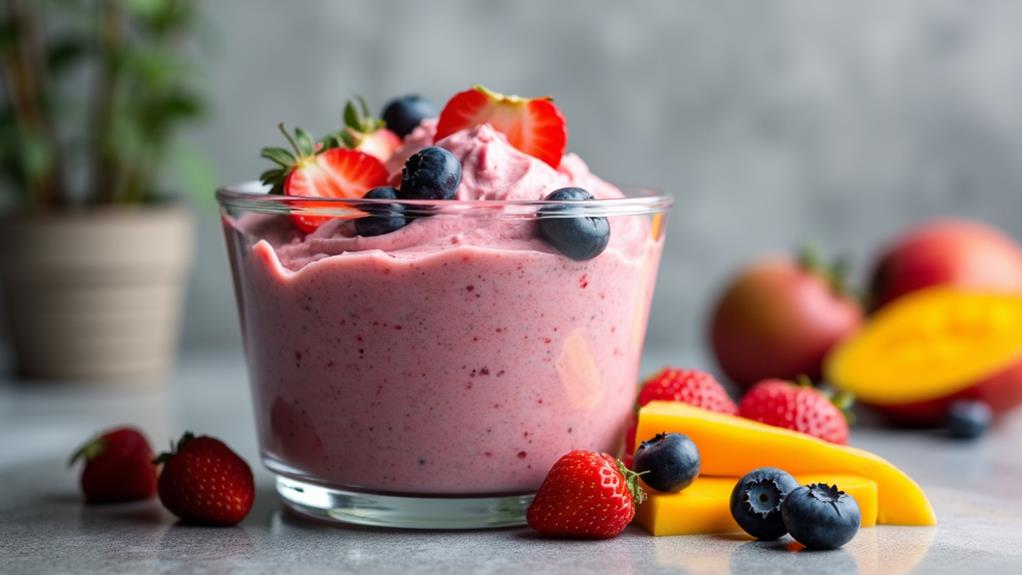
Frozen fruit desserts offer a delightful and healthy way to satisfy your sweet tooth with minimal effort. Using a food processor, you can transform frozen fruit into quick and nutritious treats like sorbets and nice creams. Start by letting your frozen fruit thaw for about 10 minutes to reduce wear on the blades and ensure a smoother consistency.
For a basic sorbet, blend 3 cups of frozen fruit with 1 cup of juice until smooth. This refreshing treat is both simple and delicious. If you prefer something creamier, use frozen bananas as a base for your ice cream. Blending frozen bananas creates a creamy texture reminiscent of traditional ice cream but without the added fats. Enhance the flavor with cocoa powder or vanilla for a guilt-free indulgence.
Here are some ideas to customize your frozen fruit desserts:
- Mixed Berry Sorbet: Blend frozen strawberries, blueberries, and raspberries with a splash of apple juice.
- Tropical Nice Cream: Combine frozen mango, pineapple, and banana with a hint of coconut milk.
- Chocolate Banana Ice Cream: Blend frozen bananas with cocoa powder and a dash of almond milk.
These frozen fruit desserts are packed with vitamins, making them a nutritious choice for your sweet cravings.
Healthy Ice Cream
Healthy ice cream offers a delicious and guilt-free alternative to traditional ice cream, allowing you to indulge without the extra calories and added sugars. Frozen bananas serve as the primary base for this treat, providing a creamy texture and natural sweetness. To achieve the perfect soft-serve consistency, thaw your frozen bananas for 10-15 minutes before blending. This step is crucial as adding liquid might compromise the desired texture.
For an extra creamy and nutritious twist, mix in some low-fat yogurt. Not only does it add a tangy flavor, but it also increases the protein content, making your dessert more satisfying. Low-fat yogurt complements the natural sweetness of the bananas, creating a balanced and delicious treat.
You can enhance the flavor and nutritional value by adding other frozen fruits like grapes or mangoes. These fruits retain their vitamins, minerals, and fiber even when frozen, making them a convenient and often more affordable option.
Healthy ice cream made from frozen bananas and low-fat yogurt is a treat for your taste buds and a smart choice for your health. Enjoy experimenting with different flavor combinations!