Can I Make Ice Cream in My Food Processor?

You might wonder if your food processor can double as an ice cream maker. The answer is yes, it can. This method allows you to create creamy, no-churn ice cream without specialized equipment. By blending chilled ingredients, you can achieve a smooth texture comparable to store-bought varieties. But how do you avoid pesky ice crystals and ensure delightful consistency? And how do you perfect the balance of flavors? Read on for a step-by-step process and tips to create your own homemade ice cream masterpiece.
Understanding No-Churn Ice Cream
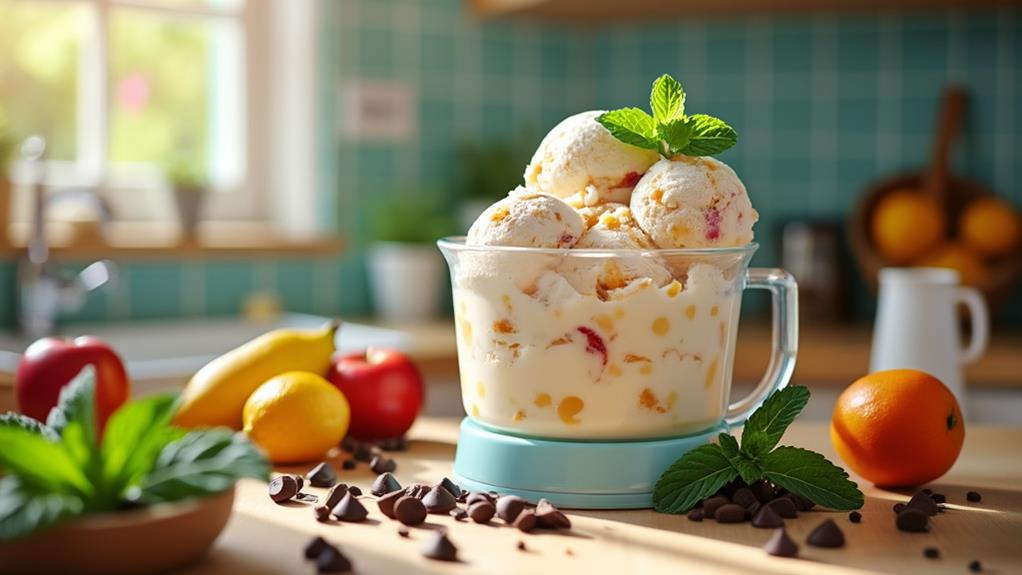
No-churn ice cream simplifies the process by eliminating the need for a specialized machine, making it quick and easy with minimal cleanup. Instead of churning, a food processor is used to whip the ingredients, ensuring a creamy texture. One challenge with no-churn methods is ice crystal formation, which can cause a grainy texture. Adding sugar lowers the freezing point, minimizing ice crystals and improving mouthfeel.
Whipping chilled evaporated milk instead of heavy cream results in a lighter flavor and better foam stabilization, enhancing the creamy texture and providing a gelato-like mouthfeel. Incorporating air during mixing is essential for achieving the desired consistency, making the ice cream smooth and enjoyable. By carefully balancing these elements, you can create a delightful homemade ice cream that rivals store-bought versions, all without the need for a specialized machine.
Advantages of Using a Food Processor
A food processor offers numerous advantages for making ice cream at home. It efficiently whips chilled evaporated milk, resulting in a lighter flavor and smoother texture compared to heavy cream. This process traps air, creating a stable foam that enhances the creamy consistency of your ice cream.
Additionally, the food processor breaks up ice crystals during blending, giving your ice cream a gelato-like mouthfeel. This guarantees a smooth texture that's hard to achieve with traditional methods. Chilling the food processor bowl beforehand is essential, as it helps maintain the whipped consistency and traps more air, improving the overall texture.
One of the standout benefits is how the food processor handles mix-ins. Whether you're adding chocolate chips, fruit, or nuts, the machine incorporates them evenly throughout the ice cream. This prevents mix-ins from sinking and guarantees a balanced flavor in every bite.
Moreover, using a food processor is an efficient way to make ice cream. It allows for quick preparation and minimal cleanup, making it a convenient alternative to more cumbersome ice cream makers. Altogether, a food processor helps you achieve creamy, smooth, and perfectly mixed homemade ice cream effortlessly.
Step-by-Step Process
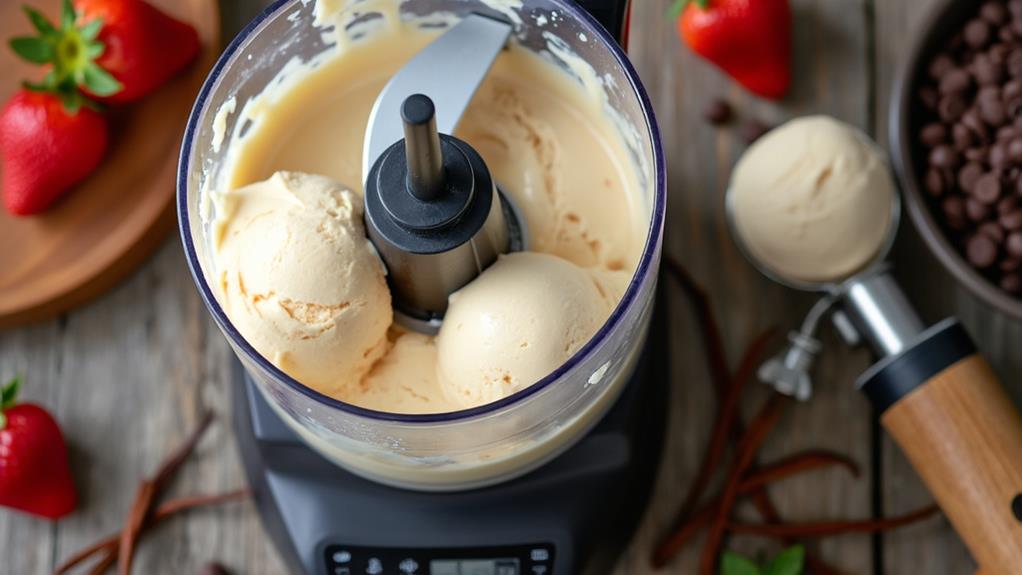
Making ice cream with a food processor is a simple and rewarding process. Start by preparing your ice cream base: a basic custard mixture made from cream, eggs, and sugar, or you can opt for sweetened condensed milk for an easier alternative. Pour the prepared custard into a Ziploc bag, ensuring to remove as much air as possible to prevent large ice crystals from forming. Freeze the mixture until it is completely solid.
Once frozen, break the custard into chunks and place them in a well-chilled food processor bowl to maintain a cold environment. Blend the custard until it is smooth. At this point, you can add mix-ins or additional flavorings such as chocolate chips, fruit, or vanilla extract. Process until everything is evenly combined.
Transfer the blended ice cream into an airtight storage container to preserve its texture and flavor. Freeze it again for a couple of hours to allow it to firm up before serving. Following these steps ensures you will have creamy, smooth homemade ice cream ready to enjoy.
Importance of Air in Texture
Incorporating air when making ice cream in a food processor is crucial for achieving a creamy texture and preventing large ice crystals. Chilling the bowl beforehand helps trap air, stabilizing the mixture and keeping it light and fluffy. Without sufficient air, your ice cream could become dense and grainy, lacking the desired smoothness.
Air Incorporation Techniques
Incorporating air into ice cream is crucial for achieving a creamy texture. A food processor can efficiently handle this air incorporation, which is essential for preventing large ice crystals and ensuring a smooth finish.
Churning is a key technique here. Introducing air pockets into the mixture noticeably enhances the mouthfeel and lightness of your ice cream. Using a food processor to whip chilled evaporated milk is particularly effective, as it stabilizes foam and improves air incorporation, giving your ice cream a gelato-like consistency and remarkable stability.
To optimize air incorporation, keep these tips in mind:
- Chill the bowl: A chilled bowl helps trap air in the whipped mixture, improving both texture and stability.
- Whip thoroughly: Ensure you whip the mixture thoroughly to incorporate as much air as possible, contributing to a smoother, creamier texture.
- Monitor consistency: Aim for a gelato-like consistency by ensuring the mixture is well-aerated and stable.
Preventing Large Crystals
A key to creating smooth, creamy homemade ice cream lies in preventing the formation of large ice crystals. Using a food processor can be instrumental in this process, as it introduces air into the mixture, forming tiny air pockets that inhibit large ice crystal formation. This step is crucial for achieving a desirable texture and creaminess.
To maximize air incorporation, ensure both your mixing bowl and ingredients are cold. This helps stabilize foam formation and enhances the overall texture. Effective air incorporation not only improves mouthfeel but also helps the ice cream maintain its structure, preventing it from becoming grainy or icy.
Here's a quick reference table:
| Key Factor | Importance |
|---|---|
| Air Incorporation | Prevents large ice crystals |
| Cold Ingredients | Ensures stable foam formation |
| Mixing Process | Introduces air pockets |
| Freezing | Maintains smooth texture |
| Food Processor Use | Achieves gelato-like consistency and creaminess |
Achieving Creamy Texture
Achieving a creamy texture in homemade ice cream relies on the effective incorporation of air during the mixing process. Whipping chilled ingredients in a food processor introduces air, which is essential for preventing large ice crystals and creating a smooth, creamy consistency.
To optimize air incorporation, always use chilled bowls and ingredients. Cold conditions support stable foam formation, crucial for a rich, luscious mouthfeel. Processing the mixture in a food processor not only whips the ingredients but also breaks down existing ice crystals, resulting in a gelato-like texture that is superior to icy or grainy alternatives.
Here's how to improve the creaminess of your ice cream:
- Use chilled ingredients: Ensure all components are well-chilled to maximize air incorporation.
- Whip efficiently: Allow your food processor to thoroughly whip the mixture, trapping air to create a smooth base.
- Break down crystals: Regularly process the mixture to keep ice crystals small, maintaining the desired creamy texture.
Flavor Variations
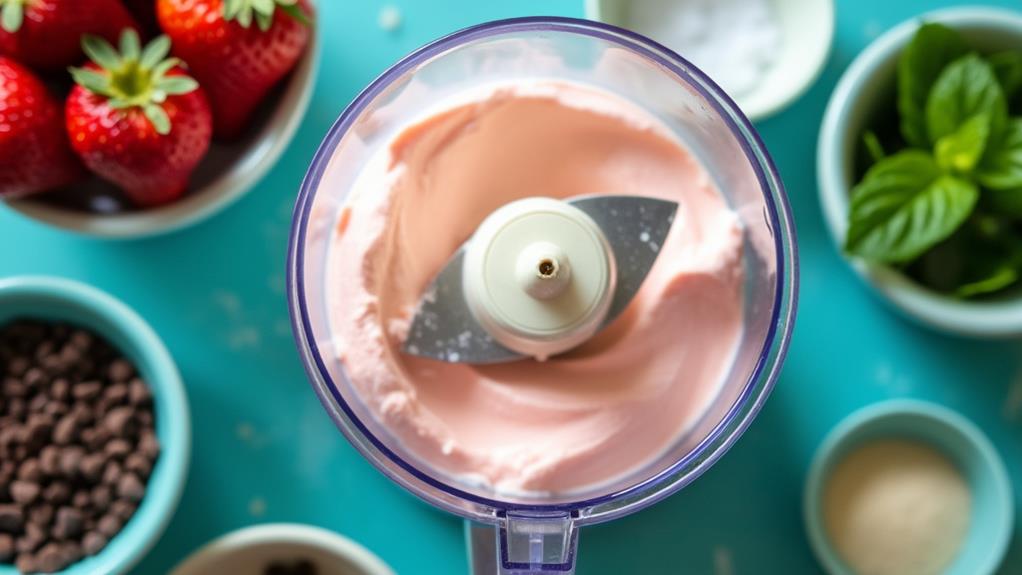
Let's explore how you can get creative with flavor variations in your homemade ice cream. Using seasonal ingredients like ripe berries or citrus fruits adds freshness and uniqueness to your creations. Experiment with combinations like espresso powder in chocolate or balsamic vinegar in strawberry for unexpected and delightful results.
Unique Flavor Combinations
Dive into the world of unique flavor combinations to elevate your homemade ice cream experience. Using your food processor, you can create delightful frozen treats that go beyond the standard vanilla. Start with a base of heavy cream and add mix-ins for both flavor and texture. Here are some unique combinations to try:
- Toasted Sesame Seed and Honey Gelato: Blend the nutty flavor of toasted sesame seeds with the sweetness of honey for a rich, deep taste.
- Saffron Ice Cream: Enhance your dessert with luxurious saffron and rose water, topped with pistachios for an exotic and fragrant treat.
- Grasshopper Ice Cream: Mint extract combined with chocolate chips creates a refreshing and decadent flavor reminiscent of the classic dessert.
Incorporating seasonal ingredients can further enhance your ice cream. Imagine ripe peaches or fresh berries adding vibrant, natural flavors to your frozen treats. The key to perfecting these unique combinations is balancing flavors and textures. Whether it's the chewy delight of shredded coconut in Thai Vegan Coconut Ice Cream or the crunch of pistachios in saffron ice cream, you'll find that these mix-ins make your homemade ice cream a memorable experience. So, don't hesitate to experiment and enjoy the endless possibilities!
Seasonal Ingredient Ideas
Using seasonal ingredients can transform your homemade ice cream into a celebration of the time of year. In summer, incorporating ripe peaches or fresh berries into your ice cream base will elevate both flavor and texture, creating a refreshing treat that captures the essence of the season.
As autumn arrives, consider infusing your ice cream with cozy flavors like pumpkin spice or apple cider. These additions create a warm, comforting dessert perfect for crisp fall days. When winter rolls around, festive ingredients such as peppermint extract or gingerbread spices can add a holiday flair to your creations, making them a hit at any gathering.
Springtime offers a chance to brighten your ice cream with fresh mint or lemon zest. These ingredients provide a light, zesty contrast to richer bases, waking up your taste buds as nature comes alive. Don't forget to experiment with local ingredients, like honey from nearby farms or herbs from your garden. These can create unique, personalized flavor combinations that not only taste great but also celebrate the season and your local community. By focusing on what's in season, you can make every batch of ice cream a special, timely delight.
Dietary Adaptable Recipes
Exploring the vibrant world of seasonal ingredients opens up a realm of possibilities for dietary-adaptable ice cream recipes. Using a food processor, you can easily modify traditional ice cream recipes to accommodate various dietary needs. For a lighter texture, substitute heavy cream with lower-fat alternatives like evaporated milk. This not only reduces fat content but also creates a smoother consistency.
Vegan options are equally straightforward. Replace dairy with coconut milk or nut-based alternatives to achieve a creamy texture while keeping your ice cream dairy-free. To reduce sugar content, natural sweeteners like honey, maple syrup, or stevia can be used in place of regular sugar. Adjust the quantities to match your taste preferences.
Enhance your ice cream with exciting flavor variations:
- Add spices like cinnamon or nutmeg for a warm, aromatic twist.
- Mix in pureed fruits, extracts, or nut butters for unique flavor profiles.
- Incorporate dairy-free chocolate chips or granola for delightful textures.
These adaptable recipes allow you to create personalized ice cream that aligns with your dietary preferences and tastes. Enjoy the endless possibilities!
Tips for Perfect Ice Cream
To achieve perfect ice cream using your food processor, start by chilling the processor bowl. Cold conditions help trap air and stabilize the whipped cream, resulting in a creamy texture. Gradually whip the chilled evaporated milk until soft peaks form; avoid whipping to stiff peaks, which can make the texture grainy. Once you have a smooth blend, gently fold in your flavorings and mix-ins to maintain a milkshake-like consistency and prevent them from sinking.
Processing the ice cream mixture until it's smooth is vital. This step helps break up any ice crystals, giving you that gelato-like texture fundamental for a satisfying mouthfeel. Don't rush this part; let the food processor do its job to guarantee a perfect consistency.
After processing, transfer your ice cream to a suitable container and allow it to firm up in the freezer. This final freezing step is significant to achieve the right firmness and general texture. Remember, patience is key—let the ice cream become fully frozen before serving. By following these tips, you'll guarantee your homemade ice cream is consistently delicious, creamy, and perfectly textured.