Can a Personal Blender Crush Ice?
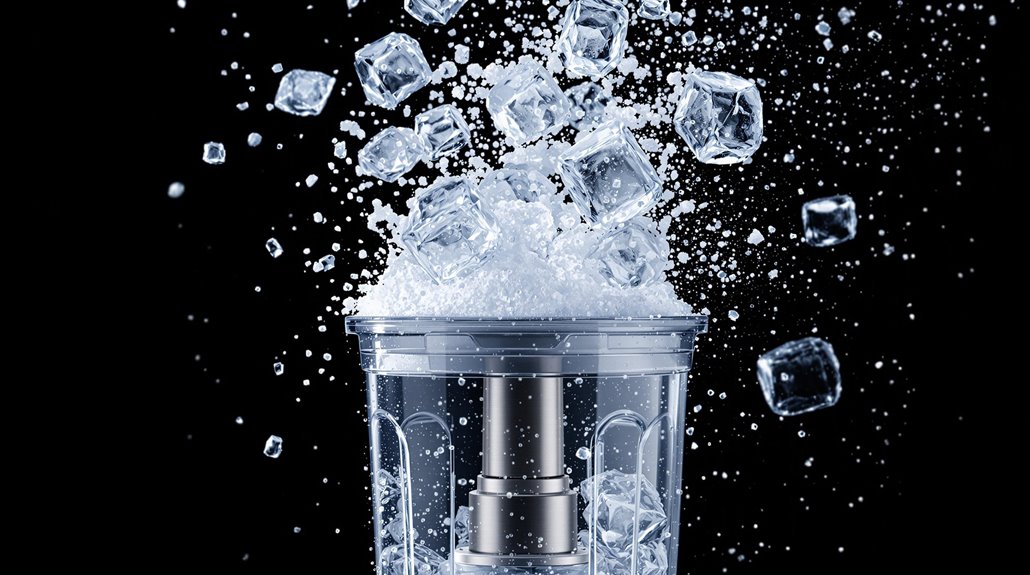
Personal blenders can crush ice effectively if they have at least 1,000 watts of power and proper design features like serrated stainless steel blades. You'll get the best results with models specifically designed for ice crushing, such as the Ninja BN401 Nutri Pro with its 1,100-watt motor. Adding liquid and using pulse functions will improve your ice-crushing success. While full-size blenders generally perform better, certain premium personal blenders can handle ice like the pros - let's investigate what makes them work.
Understanding Personal Blender Power Requirements for Ice
While personal blenders can be great for making smoothies and protein shakes, their ability to crush ice effectively depends largely on motor power. Most personal blenders operate between 600-1,200 watts, which often isn't enough power for consistent ice crushing performance.
You'll want to look for a motor base that delivers at least 1,000 watts if you're planning to use your personal blender for frozen drinks and ice crushing regularly. The Ninja BN401 Nutri Pro, with its 1,100-watt motor and dedicated crush setting, proves effective at turning ice into smooth slush. However, lower-powered models under 1,000 watts typically struggle with ice, even with sharp blades, producing uneven results with larger chunks remaining.
While some models like the Nutribullet Pro 900 excel at blending tough ingredients, consistent ice crushing requires more powerful motors. For optimal ice-crushing performance in a compact format, the Ninja Foodi Power series combines smartTORQUE technology with powerful motors to deliver consistent results.
Key Design Features That Enable Ice Crushing
Beyond raw power, several essential design features determine whether a personal blender can effectively crush ice. You'll find that top personal blenders feature serrated blades made of durable stainless steel, specifically designed to blend ice and frozen fruits with ease.
The jar's shape plays a fundamental role too - a narrow, tapered design helps funnel ice cubes directly toward the blades, making it simple to use for everything from smoothies to nut butter.
Look for models with dedicated "ice crush" settings or pulse functions, which make the blending process easy to use and more efficient. Many advanced units also include tampers that help push frozen ingredients toward the blades, preventing them from getting stuck.
For best results, adding a small amount of liquid will help your blender process ice more effectively.
While personal blenders typically have smaller motors compared to countertop models, they're still capable of handling ice when properly designed.
Performance Comparison: Personal Vs Full-Size Blenders
When it comes to crushing ice, full-size blenders outshine their personal counterparts in both consistency and performance. While personal blenders can manage ice crushing to some degree, you'll notice a significant difference in the final texture compared to full-size models.
Consider these key differences between the two types:
- Full-size blenders deliver superior power for crushing ice into a uniform, smooth consistency, while personal blenders often leave chunks
- You'll sacrifice counter space with a full-size blender, but gain versatility for various blending tasks
- Personal blenders are easier to clean and ideal if you mainly make single-serve smoothies and shakes
- Some premium personal blenders, like the Ninja BN401, bridge the gap with dedicated ice-crushing features, though they're still bulkier than standard personal models
Full-size blenders typically feature hardened stainless steel blades that are specifically designed to maintain sharpness and resist corrosion over extended periods of ice crushing.
Best Practices for Crushing Ice in Personal Blenders
Successfully crushing ice in a personal blender requires specific techniques and equipment considerations to achieve the best results. For ideal ice-crushing performance, you'll want to choose a personal blender with at least 1,000 watts of power, like the Ninja BN401 or the Ninja Foodi Power Nutri DUO, which feature serrated blades specifically designed for ice.
To maximize your blender's ice-crushing capabilities, add small amounts of ice at a time and include some liquid to help the blending process. Instead of continuous blending, use short pulse intervals. Models like the Zwilling Enfinigy come with dedicated ice-crushing settings that optimize this process.
If your blender has less than 1,000 watts of power, you might notice uneven results with some larger chunks remaining, so following these techniques becomes even more vital.
Common Challenges and Solutions When Blending Ice
Despite their convenience, personal blenders face several common obstacles when crushing ice. You'll encounter challenges with standard models that typically lack sufficient power to create smooth, chunk-free slush. While most personal blenders operate between 900-1200 watts, you'll need specialized models like the Ninja Foodi Power Nutri DUO for ideal ice-crushing performance.
- Choose a blender specifically designed for ice, ensuring adequate wattage.
- Use the designated crush setting if available, like the one on the Ninja BN401.
- Clean your blender immediately after use, rinsing both cup and blades.
- Add water when blending ice to help achieve a more even consistency.
These solutions will help you avoid uneven results and protect your blender's longevity.
Tips to Extend Your Personal Blender's Lifespan While Ice Crushing
Proper maintenance and smart usage habits can substantially extend your personal blender's life, even when regularly crushing ice. Start by breaking ice into smaller chunks of ice before blending, as this makes your Personal Blenders less likely to strain. It's worth noting that using the one speed setting gradually, rather than running continuously, helps prevent motor burnout.
Keep your blender easy to clean by rinsing the jar and lid immediately after use, preventing ice residue from hardening. Even super powerful blenders need proper care to maintain their ability to create silky smooth results.
Since personal blenders are easy to store, designate a cool, dry spot to prevent moisture damage. Additionally, avoid overfilling the container, as this allows proper ice circulation and reduces stress on the motor.