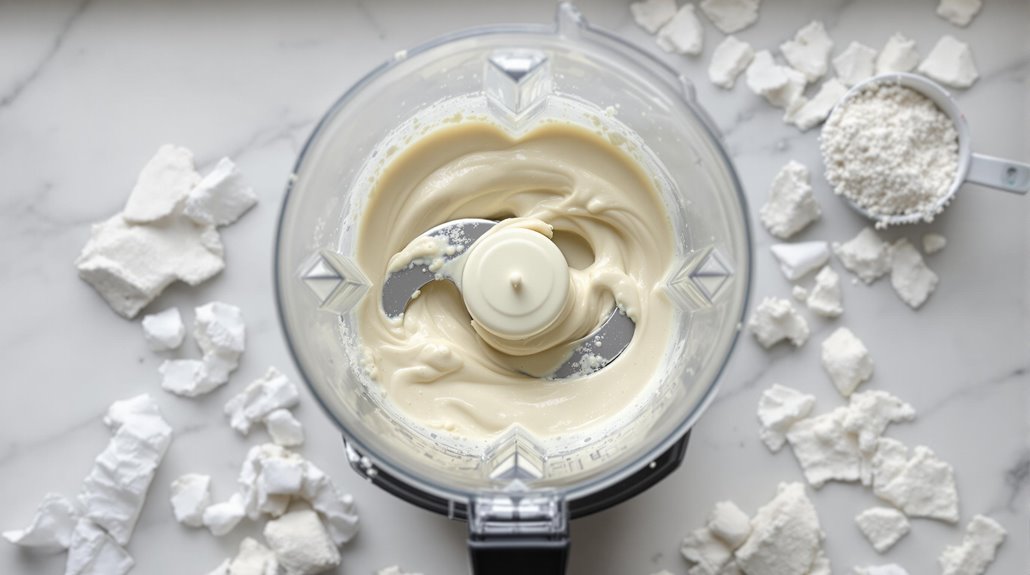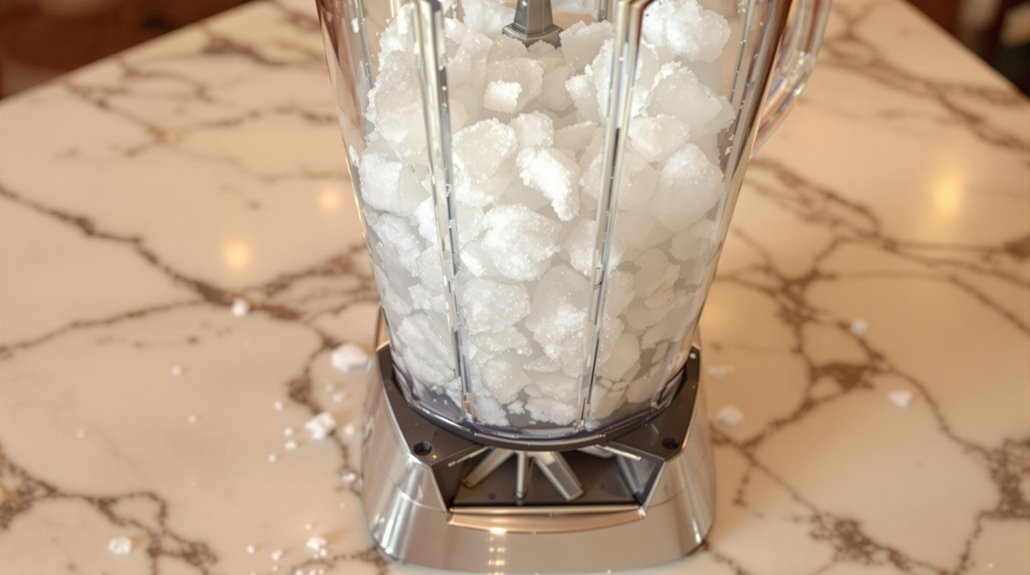
Can a Blender Be Used as a Grinder?
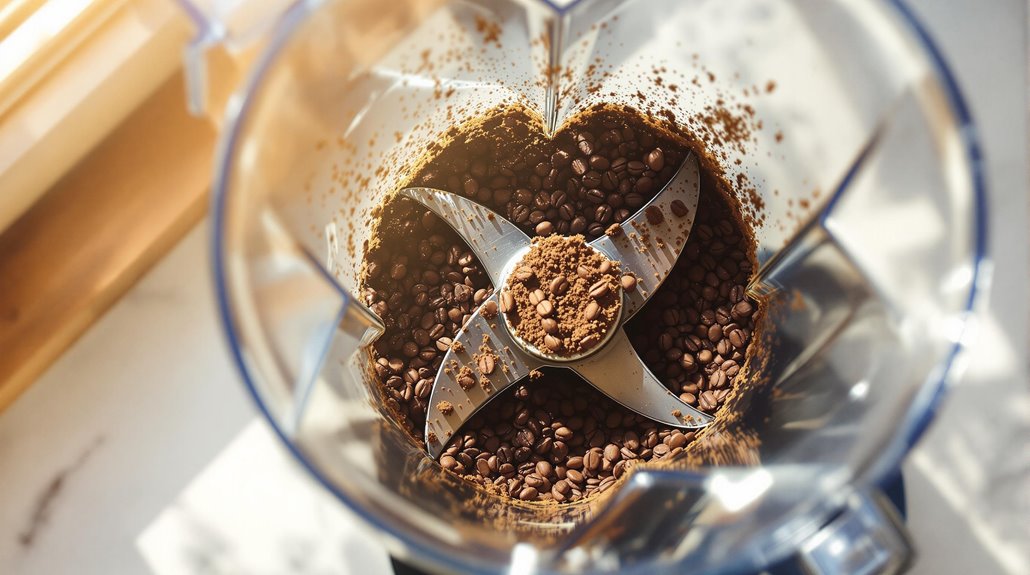
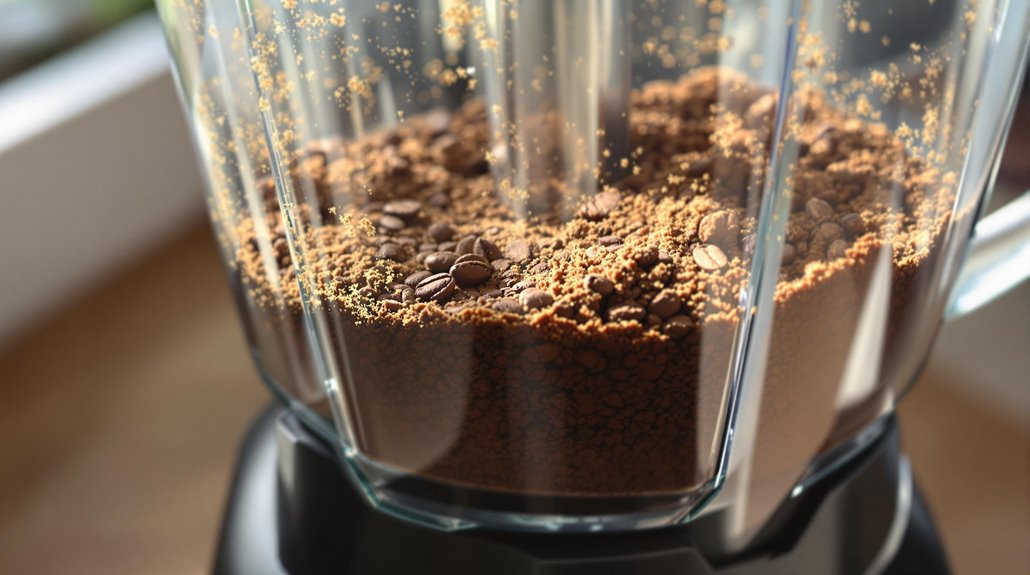
You can use your blender as a grinder for many ingredients like coffee beans, spices, nuts, and grains. While blenders use a vortex action instead of the focused crushing motion of dedicated grinders, they can still achieve good results with the right technique. For best outcomes, work in small batches using controlled pulses rather than continuous blending. Understanding key differences and proper methods will help you get the most from your blender's grinding capabilities.
Understanding the Difference Between Blenders and Grinders
While both blenders and grinders serve to break down ingredients, they operate quite differently and are designed for distinct purposes. Grinders use a focused crushing or cutting motion to process small batches of dry ingredients uniformly, making them ideal to grind coffee beans, spices, or nuts. They feature specialized burrs or blades that work in a concentrated area to achieve consistent results.
Using a blender, on the other hand, relies on wider blade movements and vortex action to process larger quantities of ingredients, typically with liquid added. Blenders excel at creating smoothies, purees, and sauces, but they can't match a grinder's precision for dry ingredients. The blender's larger chamber and higher-positioned blades make it challenging to evenly process small amounts of dry materials like spices or coffee. Most blenders feature stainless steel blades that are designed for durability and corrosion resistance rather than precise grinding of dry ingredients.
Key Features That Make Blenders Suitable for Grinding
Although blenders aren't specifically designed for grinding, several key features make them capable substitutes for traditional grinders. The powerful motor and sharp blades can effectively break down ingredients, from coffee beans to meat cuts, into your desired consistency.
The key features that make blenders effective for grinding include:
- Multiple speed settings for achieving coarse to fine textures
- Pulse function for precise control over grind size
- Enclosed container design to maintain ingredient temperature
You'll find that your blender's versatility extends beyond making smoothies. The enclosed container helps preserve flavors and aromas by minimizing heat buildup during grinding, which is especially important when processing coffee beans. Whether you're working with limited counter space or seeking a multi-purpose appliance, your blender's grinding capabilities can effectively handle various ingredients. Models like Vitamix or Blendtec are particularly effective for grinding due to their robust motors and specialized dry grain containers.
Best Practices When Using a Blender as a Grinder
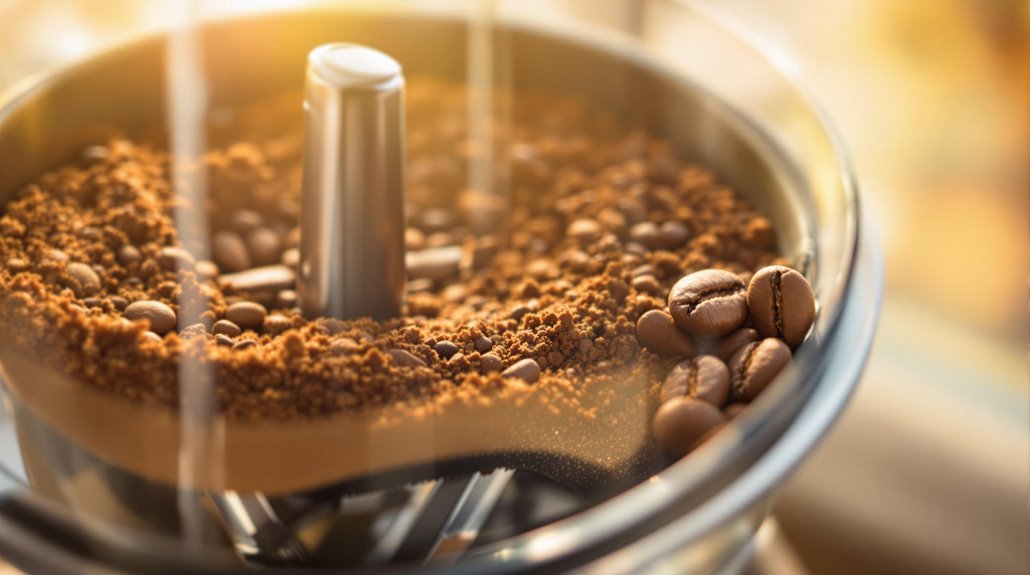
Successfully using your blender as a grinder requires following specific techniques to achieve ideal results. When grinding dry ingredients, work with small batches and use controlled pulses rather than continuous blending. This approach helps in preventing overheating while preserving the flavors and aromas of your ingredients.
For achieving ideal grind consistency, you'll need to focus on optimizing blender settings. Adjust your speed and pulse duration based on the ingredient you're grinding and your desired coarseness. Keep pulses short and monitor the texture closely to avoid over-grinding. After each use, thoroughly clean your blender to prevent flavor transfer between different ingredients. While your blender can effectively handle grinding tasks, remember that dedicated grinders typically offer more uniform results for specific ingredients. When grinding meat, maintain below 40 degrees Fahrenheit to ensure food safety and prevent bacterial contamination.
Common Ingredients You Can Grind in Your Blender
Your blender can effectively grind five common kitchen ingredients, converting them from whole to powdered form. When creating customized blends, you'll have success with coffee beans, spices, nuts, whole grains, and dried herbs or fruit. Consider texture considerations for each ingredient to achieve your desired consistency.
For optimal results, you can grind:
- Coffee beans for French press, cold brew, or drip coffee methods
- Whole spices like cinnamon, cumin, and peppercorns for fresh flavors
- Nuts for everything from coarse meals to smooth nut butters
The storage of ground ingredients requires airtight containers to maintain freshness. You'll find that freshly ground ingredients offer superior flavor compared to pre-ground alternatives, making your blender a versatile tool for altering whole ingredients into powdered forms.
Safety Precautions and Maintenance Tips
Several essential safety precautions must be followed when using a blender as a grinder to prevent damage and guarantee safe operation. Never overfill the blender jar, and always confirm the lid is securely fastened before starting. For proper blade maintenance, clean the blades thoroughly after each use and check regularly for signs of wear or damage.
To prevent motor overheating, grind in short bursts of 30 seconds or less, allowing the motor to cool between sessions. Don't attempt to grind extremely hard ingredients that could damage the blades or motor. For storage recommendations, keep your blender in a dry place and avoid storing ingredients in the jar for extended periods. If you notice any unusual sounds or vibrations, stop using the blender immediately and check for loose parts or damage.
When to Choose a Dedicated Grinder Instead
While blenders can serve as makeshift grinders, certain situations call for investing in a dedicated grinding appliance. If you're serious about your coffee's extraction quality and grind consistency, a proper grinder will substantially enhance your brewing experience.
Consider upgrading to a dedicated grinder when:
- You're brewing specialty coffee methods that require precise particle sizes, like espresso or pour-over
- You grind coffee frequently or in larger quantities
- You want to preserve the bean aroma and delicate flavor compounds
A dedicated grinder's precision burrs and adjustable settings give you better control over your grind size, while minimizing heat buildup that can degrade coffee oils. You'll notice improved flavor clarity and consistency in your daily brew, making the investment worthwhile for coffee enthusiasts who value quality and precision in their coffee preparation.